 Image 1 of 1
Boletus edulis
Grow, expand and experiment with one of Europe’s most prized woodland mushrooms. Penny Bun, also known as Porcini or Cep, is a famous edible woodland species that naturally grows in partnership with living trees.
Our living Boletus edulis agar culture provides an established mycelial culture ready for further expansion onto fresh agar, sterile grain or suitable hardwood-based substrate.
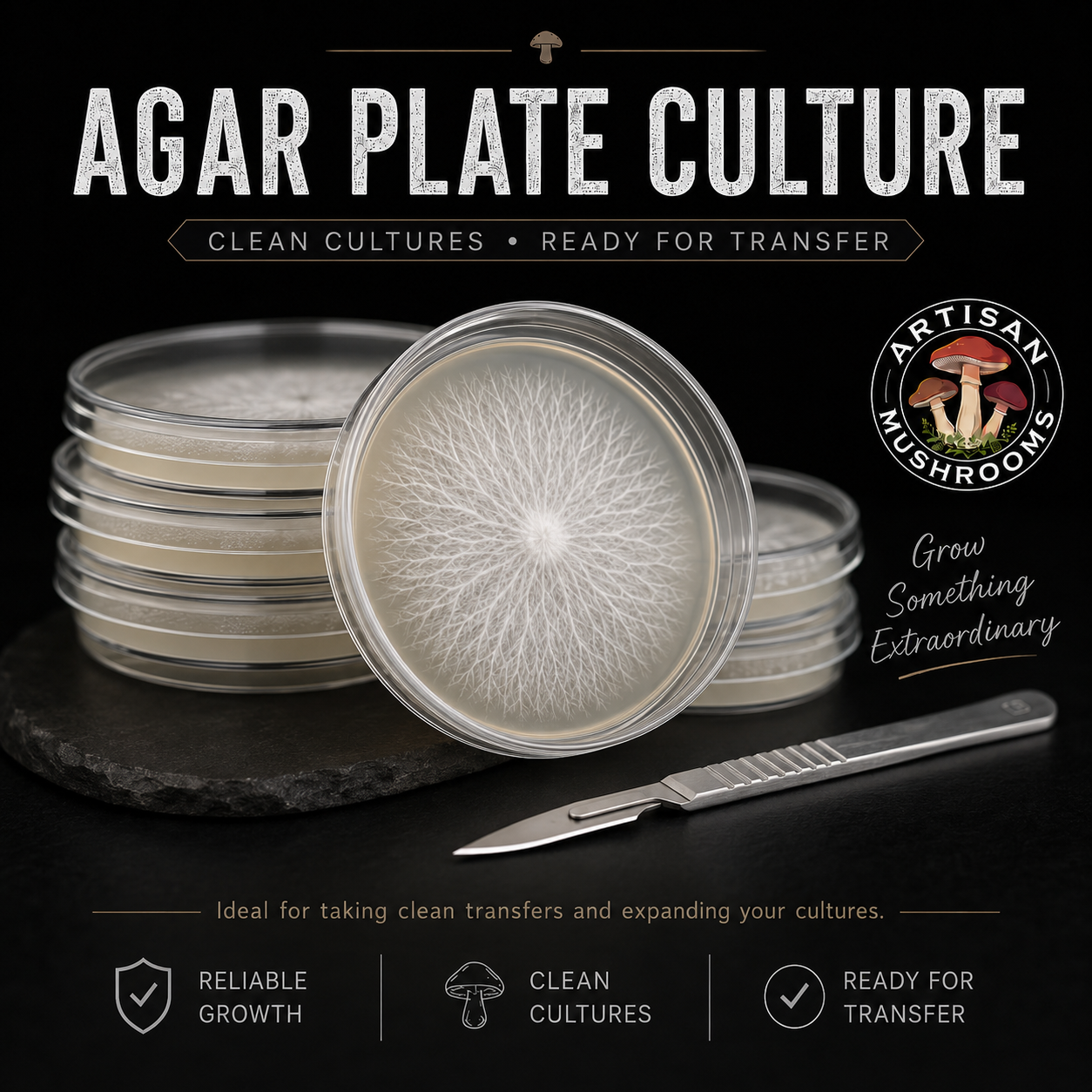
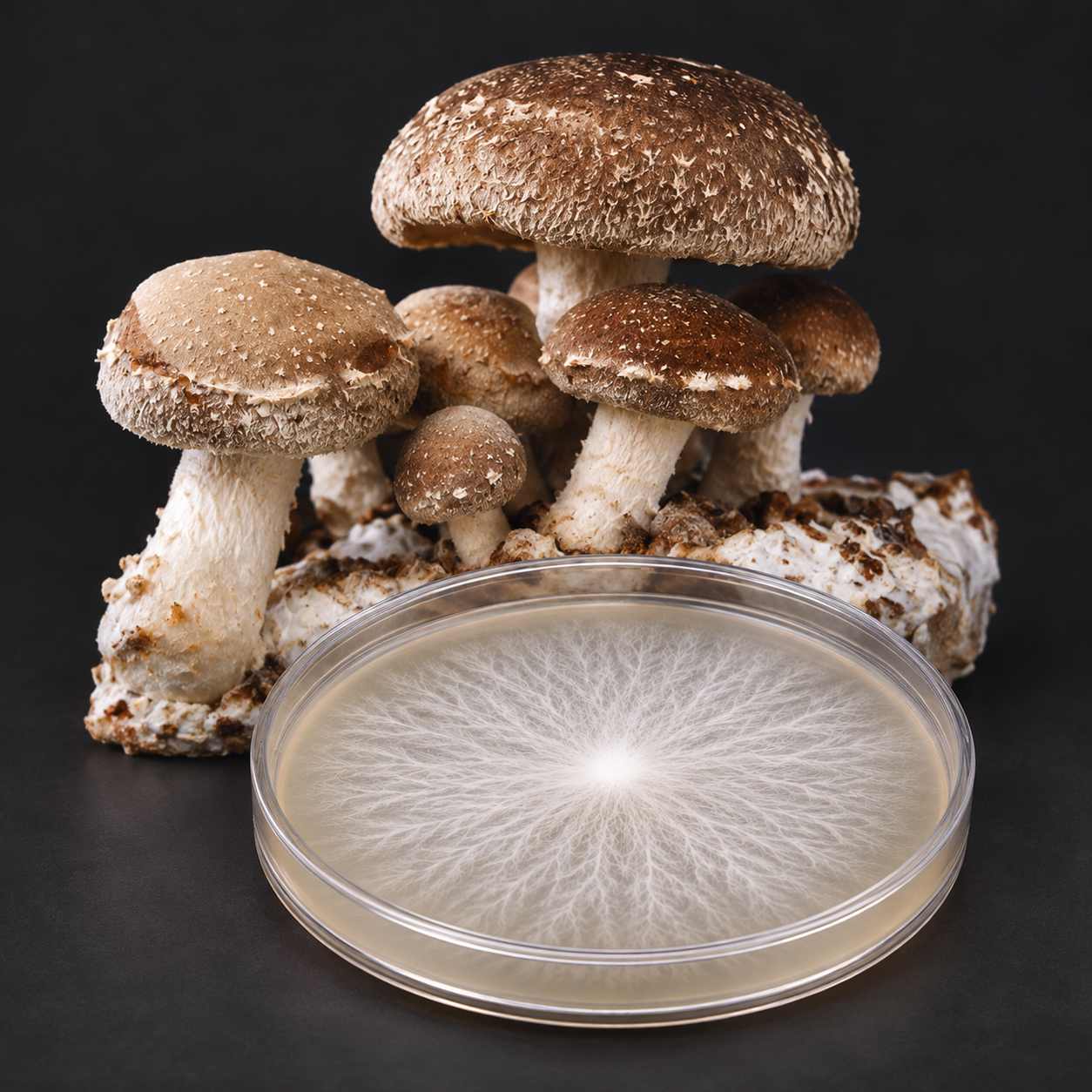
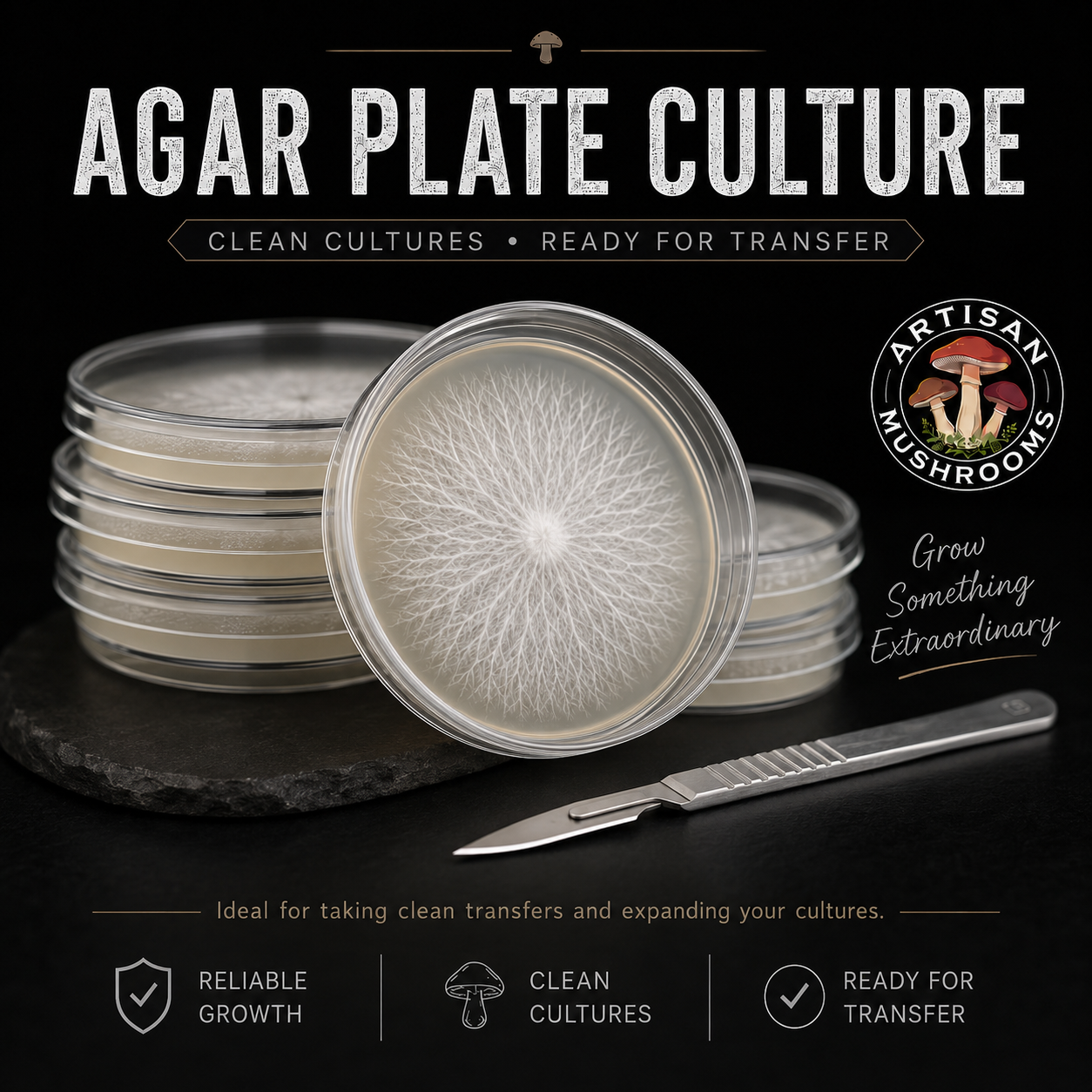
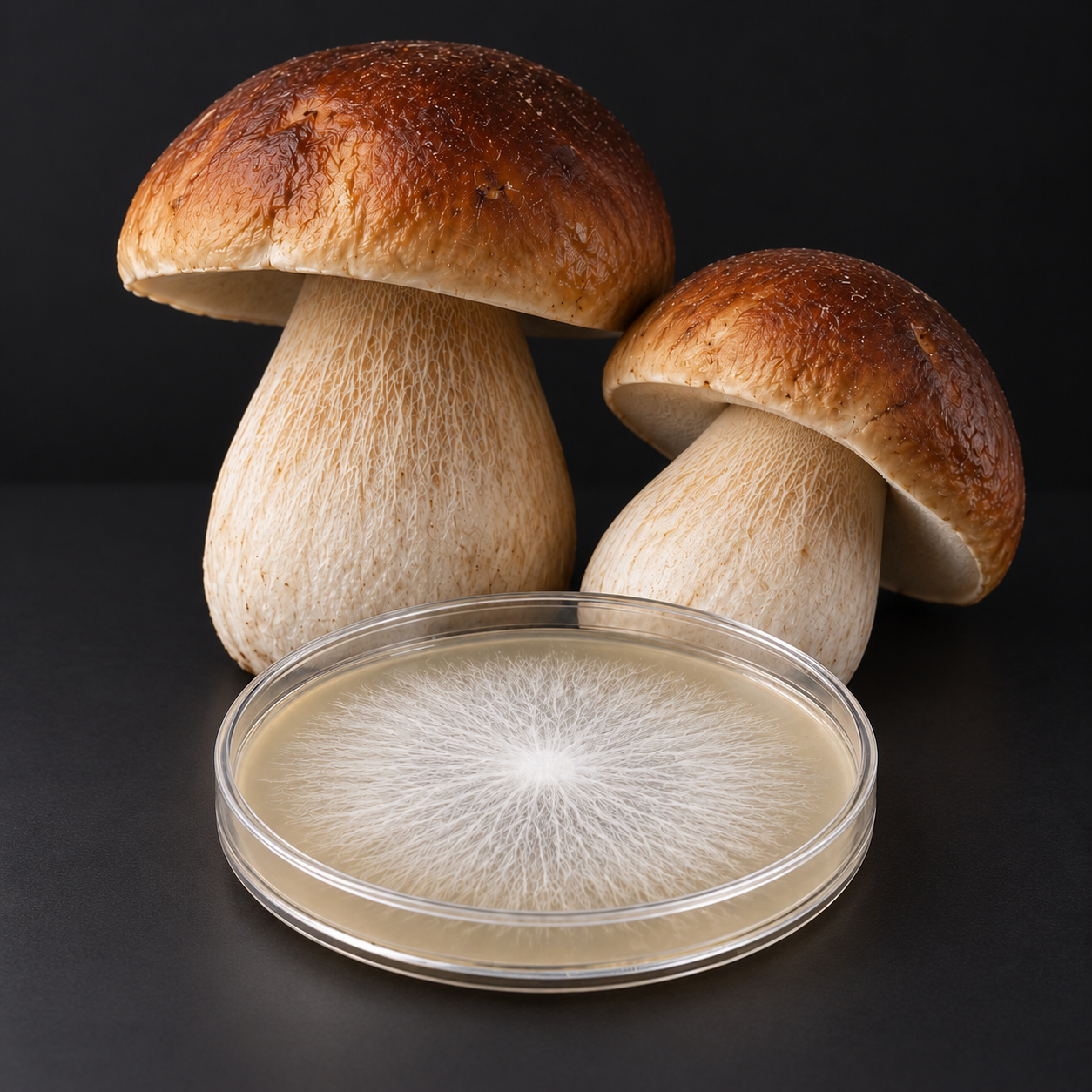
Format: One colonised agar culture plate
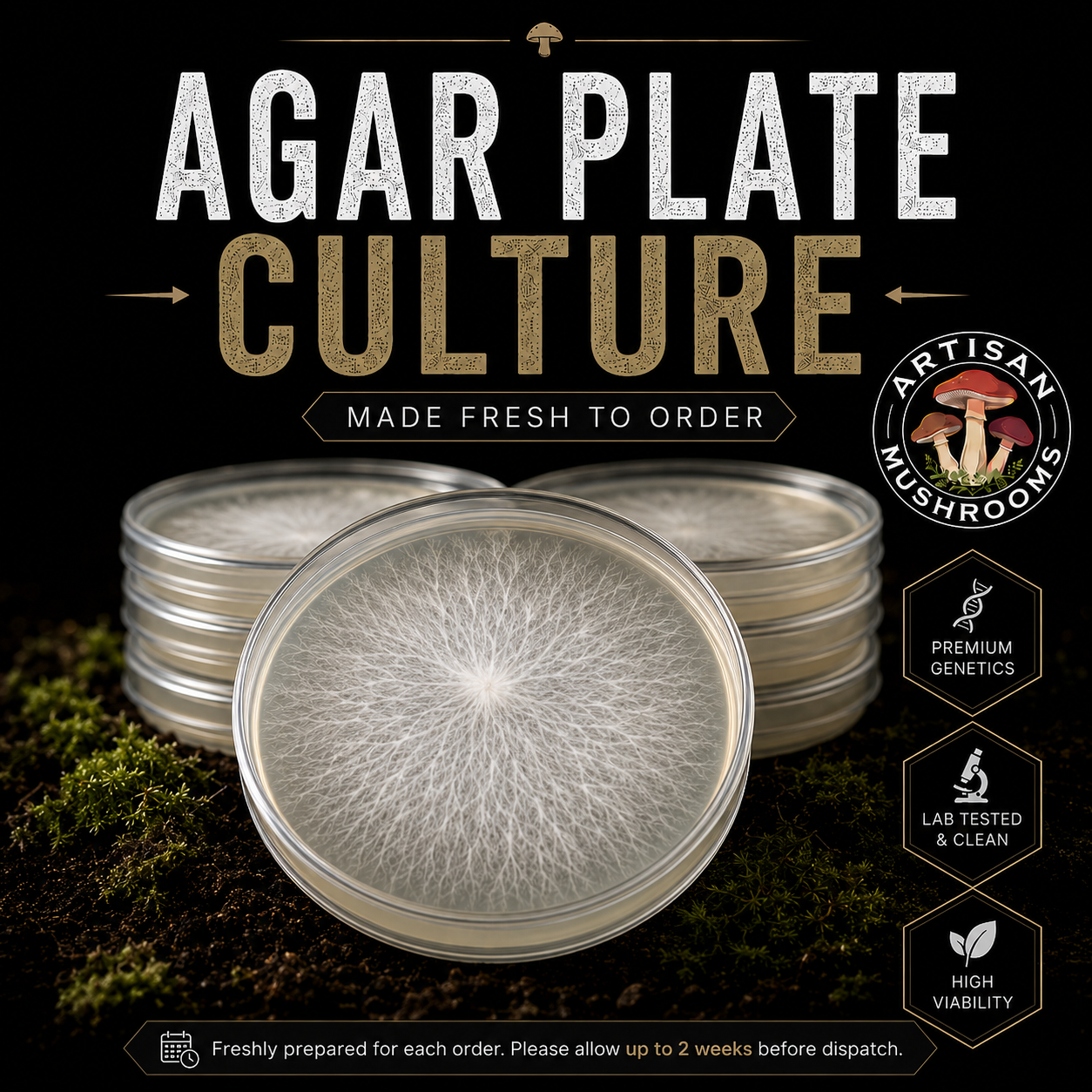
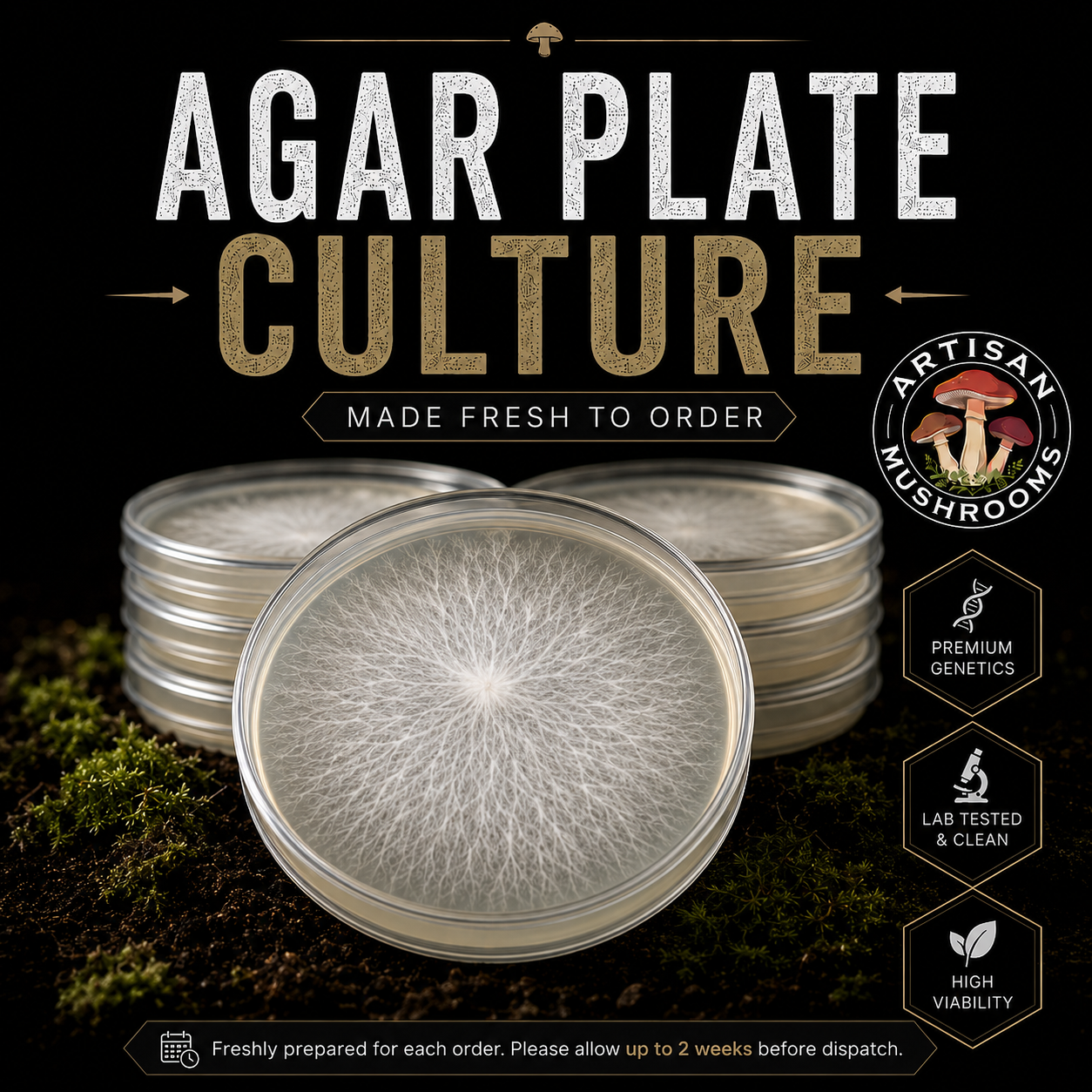
One agar plate containing living Boletus edulis mycelium
Protective packaging for transit
Porcini grows differently from Oyster, Lion’s Mane and many of the other mushrooms commonly cultivated at home.
It is an ectomycorrhizal mushroom, meaning that in nature its mycelium forms a beneficial relationship with the roots of living trees.
This makes Porcini particularly interesting for culture work and experimental outdoor or woodland cultivation projects.
An agar culture is an excellent starting point if you want to expand and maintain the culture yourself before producing a larger quantity of inoculum for an outdoor project.
A practical approach is to expand your Porcini agar culture before introducing the resulting mycelium outdoors.
Small pieces of colonised agar can be transferred under sterile conditions to:
Fresh sterile agar plates for further culture expansion
Sterilised grain to produce grain spawn
Sterilised hardwood-based substrate to produce colonised sawdust
A sterilised hardwood all-in-one grow bag to produce a larger quantity of colonised material
Once your chosen substrate has established and colonised, portions of the colonised material can be introduced into the soil around suitable living host trees.
Producing grain spawn, colonised sawdust or a colonised hardwood bag gives you considerably more inoculation material for experimenting with several locations around a tree or multiple host trees.
For growers who want to use one of our sterilised hardwood all-in-one grow bags, we recommend first expanding the agar culture through sterile culture work or grain spawn before inoculating the bag.
This allows the small amount of mycelium present on the original agar plate to be expanded into a much larger quantity of healthy mycelium.
Once the hardwood substrate is colonised, it can be used as inoculation material for your outdoor host-tree project.
Boletus edulis naturally forms associations with a range of woodland trees.
Suitable hosts can include:
Oak
Beech
Birch
Pine
Spruce
Established, healthy trees with active root systems are ideal for experimental outdoor inoculation.
When introducing colonised material outdoors, the aim is to place the mycelium within the tree’s active root zone where it has the opportunity to encounter fine feeder roots and establish its natural association with the tree.
Porcini cultivation is best approached as a fascinating long-term outdoor project rather than a conventional mushroom grow kit.
Once introduced outdoors, the mycelium must establish itself within the soil and form the appropriate relationship with its host tree.
How quickly this happens will depend on the host tree, soil, climate, competing fungi and local environmental conditions. Mushroom production cannot be guaranteed, but establishing Porcini around suitable trees can make for a rewarding experimental woodland project.
Each agar culture is prepared fresh to order in Ireland, providing healthy living mycelium ready for further culture work and expansion.
See our shipping policy for current preparation and delivery information.
Penny Bun, Porcini and Cep are common names for Boletus edulis, one of the best-known edible mushrooms in the world.
It is recognised by its large brown cap, thick pale stem and characteristic sponge-like pore surface underneath the cap.
Unlike mushrooms that obtain their nutrients primarily by decomposing wood or other organic material, Porcini forms a partnership with living trees. The fungus receives carbohydrates from its host while its extensive underground mycelium assists the tree with access to water and nutrients.
This unusual growing strategy makes Boletus edulis an excellent addition to a culture collection and an exciting species for anyone interested in woodland fungi, mycorrhizal relationships and experimental outdoor mushroom cultivation.
Keep the agar culture sealed and protected from direct sunlight and temperature extremes.
For best results, use your culture while fresh. If you need to store the plate before use, contact Artisan Mushrooms for species-specific storage advice.
Species: Boletus edulis
Common names: Penny Bun, Porcini, Cep
Format: Agar Culture
Quantity: One colonised agar plate
Growing type: Ectomycorrhizal
Suggested use: Culture expansion, spawn production and experimental outdoor host-tree projects
Expansion options: Fresh agar, grain spawn or hardwood-based substrate
Prepared in: Ireland