

Grow mushrooms on hardwood logs
Four ways to inoculate fresh wood for outdoor shiitake, oyster and lion’s mane harvests.
Outdoor cultivation · Artisan Mushrooms
Quick Answer
Use plugs for a few manageable logs, drill-and-fill sawdust spawn for a batch, or sandwich sawdust spawn between broad rounds for a totem. Chainsaw slashes are a specialist option for trained operators.
Spawn carries living mushroom mycelium into the wood. Match the strain to your tree species, then keep the log shaded and moist while the mycelium colonises it.
Choose and Prepare the Wood
Shiitake
Oak is a dependable starting point. Beech can suit some strains. Start with drilled logs and check the strain’s wood and fruiting preferences.
Temperate oysters
Poplar, willow or alder can work for suitable oyster strains. These woods may colonise faster and break down sooner than oak. Try drilled logs or totems.
Lion’s mane
Try beech or maple where recommended for the strain. Broad rounds work well for totems. Drilled logs are also an option.
Log size
For drilling, start with logs about 90–120 cm long and 8–15 cm across. Smaller logs are easier to lift and dry out faster. Use wider rounds for totems if you can move and stack them safely.
Use untreated wood cut from healthy living trees, with tight bark and sound sapwood. Leave the bark intact to slow moisture loss. Avoid rotten or fallen timber, logs already bearing fungi and resinous softwoods unless your strain supplier recommends that wood.
Late autumn to early spring is a practical cutting window for deciduous trees. A short shaded rest of around one to two weeks is common. Follow the strain supplier’s instructions and inoculate promptly in drying weather. Store logs above ground, out of sun and wind. Long storage favours competing fungi.
Four Ways to Inoculate
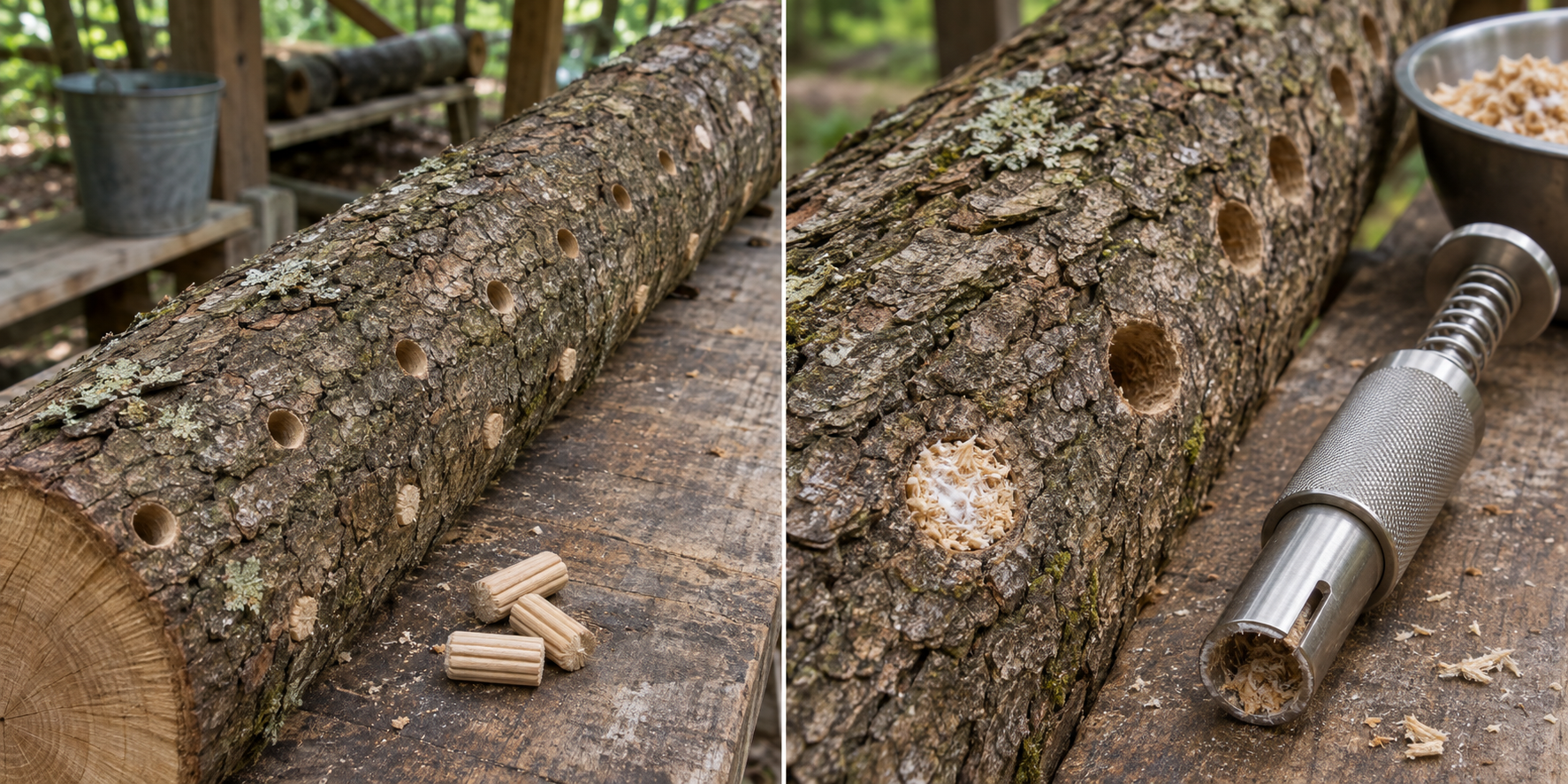
Drill-and-fill with sawdust spawn
- Secure the log against rolling. Drill staggered rows around the bark. A starting pattern is holes about 15 cm apart along each row, with rows 5–8 cm apart. A typical sawdust bit is 11 mm (7/16 in) with a depth of about 25 mm. Match the bit and depth stop to your inoculator.
- Break up the colonised sawdust in its bag. Pack the holes with a clean plunger tool, leaving the spawn slightly below the bark. Keep the remaining spawn shaded and covered.
- Seal each hole with food-grade cheese wax or mushroom log wax. Melt it gently with controlled heat, away from open flame, and apply with a heat-safe dauber. Label each log with the mushroom, strain, tree species and date.
Dowel or plug spawn
- Use colonised hardwood dowels and a matching bit, often 8 mm (5/16 in). Check plug length. Drill just deep enough to seat the dowel flush or slightly below the bark.
- Tap one plug into each staggered hole with a clean mallet. Follow the supplier’s sealing instructions. A thin wax cap can protect the exposed inoculation site and retain moisture.
Chainsaw trench or slash
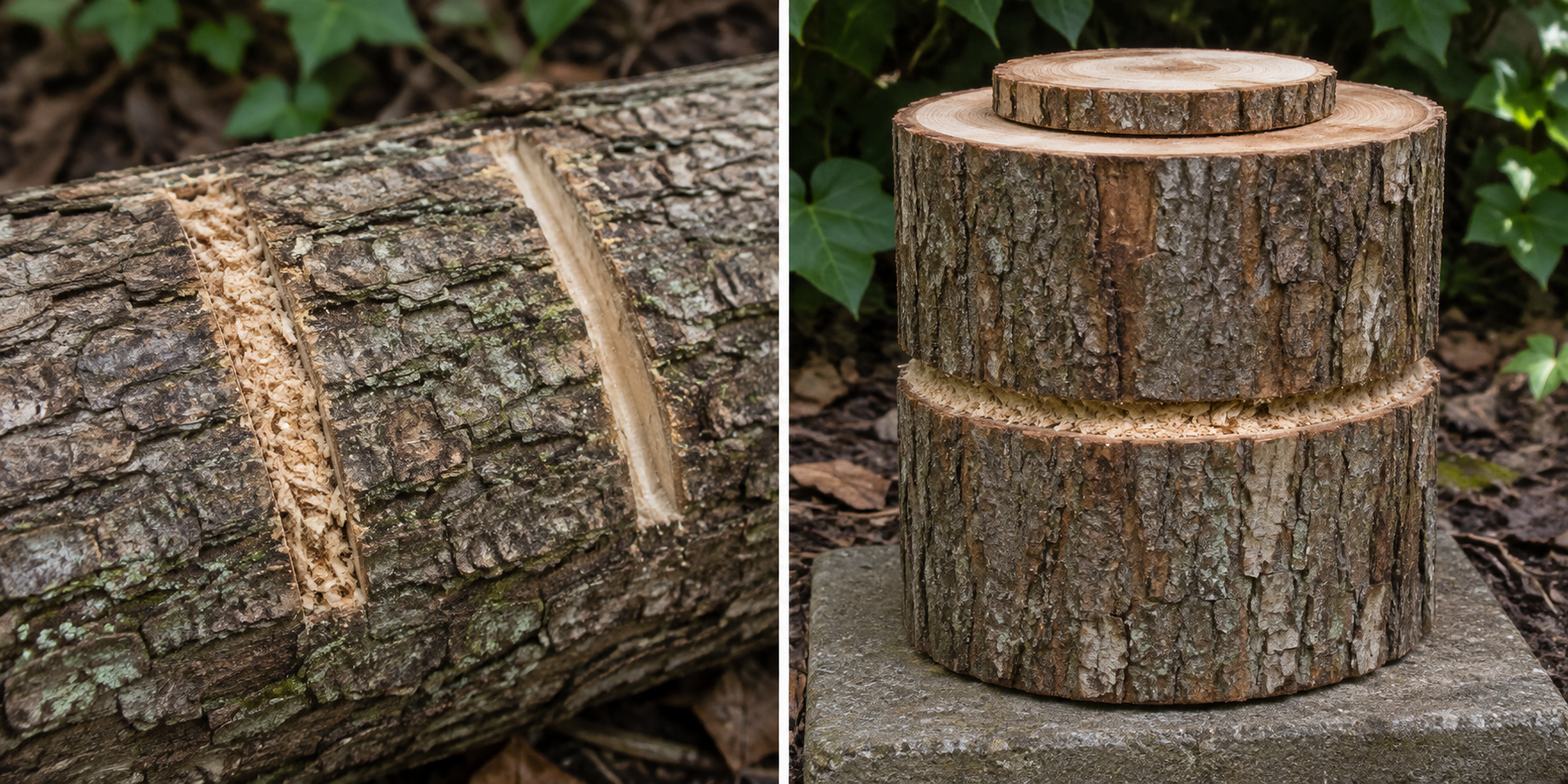
A trained operator makes a few shallow, separated cuts through bark into sound outer wood. After the saw is switched off and moved clear, brush away loose debris, pack the cuts with colonised sawdust and seal the exposed spawn with suitable wax or the cover specified for your method. Keep the log intact and fill the cuts promptly. Trial this method on a few logs before committing a batch.
Use a trained operator who follows the saw manual and Irish HSA guidance. Secure the log against rolling or shifting, keep bystanders clear and use suitable chainsaw leg protection, boots, gloves, and head, eye and hearing protection. Avoid tip contact and improvised plunge cuts. Use the drill method if you lack the training or equipment.
Totem method
- Have a competent operator cut a wide hardwood log into manageable rounds around 20–30 cm tall. Set the base on a stable support in a level, sheltered spot.
- Spread a thin, even layer of sawdust spawn over a fresh face and set the next round squarely on top. Keep the stack low and stable. A thin cap round can protect a final layer of spawn.
- Use a loose ventilated cover during early incubation if recommended for your strain and site. Check for drying or standing condensation. Remove the cover for fruiting so the seams have fresh air. The mating faces shelter the spawn, so the seams generally need no wax.
Incubation, Fruiting and Harvest
Spawn run. Stack drilled logs low on rails or blocks in deep shade, sheltered from wind, with space for airflow. Let rain reach the bark. During a dry spell, water thoroughly and let the logs drain. Avoid prolonged saturation and sealed plastic. Wax the inoculation points first. End waxing is optional and can slow rehydration.
Timeline. Allow around 9–18 months for drilled shiitake logs. Oyster and lion’s mane totems may fruit in their first suitable season or take a year or longer. Strain, wood density, size and weather affect timing. A healthy log can flush for several seasons.
Fruiting. Rain and seasonal changes can trigger a flush once the wood is colonised. For mature logs of a suitable shiitake strain, try a cool-water soak for 12–24 hours, drain and watch for pins. Let the log recover for several weeks between forced flushes. Let oyster and lion’s mane logs fruit with their seasonal cues.
Harvest. Pick shiitake before caps flatten fully, oysters before cap edges turn up, and lion’s mane while firm and pale with developed teeth. Identify every mushroom before eating. Other fungi can appear on a labelled log.
Troubleshooting
- Logs feel light or the ends are cracking. Increase shade and wind protection, water thoroughly, and replace wax that has lifted from inoculation sites.
- No fruit after a season. Check the strain’s season, wood match and moisture history. Large or dense logs may need more time. White growth at the ends alone cannot confirm full colonisation or identify the fungus.
- Unknown caps, extensive mould or soft wood. Separate affected logs, leave unidentified mushrooms unharvested, and retire heavily decayed logs.
- Pins dry out or slugs damage caps. Shield the site from drying wind, maintain moisture, and check around the base and under covers.
Find Spawn for Your Logs
Ask Artisan Mushrooms about sawdust spawn or a custom order. Include the mushroom and tree species, number and size of logs, and your planned inoculation date so we can advise on suitability and availability.
Read our mushroom substrate guide for more on matching species to growing materials.
Further reading · WSU Extension · Cornell Small Farms · Irish HSA chainsaw safety
