 Image 1 of 1
Sterile Hardwood Mushroom Grow Bag
Sterilised Hardwood Mushroom Grow Bag FAQ
What is a Sterilised Hardwood Mushroom Grow Bag?
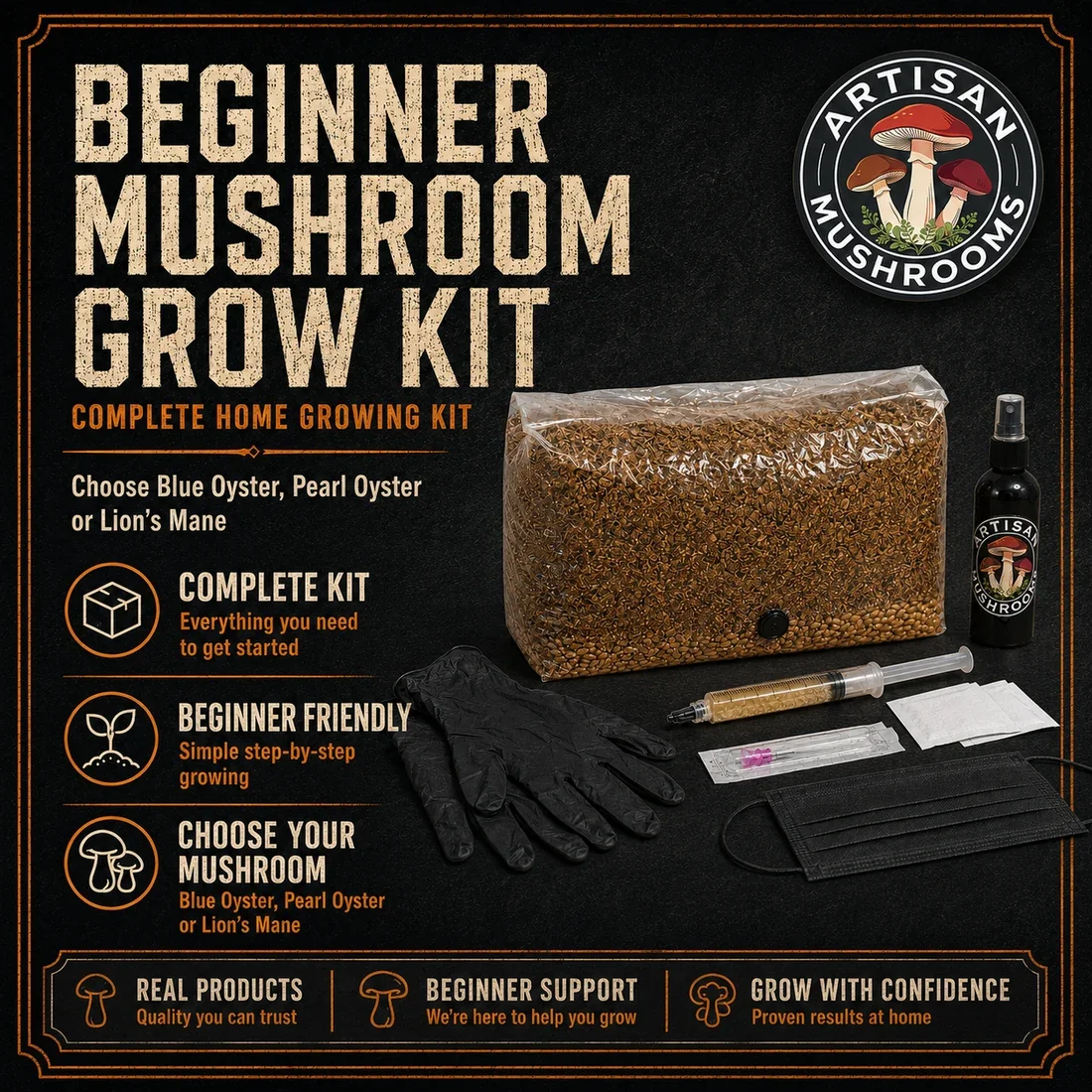
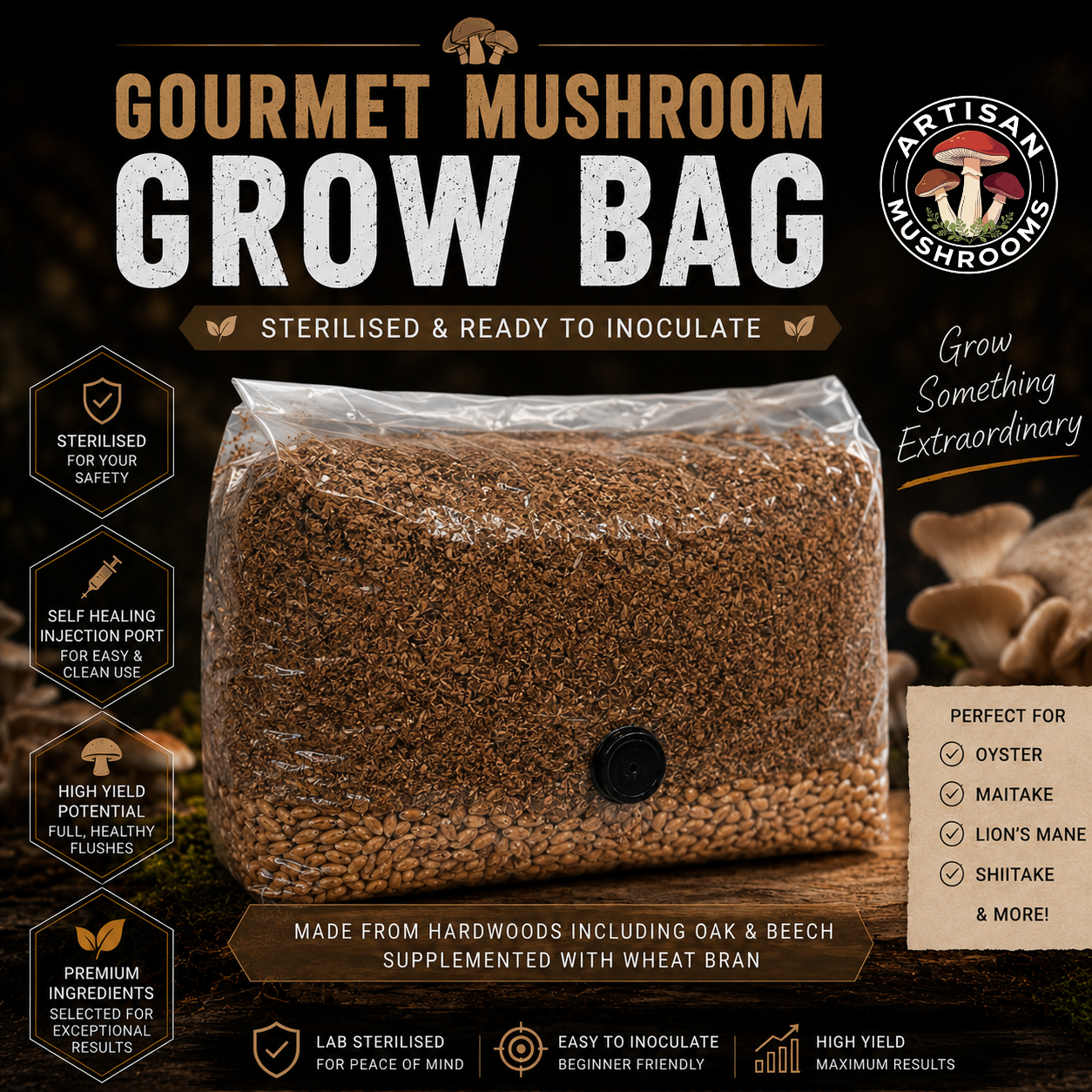
Our Sterilised Hardwood Mushroom Grow Bag is a ready-to-inoculate substrate bag designed for growing hardwood-loving gourmet and specialty mushroom species.
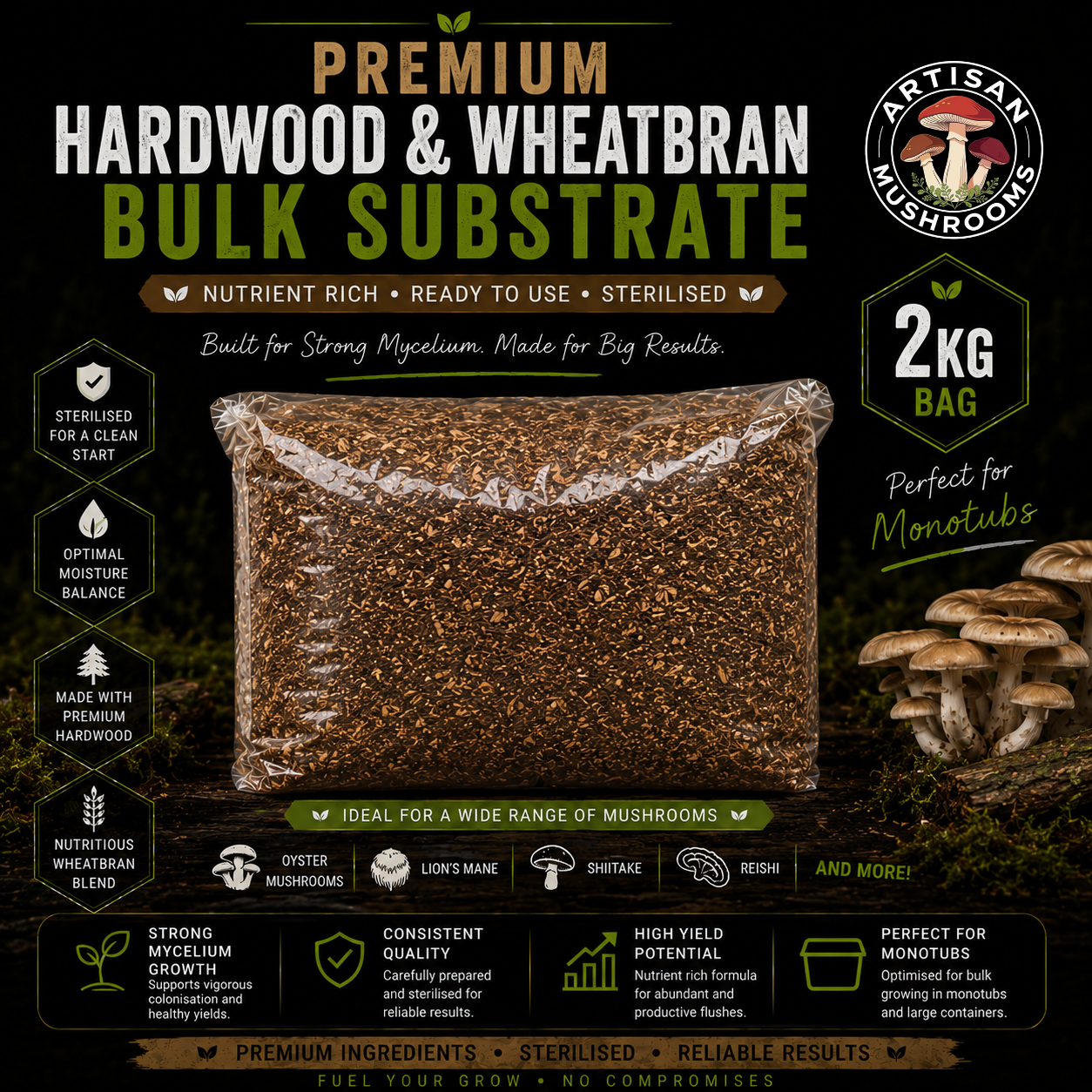
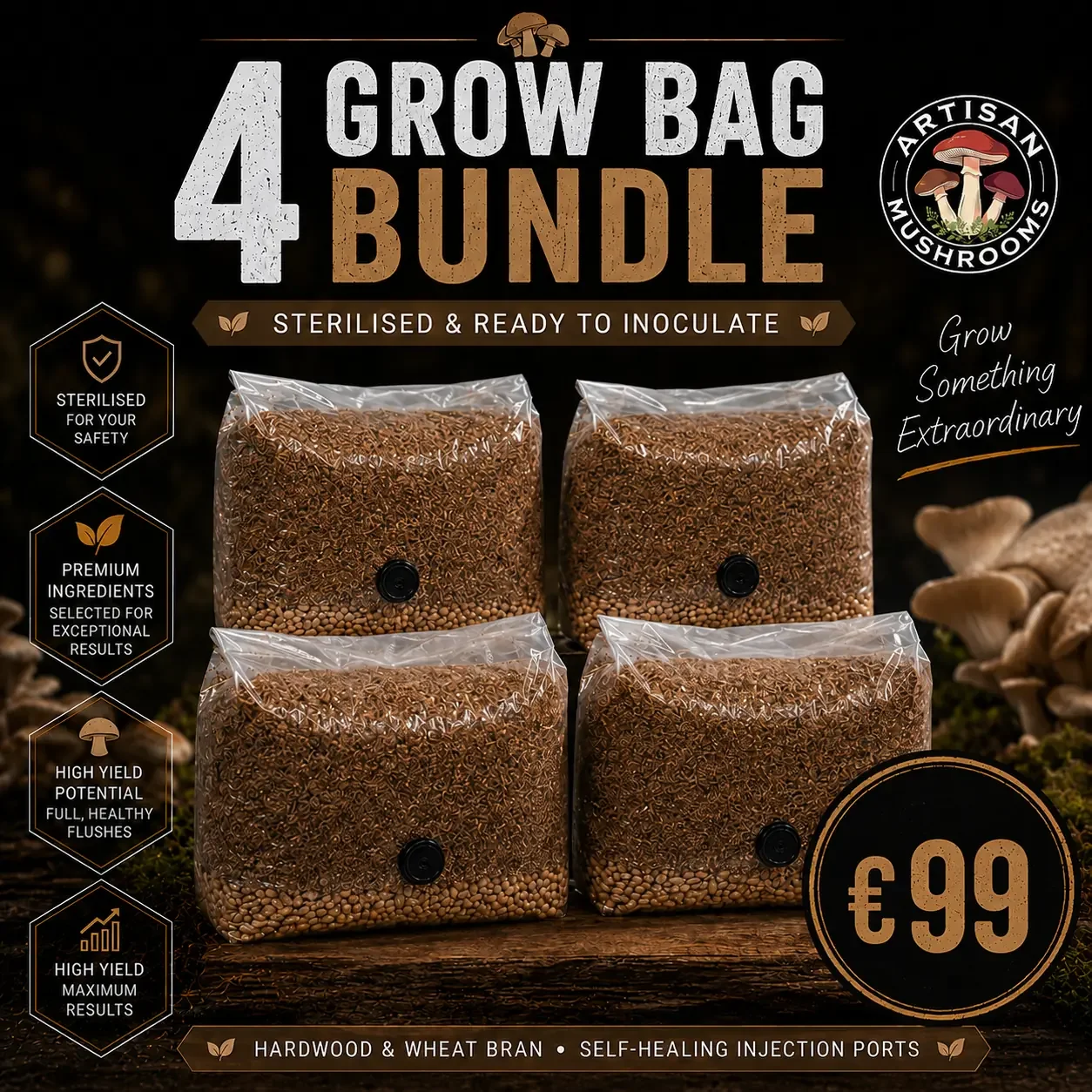
Each bag contains approximately 2 kg of properly hydrated hardwood substrate supplemented with wheat bran. The substrate is pressure sterilised and sealed inside a filter-patch grow bag to help protect it from contamination.
The bag also includes a self-healing injection port, allowing liquid culture to be injected directly into the substrate without opening the bag.
It removes the need to source, hydrate, supplement and pressure sterilise your own hardwood substrate.
What does the hardwood grow bag contain?
The substrate contains a blend of:
Hardwood material, including suitable hardwoods such as oak and beech
Wheat bran for additional nutrition
Water at an appropriate hydration level
The hardwood provides the main structural and nutritional material required by wood-decaying mushroom species.
Wheat bran provides additional nutrients that can support faster colonisation and improved mushroom production.
Because supplemented hardwood is nutrient-rich, it must be properly sterilised before inoculation. Each bag is pressure sterilised and sealed before shipping.
Is the hardwood grow bag ready to use?
Yes. The grow bag arrives hydrated, pressure sterilised and ready to inoculate.
You do not need to:
Add water
Add wheat bran
Mix the substrate
Pasteurise the substrate
Pressure sterilise the bag
Transfer the substrate into another container
Simply select a suitable mushroom liquid culture, clean the injection port and inject the culture using a sterile needle.
The bag must remain sealed during colonisation.
Is the substrate sterile or pasteurised?
The substrate is pressure sterilised rather than simply pasteurised.
This is important because the hardwood is supplemented with wheat bran. Nutrient-rich supplemented substrates are more vulnerable to mould and bacterial contamination than plain wood or straw.
Pressure sterilisation greatly reduces the microorganisms present in the substrate, providing the mushroom culture with a clean environment in which to establish.
The bag should still be handled carefully because the substrate can become contaminated if the bag, filter patch or injection port is damaged.
Which mushrooms can be grown in the hardwood grow bag?
The bag is suitable for many hardwood-loving mushroom species, including:
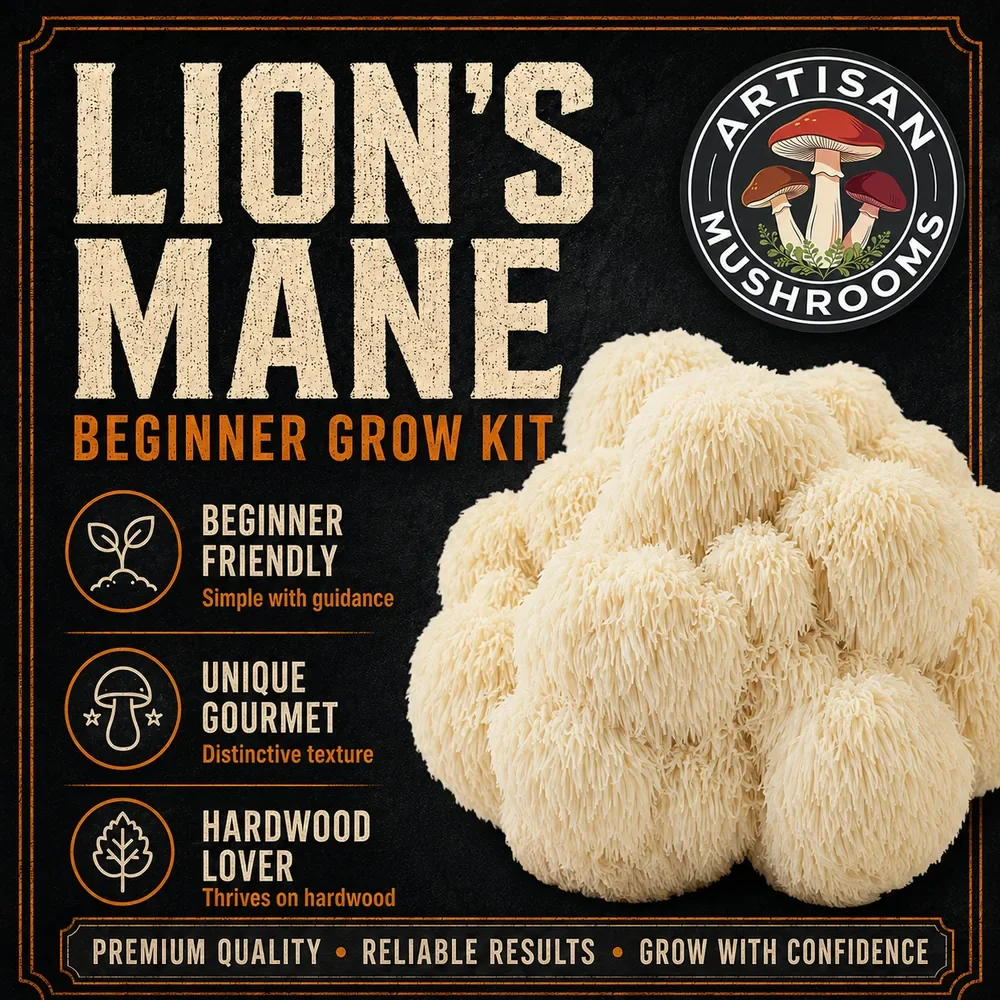
Lion’s Mane
Heat Tolerant Lion’s Mane
Lion’s Pride
Bear’s Head Lion’s Mane
Shiitake
Shiitake 3790
Heat Tolerant Shiitake
Shiitake Straw
Chestnut Mushroom
Maitake
Enoki
Turkey Tail
Red Reishi
Black Reishi
Yellow Reishi
Antler Reishi
Hemlock Reishi as an experimental option
King Oyster
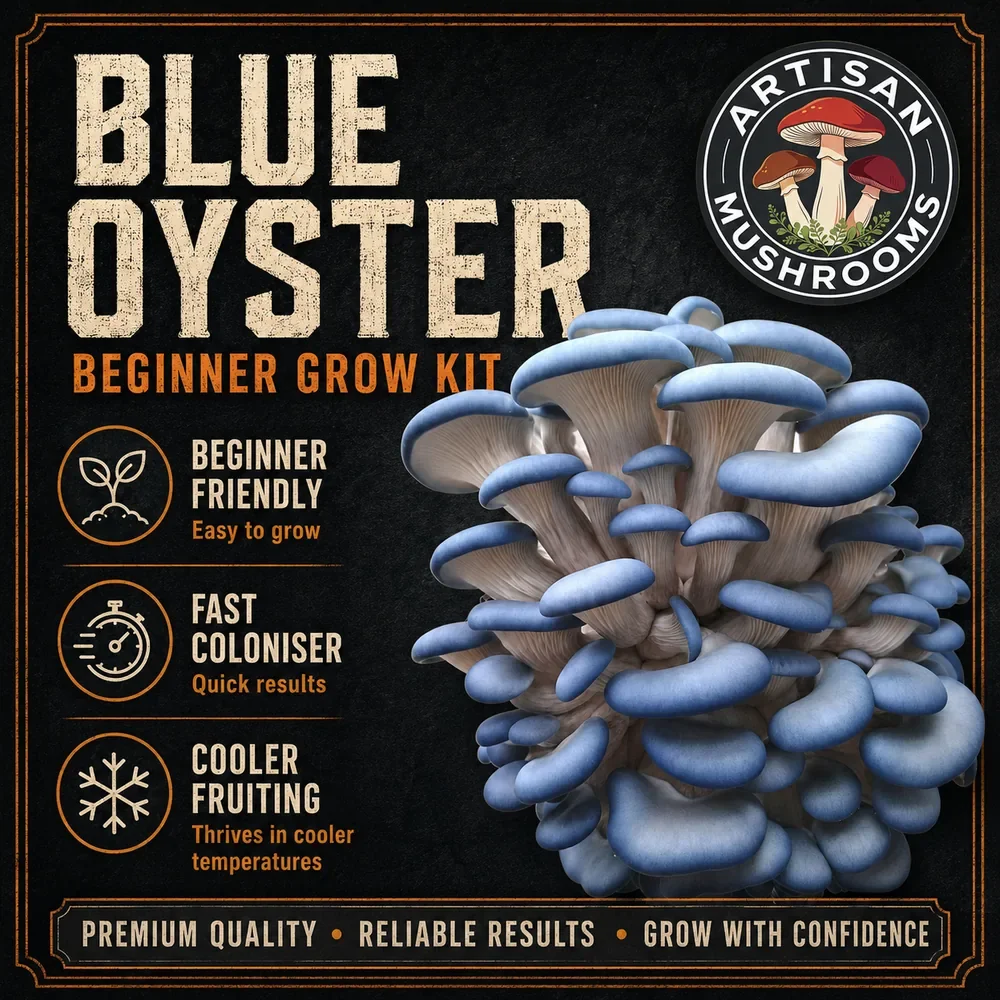
Blue Oyster
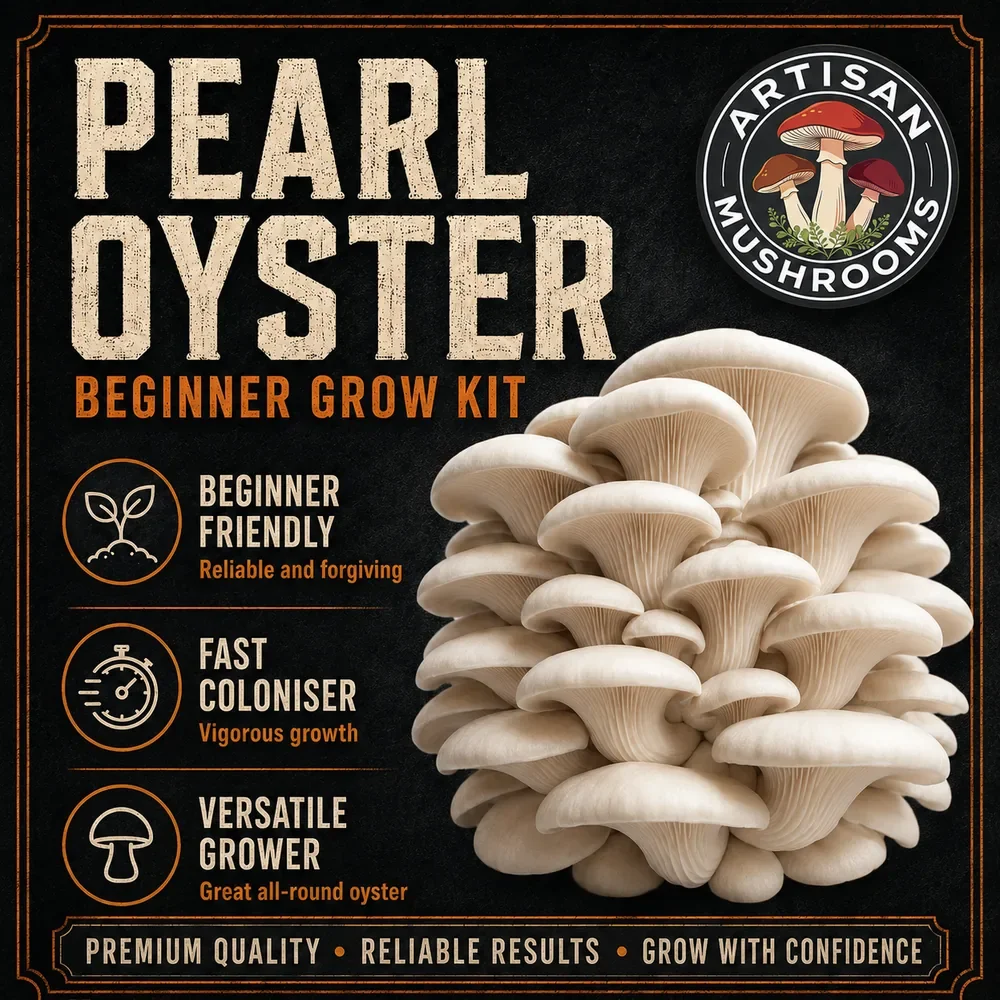
Pearl Oyster
Golden Oyster
Pink Oyster
Black Pearl Oyster
King Blue Oyster
Tarragon Oyster
Chicken of the Woods as an experimental option
Different species require different colonisation periods, fruiting temperatures and bag-opening methods.
Browse our full selection of mushroom liquid cultures to choose a compatible species.
Which mushrooms are not suitable for this grow bag?
The hardwood grow bag is not suitable as a complete ready-to-fruit substrate for every mushroom species.
It is not the recommended substrate for:
Portobello or Button mushrooms, which require compost and a casing layer
Cordyceps militaris, which requires a specialised nutrient-rich substrate
Wine Cap, which performs best in outdoor woodchip or straw beds
Golden Wine Cap, which performs best in outdoor woodchip or straw beds
Chanterelles, which require a relationship with living tree roots
Hedgehog Mushroom, which requires a relationship with living tree roots
The bag may be used as culture-expansion material for some outdoor or mycorrhizal projects, but it should not be described as a ready-to-fruit indoor block for those species.
Can I inject liquid culture directly into the bag?
Yes. The bag is specifically designed to be inoculated directly with mushroom liquid culture.
The self-healing injection port allows a sterile needle to enter the bag without creating an open hole in the plastic.
After the needle is removed, the injection port reseals around the puncture.
A basic direct-inoculation process is:
Wash your hands thoroughly.
Clean the working surface.
Gently shake the liquid culture syringe to distribute the mycelium.
Attach a new sterile needle.
Wipe the injection port with an alcohol wipe.
Allow the alcohol to evaporate.
Insert the needle through the centre of the injection port.
Inject the liquid culture into several nearby areas of the substrate.
Remove the needle carefully.
Leave the bag sealed during colonisation.
Do not inject through the plastic beside the port.
How much liquid culture should I inject?
Approximately 5 to 10 ml of liquid culture is suitable for one 2 kg hardwood grow bag.
A full 10 ml syringe can be used, provided the culture is clean and the substrate is correctly hydrated.
Using more liquid culture does not necessarily produce faster colonisation. Excessive liquid can create overly wet areas and increase the risk of bacterial contamination.
Distribute the liquid across several nearby areas rather than depositing the entire amount in one location.
Should I inject the liquid in one place or several places?
The liquid culture can be distributed across several areas of the substrate.
After inserting the needle through the self-healing injection port, angle the needle carefully in different directions and inject small amounts into several nearby sections.
This provides several starting points from which the mushroom mycelium can grow.
Avoid moving the needle aggressively inside the bag, as this could puncture the plastic or damage the injection port.
You do not need to reach every part of the substrate. The mycelium will gradually spread from the inoculated areas.
Can I use grain spawn instead of liquid culture?
Yes. Fully colonised grain spawn can be mixed with the hardwood substrate.
Using grain spawn is the traditional method for inoculating supplemented hardwood blocks because each colonised grain creates a separate growth point.
This can provide:
Faster colonisation
More even mycelial distribution
A shorter period during which contamination could establish
Strong and consistent substrate colonisation
However, using grain spawn requires opening the bag and mixing the grain into the substrate under very clean conditions.
Direct liquid-culture inoculation through the self-healing port is simpler and does not require opening the bag.
Customers who want to produce grain spawn first can inoculate our 2kg Sterilised Wheat Grain Bag.
Is liquid culture or grain spawn better?
Both methods can work.
Direct liquid-culture inoculation is best for growers who want the simplest process. The bag remains sealed, reducing the number of handling steps.
Grain spawn may be preferable for experienced growers because it provides a larger amount of established mycelium and distributes it more evenly through the substrate.
Direct liquid culture offers:
No need to open the substrate bag
Fewer cultivation stages
Less specialist equipment
A straightforward process for beginners
Grain spawn offers:
More inoculation points
Faster substrate colonisation
More even growth
Greater control over the spawn rate
The best method depends on the grower’s equipment, experience and preferred cultivation process.
Does the bag include mushroom culture?
No. The hardwood grow bag contains sterilised substrate only.
Mushroom liquid culture must be purchased separately.
This allows you to choose the mushroom species you want to grow rather than receiving a pre-inoculated block.
Browse our mushroom liquid cultures to select a suitable variety.
Does the bag include a needle or alcohol wipe?
The hardwood substrate bag itself does not normally require a separate needle or alcohol wipe when purchased without liquid culture.
Our individual liquid-culture syringes include:
One 10 ml liquid culture syringe
One sterile 18G needle
One alcohol wipe
These items provide what is required to inoculate one hardwood grow bag using liquid culture.
Always use a new sterile needle for inoculation.
What is the self-healing injection port?
The self-healing injection port is the small rubber or silicone inoculation point fitted to the bag.
It allows a sterile needle to pass into the substrate while the bag remains closed.
When the needle is removed, the flexible material reseals around the puncture. This helps maintain a protected environment inside the bag.
Before inoculation:
Clean the port with an alcohol wipe.
Allow it to dry.
Insert the needle through the centre.
Remove the needle carefully after injecting.
Do not remove the injection port from the bag.
What is the filter patch for?
The filter patch allows the mushroom mycelium to exchange gases while helping prevent airborne contaminants from entering the bag.
Growing mycelium consumes oxygen and releases carbon dioxide.
The filter patch allows this gas exchange to occur without leaving the bag open.
Do not:
Cover the filter patch with tape
Allow the patch to remain wet
Inject liquid through the patch
Cut the patch
Press the patch tightly against the substrate
Store the bag with no air space around the patch
The filter patch is required during colonisation.
How should I store the grow bag before inoculation?
Keep the unopened hardwood grow bag in a cool, clean and dry location away from direct sunlight.
Avoid:
Freezing the bag
Leaving it in a hot vehicle
Placing it beside a heater
Storing it in direct sunlight
Compressing the filter patch
Allowing the bag to be punctured
Frequently moving or handling it unnecessarily
For the best results, inoculate the bag as soon as reasonably possible after receiving it.
Long storage periods can gradually reduce substrate quality and increase the chance of hidden damage or contamination.
Should the grow bag be refrigerated before use?
Refrigeration is not normally required for an uninoculated hardwood substrate bag if it will be used promptly.
Store it in a cool, stable indoor location away from heat and sunlight.
If the bag must be stored for an extended period, cooler conditions may help slow changes within the substrate. However, do not freeze it.
Before inoculation, allow a cold bag to return to normal room temperature. Injecting refrigerated substrate can slow the initial establishment of the mushroom culture.
Should I mix the bag before inoculating it?
The substrate should already be evenly mixed and properly hydrated.
There is normally no need to open or remix the bag before direct liquid-culture inoculation.
If the substrate has settled during shipping, gently redistribute it through the outside of the sealed bag without damaging the filter patch or injection port.
Avoid pressing the substrate into an extremely dense block. The mycelium requires air spaces within the material.
Do not open the bag to mix it before inoculation.
Where should I keep the bag during colonisation?
Keep the inoculated bag in a clean indoor location with a stable temperature appropriate for the mushroom species.
Suitable locations may include:
A clean shelf
A cupboard with some air circulation
A dedicated incubation area
A clean storage room
A temperature-controlled growing space
Avoid:
Direct sunlight
Radiators
Hot presses
Damp floors
Bathrooms
Garages with major temperature changes
Areas containing mould
Locations where pets or children may damage the bag
The filter patch must remain unobstructed.
Does the bag need darkness during colonisation?
Complete darkness is not essential for most mushroom species.
Low ambient light or normal indirect room light is generally acceptable during colonisation.
Avoid direct sunlight because it can:
Overheat the substrate
Create condensation
Dry sections of the bag
Damage the developing mycelium
The most important factors during colonisation are suitable temperature, a clean environment and filtered gas exchange.
What temperature should the bag be kept at during colonisation?
The correct colonisation temperature depends on the mushroom species.
A practical general range for many hardwood-loving gourmet mushrooms is approximately 20°C to 25°C.
Some examples include:
Oyster mushrooms: approximately 20°C to 25°C
Lion’s Mane: approximately 20°C to 24°C
Shiitake: approximately 18°C to 24°C
Chestnut: approximately 21°C to 25°C
Maitake: approximately 21°C to 26°C
Reishi: approximately 24°C to 28°C
Enoki: approximately 20°C to 25°C
The inside of the substrate may become warmer than the surrounding room because actively growing mycelium produces heat.
Avoid placing several colonising bags tightly together. Leave space between them so excess heat can escape.
A digital thermometer and hygrometer can help monitor the growing environment.
How long does the hardwood grow bag take to colonise?
Colonisation time varies according to:
Mushroom species
Incubation temperature
Amount of liquid culture used
Culture vigour
Inoculation method
Substrate density
Bag size
Whether liquid culture or grain spawn was used
Fast-growing Oyster mushrooms may colonise considerably faster than Shiitake, Maitake or Reishi.
Visible growth may appear within several days or may take one to two weeks.
Complete colonisation may take approximately four to twelve weeks. Slow-growing species or directly inoculated bags may require longer.
A lack of immediate visible growth does not necessarily mean that the inoculation has failed.
What does healthy mycelium look like?
Healthy mycelium normally appears white or cream-coloured.
Depending on the mushroom species, it may look:
Fine and wispy
Cotton-like
Dense and solid
Rope-like
Patchy during early growth
Thick and leathery
Slightly yellow or tan in older areas
Lion’s Mane and Shiitake mycelium can appear finer and less densely white than Oyster mushroom mycelium.
Reishi may form a thick white surface layer and can produce amber droplets.
Shiitake blocks may eventually develop brown colouring during maturation. This is normal for a mature Shiitake block.
Should I break up or massage the bag during colonisation?
It is not normally necessary to break up a hardwood grow bag.
Hardwood fruiting substrate is different from loose grain. It is generally allowed to colonise and consolidate into a firm block.
Gently redistributing a loose substrate during early colonisation may spread the mycelium, but aggressive mixing can:
Damage the filter patch
Puncture the bag
Break developing mycelial connections
Compact the substrate
Introduce contaminated air through damaged areas
For most growers, the safest option is to leave the bag undisturbed while the mycelium colonises.
How do I know when the bag is fully colonised?
A fully colonised bag should show healthy mycelial growth throughout the substrate.
Signs include:
White or species-appropriate mycelium visible across most of the bag
The substrate becoming firm and held together
No large loose or uncolonised areas
No spreading green, black, pink or other unusual mould colours
No foul or sour smell
No large wet or slimy sections
Some species require additional maturation after visible colonisation.
For example:
Shiitake should popcorn and develop a brown outer surface.
Maitake benefits from additional consolidation.
Reishi may require time to form a dense mature block.
Chestnut can benefit from one or two additional weeks after colonisation.
Lion’s Mane may attempt to fruit before the block appears completely white.
Follow the cultivation requirements of the selected species.
Can the bag begin fruiting before it looks fully colonised?
Yes. Some species, especially Lion’s Mane, may begin producing small fruiting bodies inside the bag before the block appears completely white.
If healthy fruiting growth appears:
Identify the strongest developing fruiting point.
Confirm that the surrounding substrate appears clean.
Make a suitable opening close to the fruiting body.
Move the bag into the correct fruiting environment.
Maintain humidity and fresh-air exchange.
Do not confuse mushroom primordia with mould.
Healthy primordia normally emerge from established white mycelium and continue developing into recognisable mushroom tissue.
What are the yellow or amber droplets inside the bag?
Small yellow, amber or brown droplets may be fungal metabolites.
They can appear when the mycelium is:
Actively digesting the substrate
Consolidating the block
Experiencing mild environmental stress
Becoming too warm
Remaining colonised for an extended period
Responding to excess moisture
A small amount of clear or amber liquid does not necessarily indicate contamination.
Large quantities of dark liquid combined with sour smells, slimy substrate or spreading unusual colours may indicate bacterial contamination or another problem.
How can I tell if the bag is contaminated?
Possible contamination signs include:
Green mould
Black mould
Pink or red growth
Bright orange growth unrelated to the mushroom species
Grey cobweb-like mould spreading rapidly
Wet or slimy uncolonised substrate
Sour, fermented or rotten smells
Grain-like bacterial slime
Rapidly spreading discolouration
A bag swelling excessively without healthy mycelium
Some natural mushroom pigmentation can resemble contamination.
Examples include:
Shiitake browning during maturation
Reishi producing yellow or amber metabolites
Chicken of the Woods producing yellow or orange pigmentation
Older mycelium developing cream or tan areas
When uncertain, isolate the bag from other mushroom grows and monitor it without opening it indoors.
What should I do if the bag becomes contaminated?
Separate the affected bag from clean cultures and substrates.
Do not open a heavily contaminated bag inside your home, laboratory or growing area. Opening it can release mould spores into the environment.
If contamination is extensive:
Keep the bag sealed.
Place it inside another bag if necessary.
Remove it from the cultivation area.
Dispose of it safely.
Clean the surrounding shelf and working area.
Wash your hands after handling it.
Do not attempt to remove a patch of mould from a sealed supplemented substrate bag. Contamination may have spread farther inside than is visible from the outside.
Why is there no visible growth after inoculation?
Visible growth can be delayed by:
Cool incubation temperatures
A slow-growing mushroom species
A small amount of liquid culture
Mycelium beginning inside the centre of the substrate
Culture that was not shaken before use
An old or weakened liquid culture
A blocked needle
Liquid being deposited into one deep location
Excessively dry or wet substrate
Contamination
Unsuitable mushroom genetics
Allow at least one to two weeks before assuming that the inoculation has failed.
Check that the bag is being kept within the appropriate temperature range.
Do not repeatedly inject additional liquid culture into the bag. Adding more liquid can increase moisture and contamination risk.
Why is the substrate very wet?
Some condensation and visible moisture can be normal, especially when the room temperature changes.
The substrate should appear hydrated but not waterlogged.
Excess moisture may result from:
Injecting too much liquid culture
High incubation temperatures
Repeated temperature changes
The bag being stored in direct sunlight
Bacterial activity
Water collecting because the bag is positioned incorrectly
If the substrate develops wet, slimy areas combined with a sour smell or stalled mycelial growth, bacterial contamination may be present.
Do not open the bag to drain it.
Why is there condensation inside the bag?
Condensation can form when the temperature inside the colonising substrate differs from the surrounding air.
Actively growing mycelium produces a small amount of heat. Moisture may then condense against the cooler plastic.
A moderate amount of condensation is common and does not automatically indicate a problem.
Reduce excessive condensation by:
Maintaining stable room temperatures
Keeping the bag away from direct sunlight
Avoiding heaters and radiators
Leaving space between bags
Preventing the bag from overheating
Keeping the filter patch unobstructed
Does the bag need to be opened during colonisation?
No. Keep the bag sealed throughout colonisation.
The filter patch provides the required gas exchange.
Opening the bag during colonisation exposes the nutrient-rich substrate to mould spores and bacteria in the surrounding air.
Only open or cut the bag when:
The substrate is fully colonised and ready to fruit
The species requires the plastic to be removed
Healthy mushrooms have begun fruiting inside the bag
Fully colonised grain spawn is being mixed into the substrate under clean conditions
For direct liquid-culture inoculation, the bag should remain sealed until fruiting.
How should the bag be opened for fruiting?
The correct opening method depends on the mushroom species.
Side-fruiting species
Lion’s Mane, Bear’s Head and many Oyster mushrooms can be fruited through a small X-shaped cut or short slit in the side of the bag.
This directs the mushrooms towards one fruiting location while keeping the rest of the block covered.
Top-fruiting species
King Oyster, Enoki, Maitake and Chestnut can be fruited from the top of the bag.
The upper plastic can be opened, folded or rolled down while leaving the sides of the substrate covered.
Fully exposed blocks
Mature Shiitake blocks are generally removed from the bag after they have fully colonised, popcorned and browned.
Mostly enclosed fruiting
Reishi can be grown as antlers inside the humid air space of a mostly closed bag. Increasing fresh-air exchange encourages shelf-shaped caps.
Always follow the fruiting requirements of the specific mushroom culture used.
Why should I leave most of the plastic around the block?
The plastic helps retain moisture inside the substrate.
Removing too much plastic can:
Dry out the block
Encourage numerous small fruiting points
Increase contamination exposure
Reduce the number of strong clusters
Cause the substrate to crack
Shorten the productive life of the block
For most species, expose only the area required for fruiting.
Shiitake is a major exception because a mature browned Shiitake block is normally removed from the bag before fruiting.
What fruiting conditions are required?
Fruiting requirements vary by mushroom species.
Most hardwood-loving mushrooms require a combination of:
High humidity
Fresh-air exchange
Gentle indirect light
A species-appropriate temperature
A fully colonised and mature substrate
An appropriate opening in the bag
A practical general humidity range is approximately 85% to 95% while pins are forming.
Fresh-air exchange is important because developing mushrooms consume oxygen and release carbon dioxide.
The exact balance depends on the species. Oyster mushrooms require frequent fresh air, while antler Reishi is deliberately grown under elevated carbon dioxide.
Use a digital thermometer and hygrometer to monitor the growing environment.
Does the bag need a fruiting chamber?
A fruiting chamber is recommended when the surrounding room cannot maintain suitable humidity and fresh-air exchange.
Possible fruiting spaces include:
A purpose-built mushroom fruiting chamber
A humidity-controlled grow tent
A modified plastic storage container
A clean greenhouse or polytunnel
A sheltered humid growing area
The chamber should provide humidity without becoming stagnant.
Do not seal the fruiting block inside an airtight container. Mushrooms require oxygen and regular fresh-air exchange.
Can I mist the grow bag?
Mist the surrounding fruiting environment rather than repeatedly soaking the mushrooms or exposed substrate.
Fine misting can help maintain humidity, but large water droplets should not remain continuously on developing mushrooms.
Direct spraying can cause:
Bacterial spotting
Yellowing
Damaged pins
Slimy caps
Aborted fruiting bodies
Excess water collecting in the bag
The unopened colonising bag does not need to be misted.
Only manage humidity after fruiting conditions have been introduced.
Does the bag need light for fruiting?
Most mushroom species benefit from gentle indirect light during fruiting.
Suitable lighting includes:
Indirect daylight
Diffused window light
A low-intensity grow light
A regular day-and-night cycle
Direct sunlight should be avoided because it can overheat and dry the block.
Strong lighting is unnecessary. Mushrooms do not use light in the same way as plants, but light helps initiate fruiting and guides the direction of growth for many species.
How many flushes can the bag produce?
A healthy hardwood grow bag may produce multiple flushes.
The number and size of flushes depend on:
Mushroom species
Culture genetics
Substrate moisture
Environmental conditions
Contamination
Harvest timing
Damage to the block
Available nutrition
Many species can produce two or three flushes. Later flushes are often smaller than the first.
Allow the block to rest after harvesting and maintain suitable moisture without keeping it continuously wet.
Some species, including Shiitake, may benefit from soaking between flushes. Other species should be rehydrated more cautiously.
How should I care for the bag after the first harvest?
After harvesting:
Remove remaining mushroom tissue from the fruiting opening.
Keep the block in a clean environment.
Allow it to rest for approximately one to two weeks.
Prevent it from drying completely.
Maintain moderate humidity and airflow.
Return it to suitable fruiting conditions.
Continue monitoring for contamination.
The exact resting and rehydration method depends on the mushroom species.
Avoid leaving old stem bases or decaying mushroom tissue attached to the block because they can encourage contamination.
Can the grow bag be reused?
The plastic bag and spent substrate are not designed to be sterilised and reused for a new indoor grow.
After the mushrooms have finished producing, the remaining substrate can be:
Added to a compost heap
Used as garden organic matter
Buried beneath mulch
Added to an outdoor mushroom bed
Used experimentally to inoculate fresh wood chips
Spread around non-edible ornamental plants
Do not reuse a contaminated block indoors.
Remove any plastic, injection port or filter material before composting the spent substrate.
Can the spent substrate produce mushrooms outdoors?
Yes. A spent but healthy hardwood block may occasionally produce additional mushrooms after being placed outdoors.
The block can be:
Buried partly beneath hardwood mulch
Added to a shaded woodchip bed
Placed beneath shrubs
Broken up and mixed with fresh hardwood chips
Added to a composting area
Outdoor fruiting depends on temperature, rainfall, moisture, competing organisms and the amount of nutrition remaining.
Additional mushrooms are possible but cannot be guaranteed.
What should I do if the bag is punctured during delivery?
Inspect the bag before inoculation.
Check for:
Tears
Needle-sized punctures outside the injection port
A damaged seal
A detached filter patch
Leaking substrate
Air entering through a visible hole
Do not inoculate a bag that has clearly lost its sealed condition.
Photograph the damaged packaging and bag before opening or disposing of anything, then contact us as soon as possible.
Minor creasing or trapped air inside the bag is normal and does not mean the bag has been punctured.
Why does the bag contain an air space?
The air space allows filtered gas exchange and provides room for the substrate and mycelium to breathe.
It may also provide space for species such as Reishi or Maitake to begin developing fruiting structures.
Do not remove all the air by pressing the plastic tightly against the substrate.
Keep the filter patch positioned above the substrate whenever possible.
Is the bag guaranteed to produce mushrooms?
The bag provides a properly prepared and sterilised substrate, but successful mushroom production depends on factors outside the substrate itself.
These include:
The cleanliness and viability of the culture
Inoculation technique
Colonisation temperature
Mushroom genetics
Complete substrate colonisation
Fruiting temperature
Humidity
Fresh-air exchange
Lighting
Bag-opening method
Contamination control
Mushroom cultivation involves living organisms, so exact colonisation times, yields and flush numbers cannot be guaranteed.
Following the cultivation requirements of the chosen species gives the best chance of success.
Is the hardwood grow bag suitable for beginners?
Yes. The bag is designed to simplify hardwood mushroom cultivation for beginners and experienced growers.
It removes several difficult preparation stages, including:
Sourcing hardwood ingredients
Measuring supplements
Hydrating the substrate
Loading filter bags
Installing an injection port
Pressure sterilising the substrate
Cooling the bag without contamination
A beginner can inject a compatible liquid culture directly through the self-healing port and leave the bag sealed during colonisation.
The grower will still need to provide the correct temperature, humidity, fresh air and fruiting method for the selected mushroom species.
Where are the hardwood grow bags prepared and shipped from?
Our Sterilised Hardwood Mushroom Grow Bags are prepared and pressure sterilised in Ireland.
Each bag is sealed and packaged to protect the sterile substrate during delivery.
Fast shipping is available to customers across Ireland, the UK, Europe, the United States and Canada.