 Image 1 of 3
 Image 2 of 3
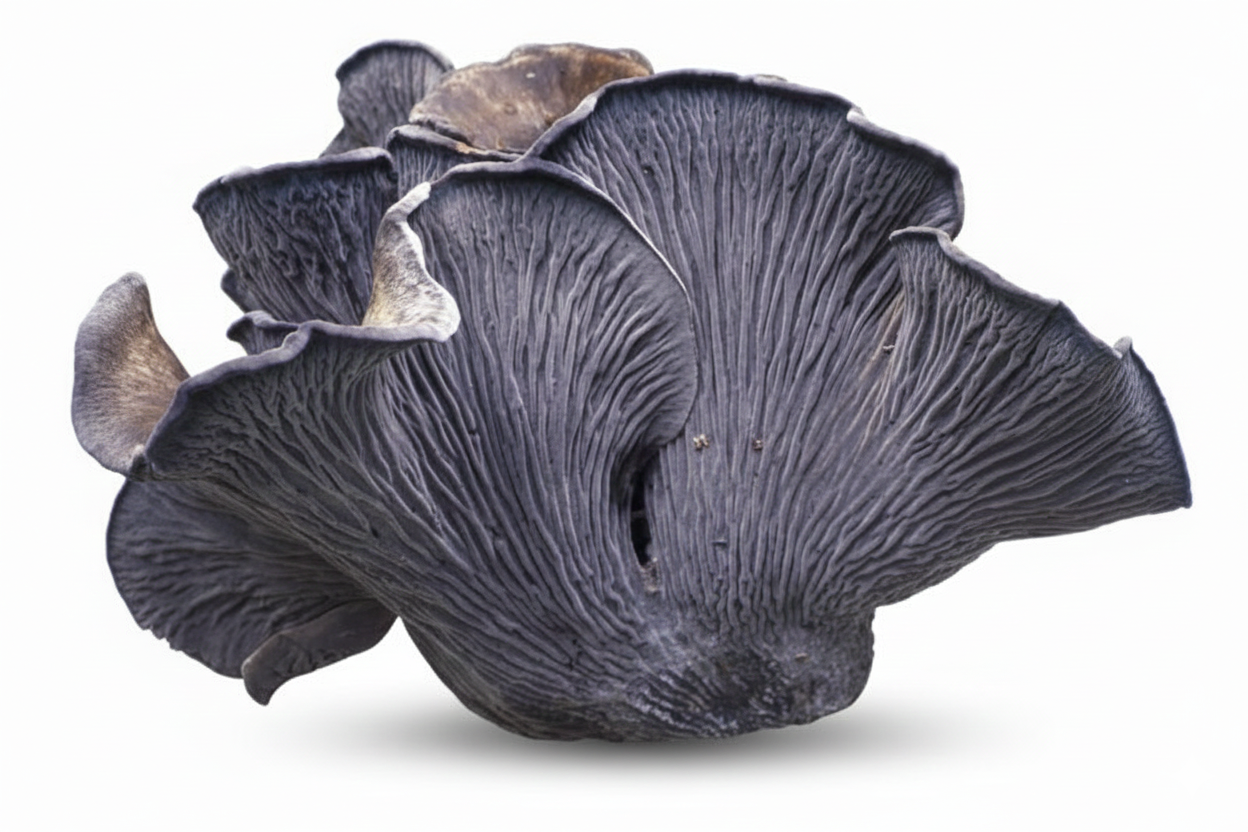 Image 3 of 3
Blue Chanterelle Liquid Culture FAQ
What is the scientific name of Blue Chanterelle?
The scientific name commonly used for Blue Chanterelle is Polyozellus multiplex. It is also known as the Clustered Blue Chanterelle, Purple Chanterelle or Blue Fan Mushroom.
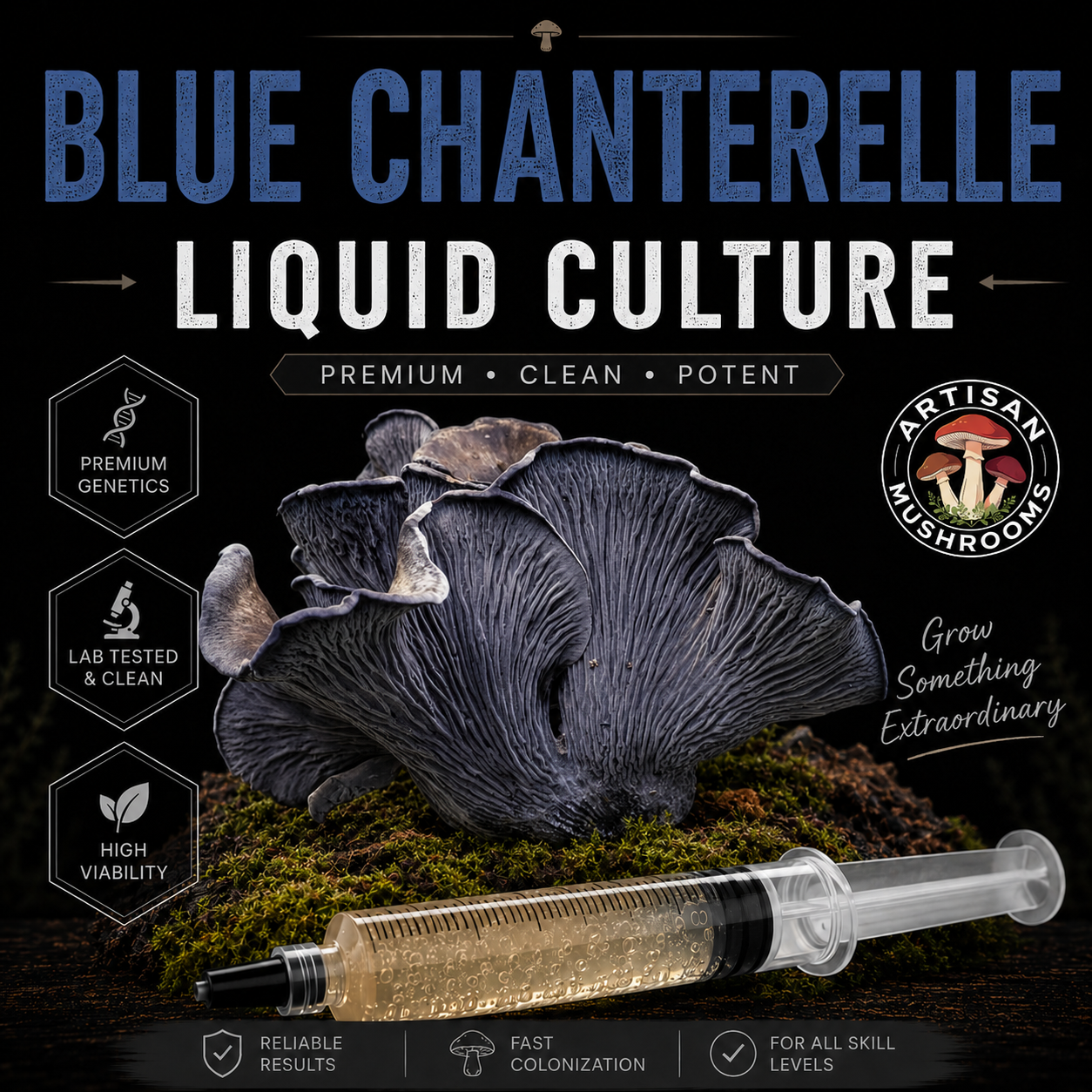
Blue Chanterelle produces distinctive clusters of blue, purple or blue-black funnel-shaped fruiting bodies. The caps often develop ruffled edges and may grow together from a shared base.
Despite its common name, Blue Chanterelle does not belong to the true Chanterelle genus, Cantharellus. However, it has a similar funnel-shaped appearance and is commonly grouped with chanterelle-like woodland mushrooms.
What substrate is best for growing Blue Chanterelle?
Blue Chanterelle is a mycorrhizal woodland mushroom, meaning it eventually needs to establish a relationship with the living roots of a suitable host tree.
The liquid culture can first be inoculated into sterilised grain or sterilised hardwood sawdust. Once the material is well colonised with Blue Chanterelle mycelium, it can be planted around the active root zones of suitable conifer trees.
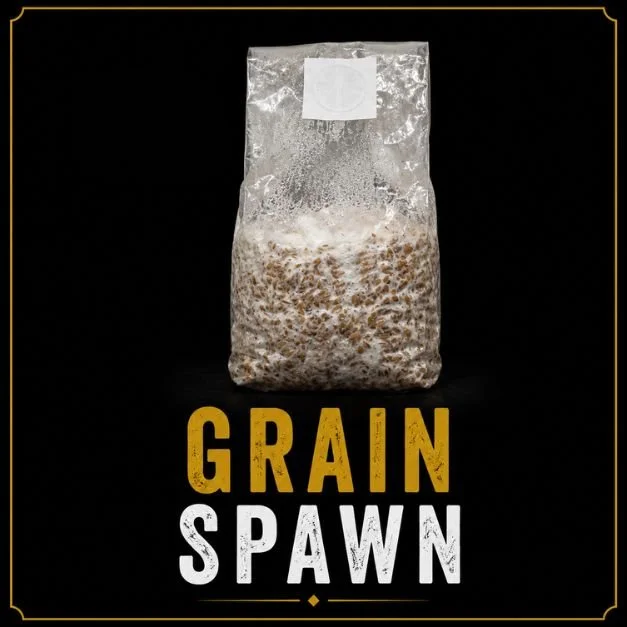
Our 2kg Sterilised Wheat Grain Bag can be used to expand the culture and produce colonised grain for an outdoor tree-inoculation project.
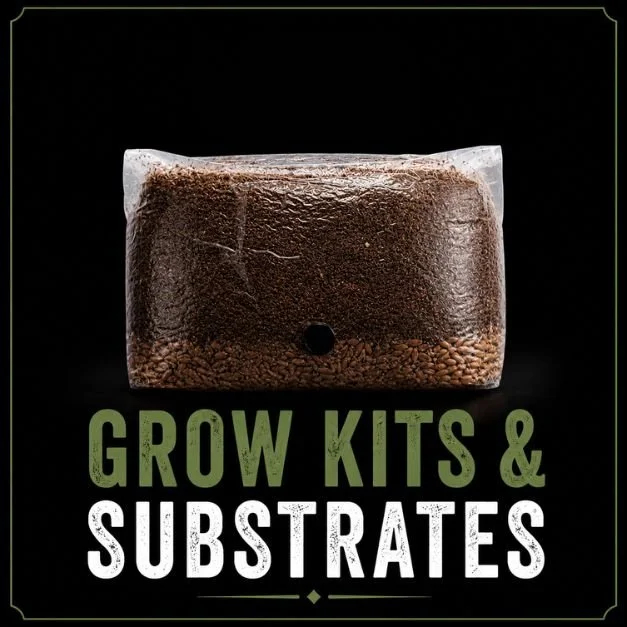
Our 2kg Sterilised Hardwood and Wheat Bran Substrate provides a hardwood sawdust-based medium that can also be inoculated and allowed to colonise before being planted around suitable tree roots.
The colonised grain or hardwood substrate acts as a carrier for the Blue Chanterelle mycelium. It does not remove the need for a living host tree, and mushrooms should not be expected to fruit directly from the bag.
Can I inoculate a grow bag directly?
Yes. Blue Chanterelle liquid culture can be injected directly into our Sterile Hardwood Mushroom Grow Bag using a sterile needle and the self-healing injection port.
The hardwood material can then be allowed to colonise with Blue Chanterelle mycelium. Once colonised, the substrate can be divided and planted around the feeder-root zones of suitable conifer trees.
The grow bag should be used as a culture-expansion and outdoor inoculation medium rather than as a conventional indoor fruiting block.
Blue Chanterelle requires living tree roots and suitable woodland conditions before mushroom production can become possible.
Can Blue Chanterelle liquid culture be used on grain?
Yes. Blue Chanterelle liquid culture can be used to inoculate properly sterilised grain.
The culture can be injected into our 2kg Sterilised Wheat Grain Bag and allowed to spread through the grain.
Once the grain is well colonised, it can be divided and planted at several locations around the active root zone of a suitable conifer tree.
Mixing the colonised grain with surrounding woodland soil, natural needle litter or suitable organic material may help distribute the mycelium across a wider section of the root zone.
The colonised grain is used as an outdoor inoculation carrier. It should not be treated as a ready-to-fruit indoor substrate.
Do you sell sterilised grain and hardwood substrate?
Yes. We offer pre-sterilised wheat grain bags, sterilised hardwood and wheat bran substrate, and ready-to-inoculate hardwood grow bags that can be used to expand Blue Chanterelle mycelium before outdoor planting.
Using prepared and sterilised media removes the need to hydrate, mix and pressure sterilise your own grain or hardwood sawdust. It reduces the amount of specialist equipment required and can help lower the risk of contamination during culture expansion.
A typical cultivation process is:
Inoculate a pre-sterilised grain or hardwood substrate bag with Blue Chanterelle liquid culture.
Allow the grain or hardwood material to become well colonised with mycelium.
Select a healthy conifer tree in an established and relatively undisturbed outdoor location.
Identify several areas around the tree containing fine, actively growing feeder roots.
Plant portions of the colonised grain or hardwood substrate around the root zone.
Replace the original soil and natural needle or leaf litter.
Maintain natural soil moisture without saturating or waterlogging the area.
Allow sufficient time for the mycelium to encounter and potentially associate with the tree roots.
Blue Chanterelle cultivation is a long-term outdoor project. Successful establishment and eventual mushroom production cannot be guaranteed.
Which trees are suitable for Blue Chanterelle cultivation?
Blue Chanterelle is most strongly associated with coniferous woodland.
Potential host trees may include:
Spruce
Fir
Pine
Other compatible conifer species
Spruce and fir are particularly relevant because Blue Chanterelle is frequently found growing in established forests containing these trees.
Choose a healthy tree growing in well-drained soil with natural organic matter, moss or needle litter. Areas containing fine feeder roots are more suitable than planting immediately beside the trunk or against large structural roots.
An established woodland edge or garden containing mature conifers may provide more suitable conditions than heavily cultivated, compacted or frequently disturbed soil.
Compatibility can vary according to the culture, tree species, soil conditions and local climate, so successful establishment cannot be guaranteed.
How is Blue Chanterelle different from Yellow Chanterelle?
Blue Chanterelle and Yellow Chanterelle are both mycorrhizal woodland mushrooms, but they belong to different genera.
Yellow Chanterelle is generally identified as Cantharellus cibarius and produces golden-yellow fruiting bodies.
Blue Chanterelle is commonly identified as Polyozellus multiplex and produces clustered blue, purple or blue-black fruiting bodies.
Yellow Chanterelle may associate with both broadleaf and coniferous trees, depending on the strain and local habitat. Blue Chanterelle is more strongly associated with coniferous woodland, particularly forests containing spruce and fir.
Both cultures can be expanded through sterilised grain or hardwood sawdust before the colonised material is planted around suitable tree root zones.
Is Blue Chanterelle suitable for beginners?
Blue Chanterelle can be attempted by beginners, but it is considerably more difficult and less predictable than Oyster mushrooms, Lion’s Mane or other species grown in prepared fruiting bags.
The initial culture-expansion stage can be simplified by using pre-sterilised grain or a ready-to-inoculate hardwood grow bag.
However, the colonised material must still be planted around the roots of a suitable living conifer. Establishment may take a long time, and visible mycelial growth in the bag does not guarantee that the fungus will successfully associate with the tree or eventually produce mushrooms.
Blue Chanterelle is best suited to patient growers, woodland owners and mycology enthusiasts interested in a long-term outdoor cultivation project.
How should I store the liquid culture?
Keep the Blue Chanterelle liquid culture syringe refrigerated at approximately 2°C to 4°C until you are ready to use it. Do not freeze it.
For the best viability, use the culture within three months of receiving it.
Before inoculation, allow the syringe to come closer to room temperature and shake it gently to distribute the Blue Chanterelle mycelium throughout the nutrient solution.
Always keep the protective cap fitted while the syringe is in storage. Attach a new sterile needle immediately before inoculating grain, hardwood substrate or agar.
How much liquid culture should I use?
The amount of Blue Chanterelle liquid culture required depends on the size and type of growing medium.
For one of our sterile LME agar plates, one or two small drops are normally sufficient.
A small grain jar may require approximately 1 to 2 ml. When inoculating our 2kg Sterilised Wheat Grain Bag or Sterile Hardwood Mushroom Grow Bag, approximately 5 to 10 ml can be used.
Using too much liquid culture can introduce excess moisture into the grain or substrate, which may increase the risk of bacterial contamination.
Always use an appropriate amount for the size and existing moisture content of the growing medium.
Does the syringe contain mushroom spores?
No. Blue Chanterelle liquid culture contains living Polyozellus multiplex mycelium suspended in a sterile nutrient solution.
It is not a mushroom spore solution.
The active mycelium can be used to inoculate sterilised grain, hardwood sawdust substrate or a sterile LME agar plate.
Once the grain or hardwood substrate has become colonised, it can be used to introduce the Blue Chanterelle mycelium around the root zones of suitable conifer trees.
How should colonised material be planted around a tree?
Choose a healthy conifer growing in well-drained soil. Avoid planting immediately against the trunk, as the most useful feeder roots are normally located farther out within the tree’s root zone.
Carefully make several small planting holes around the tree. Place portions of colonised grain or hardwood substrate into the holes close to fine roots, then replace the original soil and natural needle litter.
Distributing the colonised material across several inoculation points gives the mycelium more opportunities to encounter suitable roots.
Avoid cutting or unnecessarily damaging the roots. The area should be kept naturally moist during prolonged dry conditions but should not be saturated or waterlogged.
Do not apply fungicides around the inoculated area. Try to avoid digging, compacting or heavily disturbing the root zone after planting.
What outdoor conditions does Blue Chanterelle need?
Blue Chanterelle requires a suitable living host tree and a successfully established mycorrhizal relationship before mushroom production can occur.
A potentially suitable outdoor environment includes:
Healthy and compatible conifer trees
Well-drained woodland soil
Fine, actively growing feeder roots
Natural moss, needle litter and organic matter
Consistent seasonal soil moisture
A cool or temperate woodland environment
A stable and relatively undisturbed root zone
Natural seasonal changes in temperature and rainfall
Sufficient time for the fungus to establish
Blue Chanterelle is naturally associated with established coniferous forests and may be particularly difficult to establish in exposed, dry or frequently disturbed gardens.
The inoculated area should be protected from severe drying, prolonged waterlogging, soil compaction and unnecessary disturbance.
Unlike mushrooms grown in indoor fruiting chambers, Blue Chanterelle depends on the wider woodland environment. Tree health, soil conditions, competing organisms, climate and seasonal rainfall can all influence establishment and fruiting.
Even when colonised grain or hardwood substrate is successfully planted around suitable roots, mushroom production is not guaranteed.
How long does Blue Chanterelle take to produce mushrooms?
There is no dependable fruiting timetable for Blue Chanterelle cultivation.
The mycelium must survive the transition from the colonised carrier material into the surrounding soil and establish a compatible relationship with the tree roots.
This may take several growing seasons, and successful establishment may not produce visible mushrooms every year.
Weather, rainfall, tree health, soil conditions and seasonal temperatures can all affect whether fruiting occurs.
Blue Chanterelle should therefore be viewed as a patient, long-term woodland cultivation project rather than a quick or predictable indoor mushroom grow.
Where are your Blue Chanterelle cultures shipped from?
All Blue Chanterelle liquid cultures are prepared fresh under sterile laboratory conditions and shipped directly from Ireland.
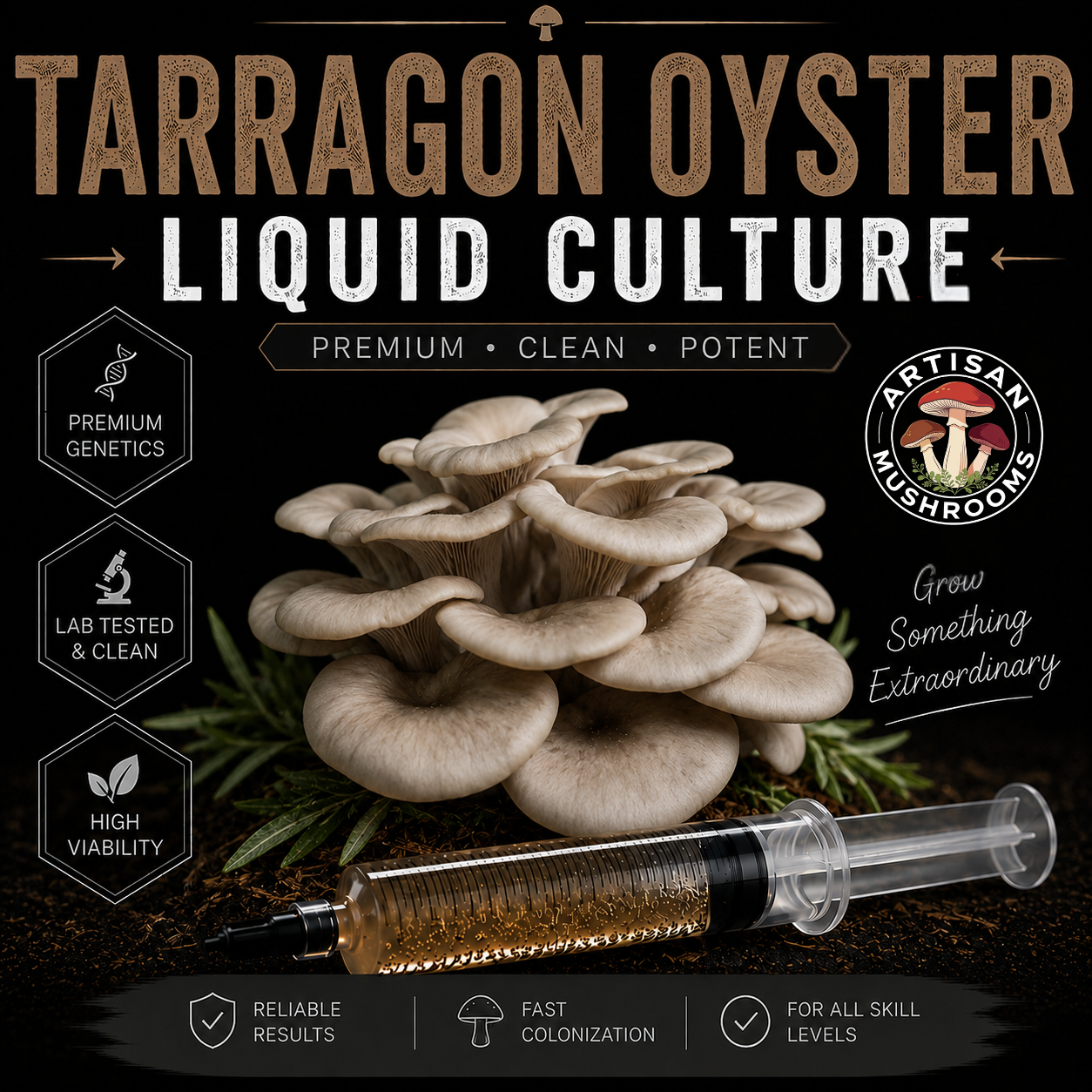
Each order includes a 10 ml Blue Chanterelle liquid culture syringe, a sterile 18G needle and an alcohol wipe.
Fast shipping is available to customers across Ireland, the UK, Europe, the United States and Canada.