 Image 1 of 3
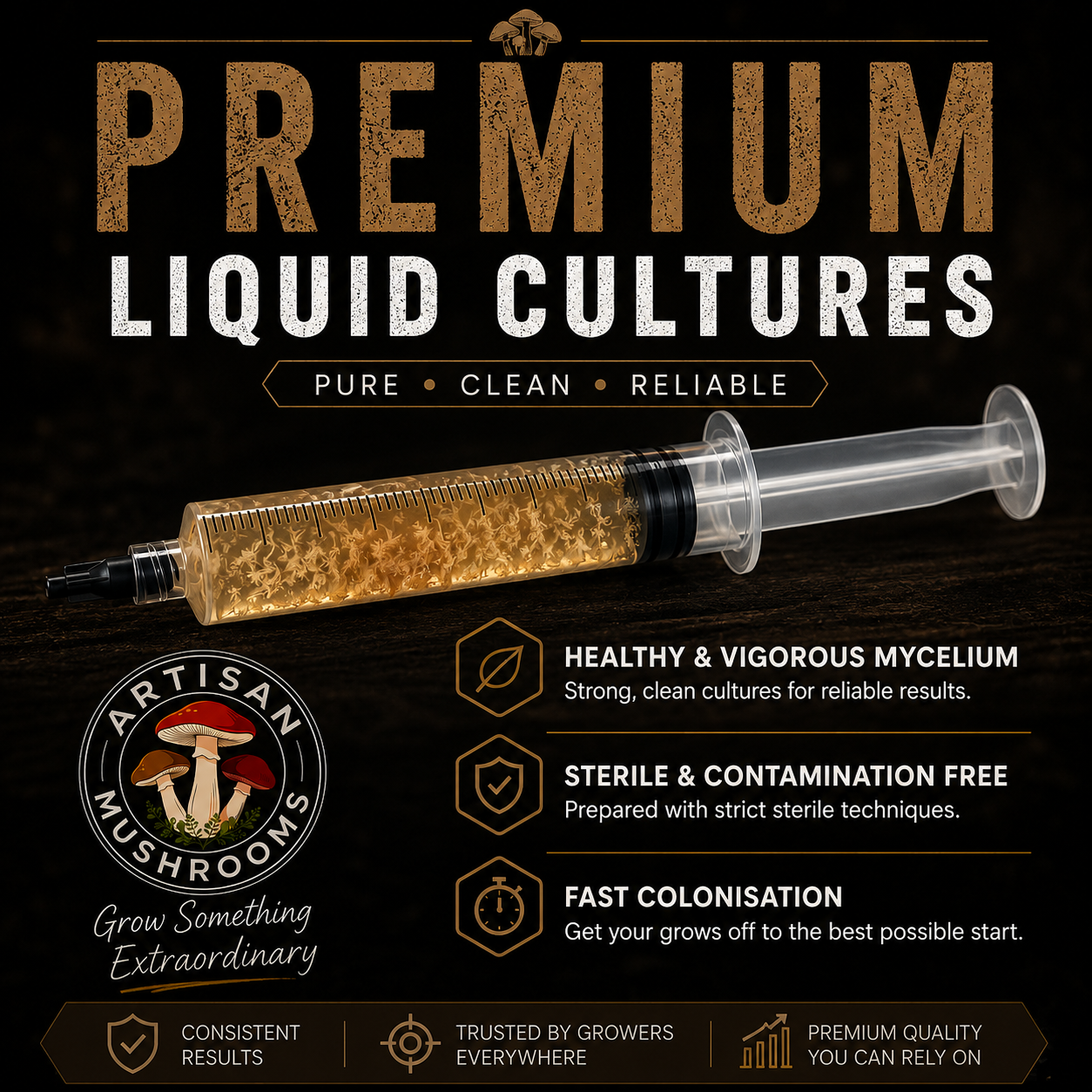 Image 2 of 3
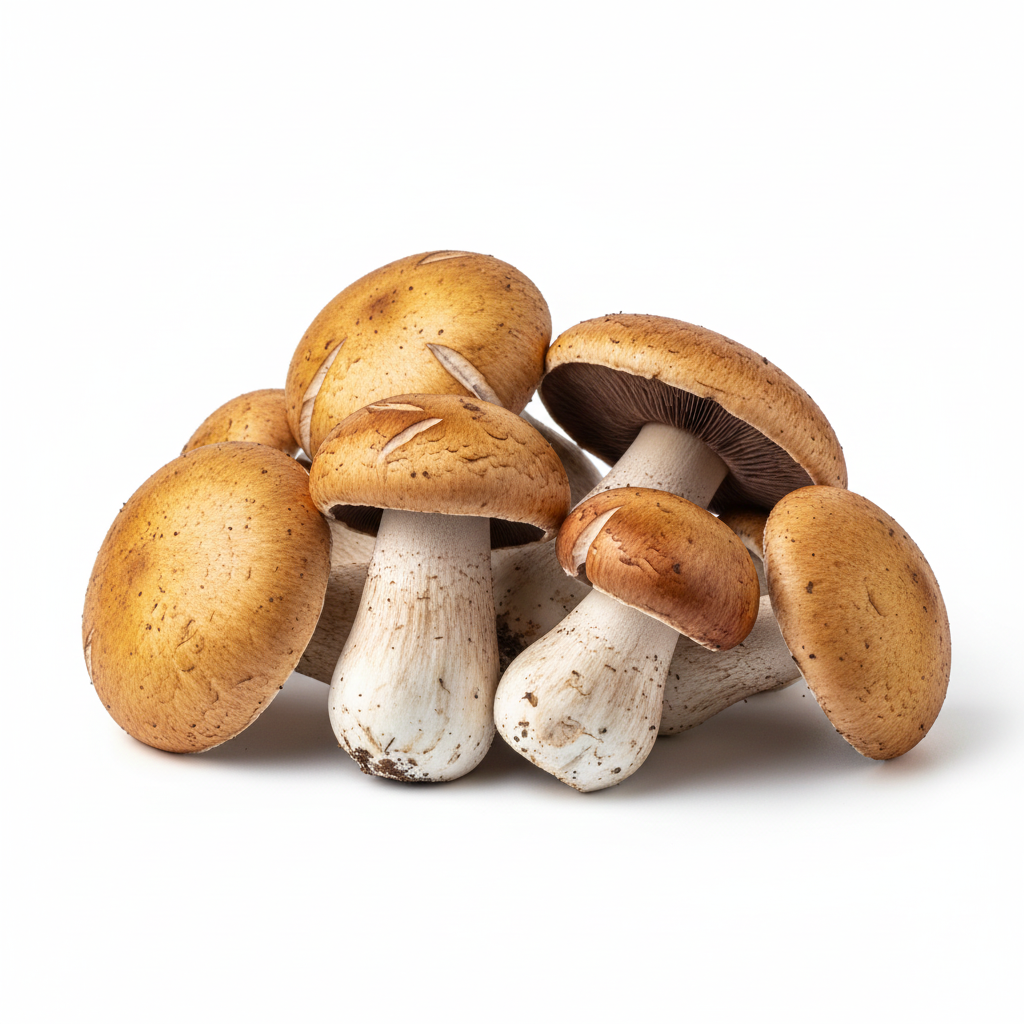 Image 3 of 3
Golden Wine Cap Liquid Culture FAQ
What is the scientific name of Golden Wine Cap?
The scientific name commonly used for Golden Wine Cap is Stropharia rugosoannulata f. lutea.
It is the golden or yellow-capped form of the regular Wine Cap mushroom, Stropharia rugosoannulata. It may also be listed commercially as Stropharia rugosoannulata var. lutea.
Golden Wine Cap is also known as Golden Garden Giant, Yellow Wine Cap or Golden King Stropharia.
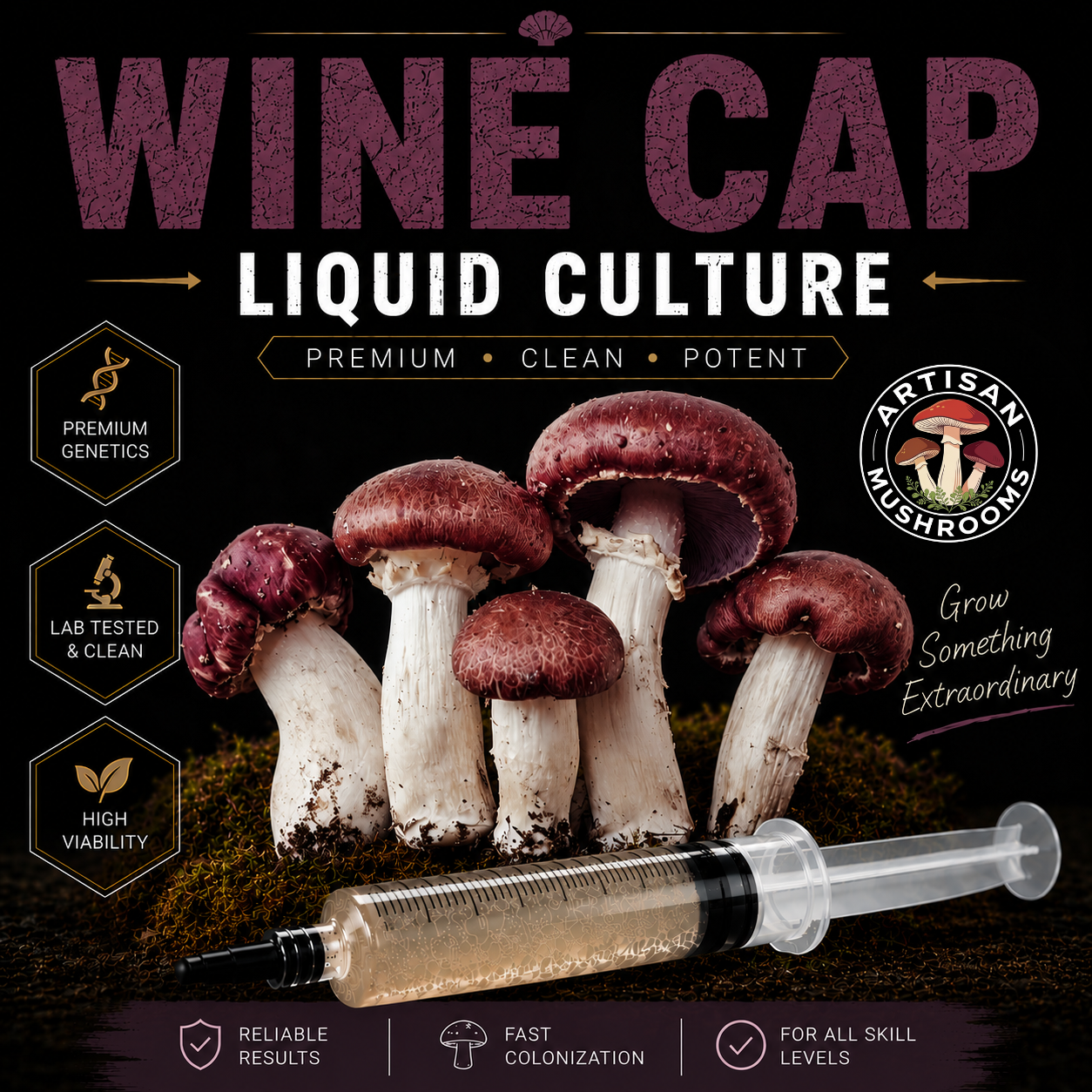
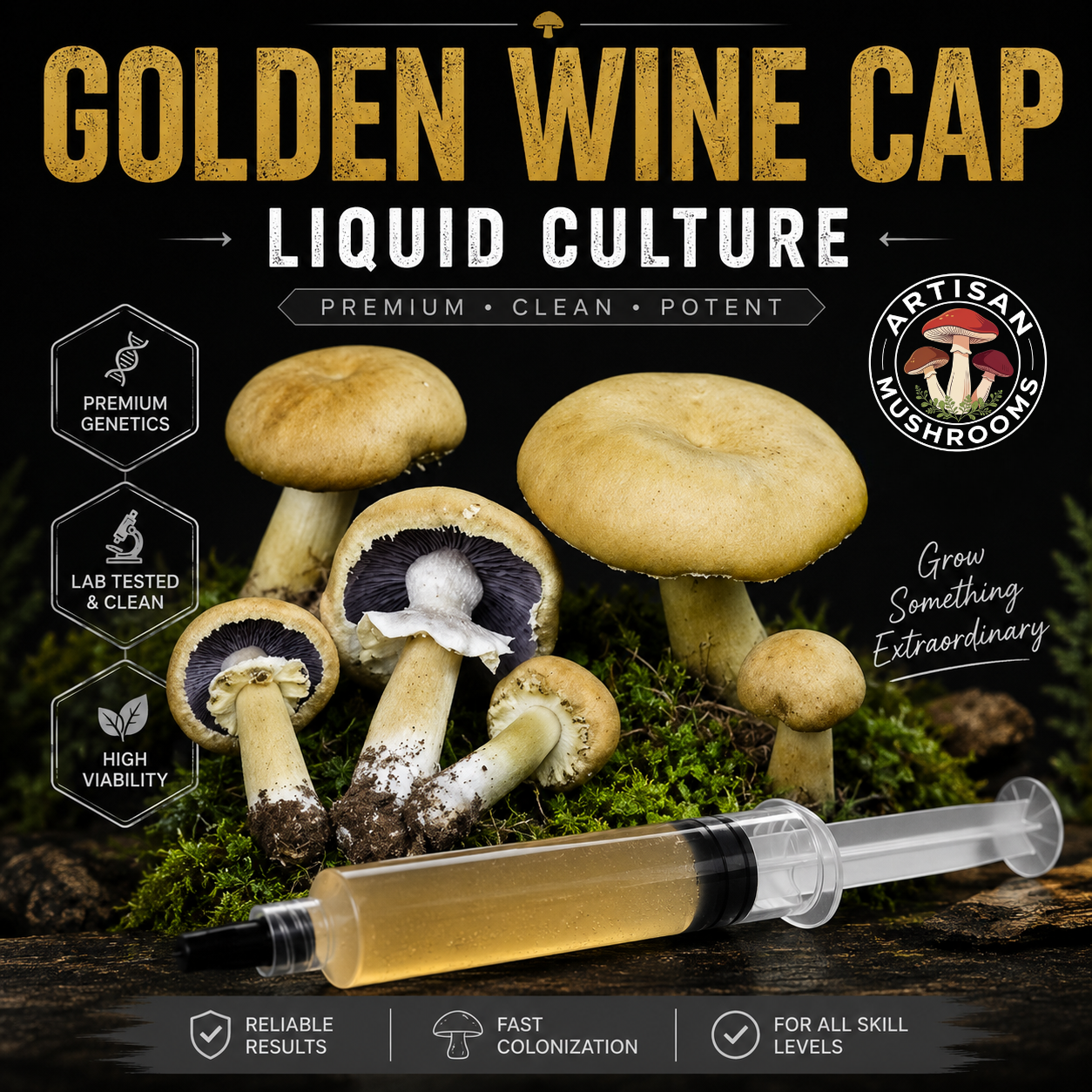
It produces large mushrooms with golden-yellow to yellow-brown caps, thick pale stems and a distinctive wrinkled ring around the stem. As the mushrooms mature, the caps may become paler and flatter.
How is Golden Wine Cap different from regular Wine Cap?
Golden Wine Cap and regular Wine Cap are closely related forms of the same species.
The main difference is cap colour.
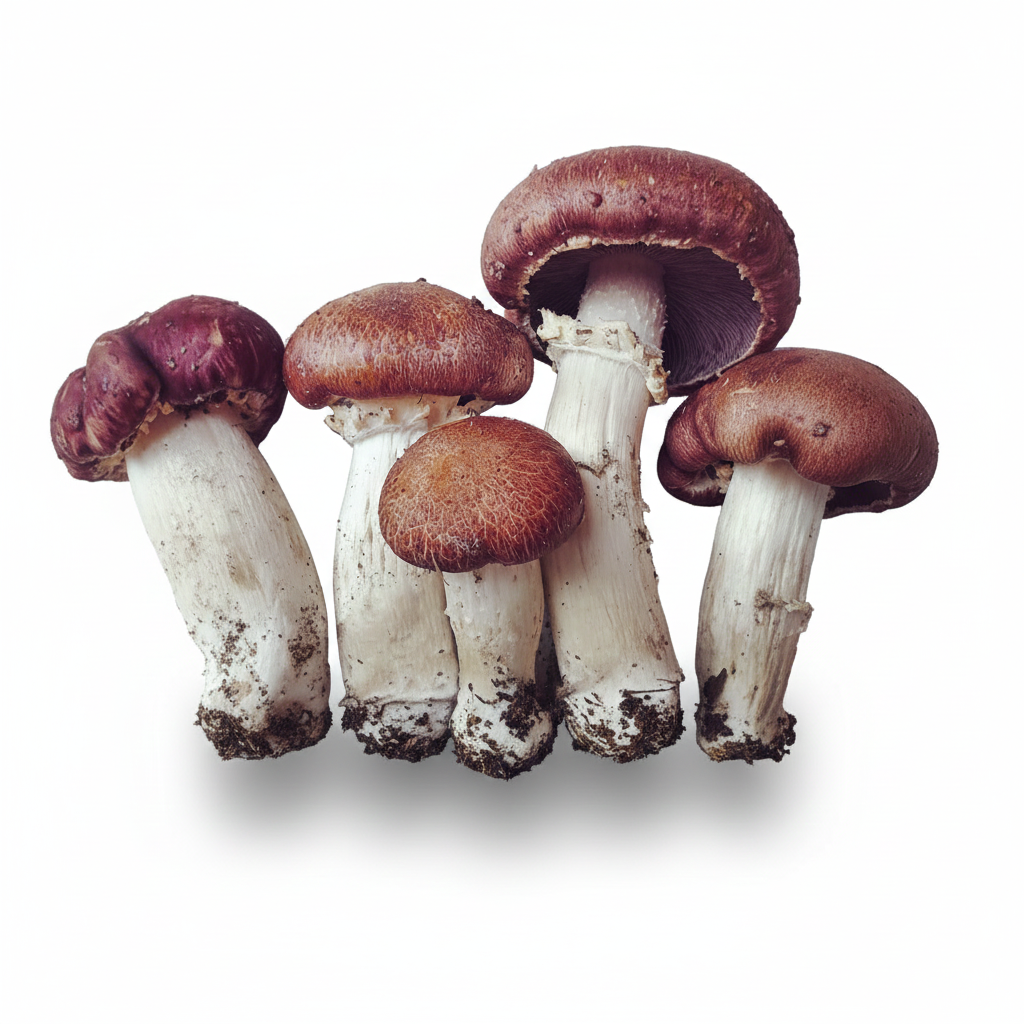
Regular Wine Cap normally produces burgundy-red, wine-red or reddish-brown caps when young. Golden Wine Cap produces yellow, golden or yellow-brown caps.
Both forms have similar:
Substrate preferences
Outdoor cultivation methods
Colonisation habits
Temperature requirements
Moisture requirements
Garden-bed uses
Large fruiting bodies
Both are vigorous decomposers suited to hardwood chips, straw, garden mulch and other plant-based materials.
What substrate is best for growing Golden Wine Cap?
Golden Wine Cap performs particularly well on untreated hardwood wood chips.
Suitable materials include:
Hardwood wood chips
Hardwood mulch
Chipped deciduous branches
Wheat straw
Oat straw
A mixture of straw and hardwood chips
Hardwood sawdust
Leaf litter mixed with wood chips
Other untreated plant-based materials
Hardwood chips from broadleaf trees are generally preferred. Avoid wood that has been painted, chemically treated or contaminated with preservatives.
A mixture containing different chip sizes can work particularly well. Smaller chips and woody fragments provide numerous initial colonisation points, while larger chips provide a longer-lasting food source.
Golden Wine Cap can also be cultivated on straw. Straw beds may colonise and produce mushrooms more quickly, but hardwood-chip beds generally remain productive for longer.
Is Golden Wine Cap grown indoors or outdoors?
Golden Wine Cap is most commonly and successfully grown outdoors.
Suitable locations include:
Shaded garden beds
Woodchip paths
Vegetable gardens
Orchards
Polytunnels
Forest gardens
Areas beneath shrubs
Mulched areas around perennial plants
Shaded edges of allotments
Woodchip beds beside hedges
Indoor cultivation is possible under controlled conditions, but it is generally less straightforward than outdoor woodchip-bed cultivation.
For most home growers, the recommended method is to expand the liquid culture into grain or hardwood sawdust spawn and then use the colonised material to establish an outdoor bed.
Can Golden Wine Cap liquid culture be injected directly into outdoor wood chips?
Injecting liquid culture directly into a large outdoor woodchip bed is not normally the most reliable method.
The liquid culture may only contact a small number of wood chips, making it difficult for the mycelium to spread throughout the bed before competing outdoor organisms become established.
A more dependable method is:
Use the liquid culture to inoculate sterilised grain or hardwood sawdust.
Allow the grain or hardwood material to become fully colonised.
Break the colonised material into numerous small pieces.
Distribute the pieces throughout the outdoor woodchip or straw bed.
Cover the spawn completely with additional hydrated material.
Keep the bed consistently moist while the mycelium establishes.
Fully colonised grain or sawdust provides many separate inoculation points, allowing the Golden Wine Cap mycelium to spread throughout the bed more effectively.
Can Golden Wine Cap liquid culture be used on grain?
Yes. Sterilised grain is an excellent medium for expanding Golden Wine Cap liquid culture.
The culture can be injected into our 2kg Sterilised Wheat Grain Bag through its self-healing injection port.
Allow the grain to become fully colonised with Golden Wine Cap mycelium. Once colonised, the grain spawn can be broken apart and distributed throughout a prepared outdoor bed containing hardwood chips, straw or a mixture of both.
Grain provides nutrition and allows the liquid culture to expand into a much larger quantity of mycelium.
Do not leave colonised grain exposed on the surface of an outdoor bed. Birds, rodents and other animals may eat it.
Place the grain spawn between layers of wood chips or straw and cover it completely.
Can Golden Wine Cap liquid culture be used on hardwood sawdust?
Yes. Golden Wine Cap can colonise properly prepared hardwood sawdust and sawdust-based substrates.
Our 2kg Sterilised Hardwood and Wheat Bran Substrate can be used to expand Golden Wine Cap mycelium and produce colonised hardwood material.
Once fully colonised, the substrate can be broken into pieces and distributed throughout an outdoor woodchip or straw bed.
The colonised hardwood substrate acts as an outdoor inoculation carrier. It should not necessarily be treated as a conventional indoor mushroom fruiting block.
Golden Wine Cap generally performs best when the colonised material is transferred into a larger outdoor bed with contact with natural soil, seasonal rainfall and fresh woody material.
Can I inoculate a hardwood grow bag directly?
Yes. Golden Wine Cap liquid culture can be injected directly into our Sterile Hardwood Mushroom Grow Bag using the self-healing injection port.
Allow the hardwood material to become fully colonised before opening the bag.
Once colonised, the material can be:
Broken apart and distributed through a woodchip bed
Mixed into a straw and woodchip bed
Planted beneath hardwood mulch
Used to establish several smaller outdoor beds
Used to expand an existing Golden Wine Cap patch
Placed between layers of hydrated garden mulch
The hardwood grow bag is primarily used as a culture-expansion medium for Golden Wine Cap rather than as a standard ready-to-fruit indoor mushroom block.
Do you sell supplies for growing Golden Wine Cap?
Yes. We offer several products that can help expand Golden Wine Cap liquid culture before establishing an outdoor bed.
Our 2kg Sterilised Wheat Grain Bag can be inoculated to produce Golden Wine Cap grain spawn.
Our 2kg Sterilised Hardwood and Wheat Bran Substrate can be used to produce colonised hardwood material.
Our Sterile Hardwood Mushroom Grow Bag provides a convenient all-in-one option for expanding the culture before transferring it outdoors.
Our sterile LME agar plates can be used for culture testing, isolation and further expansion.
The customer will still need to obtain untreated hardwood chips, straw or another suitable outdoor bed material.
What is a typical Golden Wine Cap growing process?
A typical Golden Wine Cap cultivation process is:
Inoculate a pre-sterilised grain or hardwood grow bag with Golden Wine Cap liquid culture.
Allow the grain or hardwood substrate to become fully colonised.
Select a shaded or partially shaded outdoor growing location.
Remove weeds and level the soil surface.
Hydrate the hardwood chips or straw thoroughly.
Place a layer of hydrated material directly over the soil.
Break the colonised grain or hardwood spawn into small pieces.
Distribute the spawn evenly across the bed.
Add another layer of hydrated wood chips or straw.
Repeat the layering process if sufficient material and spawn are available.
Finish with a protective layer of wood chips, straw or leaf litter.
Water the complete bed thoroughly.
Keep it consistently moist while the mycelium establishes.
Wait for suitable seasonal temperatures and rainfall to trigger fruiting.
Outdoor Golden Wine Cap cultivation is not a sterile process.
Once the clean spawn is introduced into the bed, the Golden Wine Cap mycelium must compete with the microorganisms already present in the garden.
Using vigorous, fully colonised spawn and maintaining suitable moisture gives the culture a better opportunity to establish.
How deep should a Golden Wine Cap bed be?
A practical starting depth for a Golden Wine Cap woodchip bed is approximately 10 to 15 cm.
A deeper bed can contain more nutrition and retain moisture for longer. However, an excessively deep, heavily compacted or waterlogged bed may develop poorly aerated areas.
Build the bed in loose layers rather than compressing the material heavily.
A suitable structure may include:
A base layer of hydrated hardwood chips or straw.
A layer of broken-up Golden Wine Cap spawn.
Another layer of hydrated wood chips.
An additional layer of spawn if sufficient material is available.
A final protective layer of chips, straw or leaf litter.
The dimensions are flexible. Golden Wine Cap can be cultivated in small garden beds, long woodchip paths or larger landscaped areas.
What type of wood chips should I use?
Untreated hardwood chips are generally the best choice.
Suitable broadleaf woods may include:
Beech
Oak
Alder
Willow
Poplar
Birch
Maple
Hazel
Mixed deciduous hardwood
Fresh or relatively recent chips can be used, provided they are free from chemical treatments and contamination.
Avoid:
Painted wood
Pressure-treated timber
MDF
Chipboard
Plywood
Chemically preserved mulch
Heavily dyed decorative mulch
Wood contaminated with fuel or oils
Wood containing plastic or construction waste
A mixed texture containing small fragments and larger chips is useful because it combines rapid initial colonisation with a longer-lasting woody food source.
Can Golden Wine Cap be grown on straw?
Yes. Golden Wine Cap can colonise wheat straw, oat straw and other suitable cereal straws.
The straw should be:
Clean
Free from visible mould
Properly hydrated
Loosely packed
Kept consistently moist
Protected from excessive drying
Straw beds can colonise relatively quickly, but the material normally breaks down faster than hardwood chips.
Combining straw with hardwood chips can provide the rapid colonisation benefits of straw while giving the bed a longer-lasting woody food source.
A practical method is to place hydrated straw near the lower part of the bed, distribute the Golden Wine Cap spawn over it and cover everything with hydrated hardwood chips.
Do the wood chips or straw need to be sterilised?
Outdoor wood chips do not normally need to be sterilised before establishing a Golden Wine Cap bed.
The species is vigorous and is commonly cultivated directly in hydrated outdoor mulch.
Clean straw may be soaked, conditioned or pasteurised before use, particularly when the straw is densely packed or the grower wants to reduce competing organisms.
Regardless of the preparation method:
Use clean materials.
Avoid visibly mouldy straw or wood chips.
Hydrate the material thoroughly.
Allow excessive water to drain.
Use fully colonised spawn.
Keep the bed moist after planting.
Avoid chemically treated materials.
Sterile preparation is most important during the initial liquid-culture-to-grain or liquid-culture-to-sawdust stage.
Can Golden Wine Cap be grown on CVG?
CVG should not be used as the main Golden Wine Cap substrate.
Coco coir, vermiculite and gypsum can retain moisture, but they do not provide the same woody nutrition as hardwood chips or straw.
Golden Wine Cap requires lignocellulosic plant material to support long-term colonisation and mushroom production.
A small amount of coco coir could be incorporated into an experimental bed to help retain moisture, but it should not replace hardwood chips, straw or other suitable plant-based material.
For reliable outdoor cultivation, use hydrated hardwood chips, straw or a mixture of both.
Does a Golden Wine Cap bed need soil?
Golden Wine Cap does not use garden soil as its main food source. Its primary nutrition comes from wood chips, straw and other decomposing plant material.
However, placing the bed directly over natural soil is beneficial.
Contact with the ground provides:
Natural moisture
Beneficial soil microorganisms
More stable temperatures
Improved humidity
Access to additional organic material
A suitable environment for mushroom formation
Avoid placing the bed over plastic sheeting, concrete or an impermeable weed barrier.
Plain cardboard may be used over the soil to suppress weeds, but it should be thoroughly soaked and free from plastic coatings, tape and adhesive labels.
Where should I locate a Golden Wine Cap bed?
Choose a shaded or partially shaded location that does not dry out quickly.
Suitable locations include:
Beneath shrubs
Between vegetable rows
Along shaded garden paths
Around established fruit trees
Beside hedges
Inside a polytunnel
On the shaded side of a building
Beneath tall seasonal crops
At the edge of a woodland garden
Around perennial plants
Avoid exposed locations receiving intense sunlight throughout the day.
The growing area should be close enough to a water source that it can be kept moist during dry weather.
Golden Wine Cap can work particularly well in vegetable gardens because the woodchip mulch helps conserve soil moisture while the fungus breaks down organic material.
When is the best time to start a Golden Wine Cap bed?
Spring and early autumn are generally good times to establish a Golden Wine Cap bed in Ireland and other temperate climates.
These periods normally provide mild temperatures and regular moisture, giving the mycelium time to spread before very hot, dry or freezing conditions occur.
A bed can also be established during summer if it is shaded and watered carefully.
An autumn-established bed may colonise during mild weather, slow down during colder periods and resume active growth when conditions improve.
The exact fruiting time depends on:
The season in which the bed was established
The amount of spawn used
Local temperatures
Rainfall
Woodchip depth
Bed moisture
The amount of time available for colonisation
Is Golden Wine Cap suitable for beginners?
Yes. Golden Wine Cap is one of the more approachable mushrooms for outdoor cultivation.
It is particularly suitable for:
Gardeners
Allotment holders
Permaculture growers
Woodland owners
Growers without an indoor fruiting chamber
Customers interested in low-maintenance outdoor cultivation
The sterile culture-expansion stage can be simplified by using pre-sterilised grain or a ready-to-inoculate hardwood grow bag.
Once the spawn is fully colonised, it can be transferred into a prepared outdoor bed.
Outdoor cultivation remains dependent on rainfall, temperature, moisture and competition from other organisms. Exact fruiting times and yields cannot be guaranteed.
How should I store the liquid culture?
Keep the Golden Wine Cap liquid culture syringe refrigerated at approximately 2°C to 4°C until you are ready to use it. Do not freeze it.
For the best viability, use the culture within three months of receiving it.
Before inoculation, allow the syringe to come closer to room temperature and shake it gently to distribute the Golden Wine Cap mycelium throughout the nutrient solution.
Always keep the protective cap fitted while the syringe is in storage. Attach a new sterile needle immediately before inoculating grain, agar or a suitable hardwood grow bag.
How much liquid culture should I use?
The amount of Golden Wine Cap liquid culture required depends on the size and type of growing medium.
For one of our sterile LME agar plates, one or two small drops are normally sufficient.
A small grain jar may require approximately 1 to 2 ml.
When inoculating our 2kg Sterilised Wheat Grain Bag or Sterile Hardwood Mushroom Grow Bag, approximately 5 to 10 ml can be used.
Using too much liquid culture can introduce excess moisture into the grain or substrate, increasing the risk of bacterial contamination.
For a large outdoor bed, expand the liquid culture into grain or hardwood spawn rather than injecting the liquid culture directly into the wood chips.
Does the syringe contain mushroom spores?
No. Golden Wine Cap liquid culture contains living Stropharia rugosoannulata f. lutea mycelium suspended in a sterile nutrient solution.
It is not a mushroom spore solution.
Because the mycelium is already actively growing, the liquid culture provides a convenient starting point for producing grain or hardwood spawn.
The culture can also be placed onto a sterile LME agar plate for testing, isolation or expansion.
What conditions does Golden Wine Cap need to colonise grain?
Golden Wine Cap mycelium generally colonises grain well under moderate temperatures.
Suitable starting conditions include:
Temperatures of approximately 20°C to 25°C
Darkness or low ambient light
A clean and stable environment
Filtered gas exchange
No direct sunlight
Properly hydrated grain
Minimal disturbance during early growth
The grain should gradually become covered in healthy white mycelium.
Allow the bag to become fully colonised before using it to inoculate an outdoor bed. Partially colonised grain is more vulnerable to contamination and may be eaten by animals after planting.
How long does a Golden Wine Cap bed take to colonise?
Colonisation time varies considerably.
Important factors include:
The amount of spawn used
Bed size and depth
Woodchip size
Type of growing material
Temperature
Moisture
Competition from other organisms
Time of year
Visible white mycelium may begin spreading through the wood chips within several weeks under favourable conditions.
Full bed establishment may take several months.
Some beds may produce mushrooms during the first suitable fruiting season, while others may not fruit until the following year.
A bed established during spring may produce mushrooms after cool, wet weather later in the year. A bed established in autumn may produce its first significant crop the following spring or autumn.
How should I water a Golden Wine Cap bed?
Water the bed thoroughly when it is first established.
During the colonisation period, keep the wood chips consistently damp but not waterlogged.
Check moisture beneath the surface rather than judging the bed only by the appearance of the upper chips. The surface may appear dry while the lower layers remain moist.
During prolonged dry weather:
Water deeply rather than applying a very light mist.
Allow the water to penetrate the complete depth of the bed.
Replace displaced straw or leaf litter.
Avoid leaving the bed submerged.
Water during the morning or evening to reduce evaporation.
Check the lower layers periodically without repeatedly disturbing the bed.
Once established, the mycelium may tolerate brief dry periods, but severe or prolonged drying can delay colonisation and fruiting.
What conditions encourage Golden Wine Cap mushrooms to fruit?
Golden Wine Cap normally fruits after the outdoor bed is well colonised and suitable cool, moist conditions occur.
Practical fruiting conditions include:
Temperatures of approximately 10°C to 20°C
Moist wood chips or straw
High surrounding humidity
Regular rainfall or thorough watering
Shade or partial shade
Fresh outdoor air
Contact with natural soil
Seasonal temperature changes
Heavy rainfall after a relatively dry period can trigger mushroom production in an established bed.
Golden Wine Cap commonly fruits during spring and autumn in temperate climates, although mushrooms may also appear during other cool and wet periods.
Outdoor conditions cannot be controlled precisely, so patience is required.
Can Golden Wine Cap fruit more than once?
Yes. An established Golden Wine Cap bed may produce several flushes and can potentially remain productive for several years.
Continued fruiting depends on:
The amount of woody material remaining
Bed moisture
Seasonal weather
Temperature
Strength of the established mycelium
Competition from other organisms
Additional untreated hardwood chips can be added periodically to feed and extend the bed.
Apply new chips in a moderate layer and keep them moist. Avoid burying an actively fruiting bed beneath a very deep layer of fresh material all at once.
Sections of a strongly colonised bed can also be moved into fresh woodchip areas to establish additional patches.
How do I know if the Golden Wine Cap bed is colonising?
Healthy Golden Wine Cap mycelium normally appears as white, thread-like or cottony growth connecting wood chips beneath the surface.
When you carefully move part of the upper layer, you may notice:
White strands running between wood chips
Chips held together by mycelium
Dense white patches in moist areas
An earthy mushroom smell
Increasing colonisation beneath the surface
Avoid repeatedly digging through the bed because disturbance can break the developing mycelial network.
Green, black, brightly coloured or foul-smelling growth may indicate competing mould or bacterial decomposition.
Outdoor beds naturally contain many organisms and will not remain visually sterile. The important sign is that healthy Golden Wine Cap mycelium continues spreading through the woody material.
Why is my Golden Wine Cap bed not producing mushrooms?
A Golden Wine Cap bed may fail to fruit because:
It has not been established for long enough.
The wood chips have not fully colonised.
The bed has dried out.
The location receives too much direct sunlight.
Fruiting temperatures are too warm.
There has not been enough rainfall.
Too little spawn was used.
The bed is waterlogged or compacted.
The wood chips are unsuitable or chemically treated.
Competing organisms have become dominant.
The bed lacks contact with natural soil.
Suitable seasonal fruiting conditions have not yet occurred.
Check beneath the surface for healthy white mycelium.
When the mycelium appears strong, continue maintaining moisture and allow natural seasonal temperature changes to encourage fruiting.
A lack of mushrooms during the first season does not necessarily mean that the bed has failed.
Why are my Golden Wine Cap mushrooms pale?
Golden Wine Cap colour can range from bright yellow and golden yellow to yellow-brown, tan or cream.
The caps can become paler as they:
Expand
Mature
Receive stronger sunlight
Experience heavy rainfall
Begin drying
Age naturally
Cap-colour variation is normal and does not necessarily indicate poor growth.
The strongest yellow or golden colouring is often visible while the mushrooms are relatively young.
Why are some mushrooms in the bed red or brown?
Golden Wine Cap is a selected colour form of Stropharia rugosoannulata, but fruiting-body colour can be influenced by genetics and environmental conditions.
If clearly burgundy or red Wine Caps appear, possible explanations include:
Genetic variation within the culture
Another Wine Cap strain already present in the growing material
Existing spores or mycelium in the outdoor environment
Unrelated wild mushrooms growing from the same bed
Do not identify outdoor mushrooms by cap colour alone.
Always check the stem, ring, gills, spore colour and other identifying characteristics before considering any outdoor-grown mushroom for consumption.
When should Golden Wine Cap mushrooms be harvested?
Golden Wine Cap mushrooms are best harvested while young, firm and in good condition.
Suitable harvest signs include:
The cap is still rounded or only partly expanded.
The yellow or golden colour remains clearly visible.
The stem is firm and fresh.
The gills have not become extremely dark.
The cap has not begun deteriorating.
The mushroom is free from heavy insect damage.
Large mature mushrooms are still recognisable, but younger specimens generally have a firmer texture.
Harvest by gently twisting the mushroom from the bed or cutting the stem cleanly near the base.
Cover the small opening with nearby wood chips after harvesting to protect the mycelium underneath.
How can Golden Wine Cap mushrooms be identified safely?
Golden Wine Cap commonly develops:
A golden-yellow to yellow-brown cap
A thick, pale stem
A prominent wrinkled ring around the stem
Pale young gills that become grey and then dark purple-brown
A dark purple-brown spore print
Large fruiting bodies growing from wood chips, straw or mulch
However, outdoor mushroom beds can also produce unrelated wild species.
Never assume that every yellow or golden mushroom growing in an inoculated bed is Golden Wine Cap.
Examine every harvest carefully and use several identification characteristics.
Do not consume any mushroom unless its identity has been confidently confirmed. When uncertain, consult an experienced mushroom identifier or local mycological group.
Where are your Golden Wine Cap cultures shipped from?
All Golden Wine Cap liquid cultures are prepared fresh under sterile laboratory conditions and shipped directly from Ireland.
Each order includes a 10 ml Golden Wine Cap liquid culture syringe, a sterile 18G needle and an alcohol wipe.
Fast shipping is available to customers across Ireland, the UK, Europe, the United States and Canada.