 Image 1 of 3
 Image 2 of 3
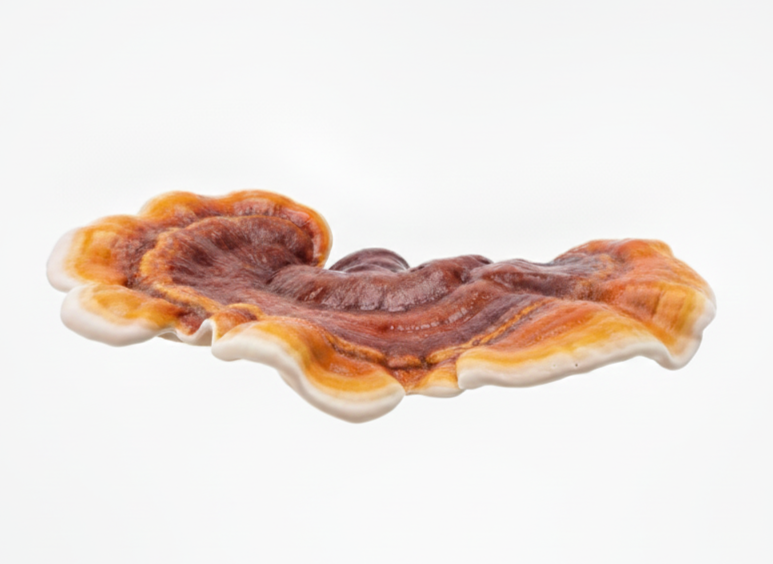 Image 3 of 3
Yellow Reishi Liquid Culture FAQ
What is the scientific name of Yellow Reishi?
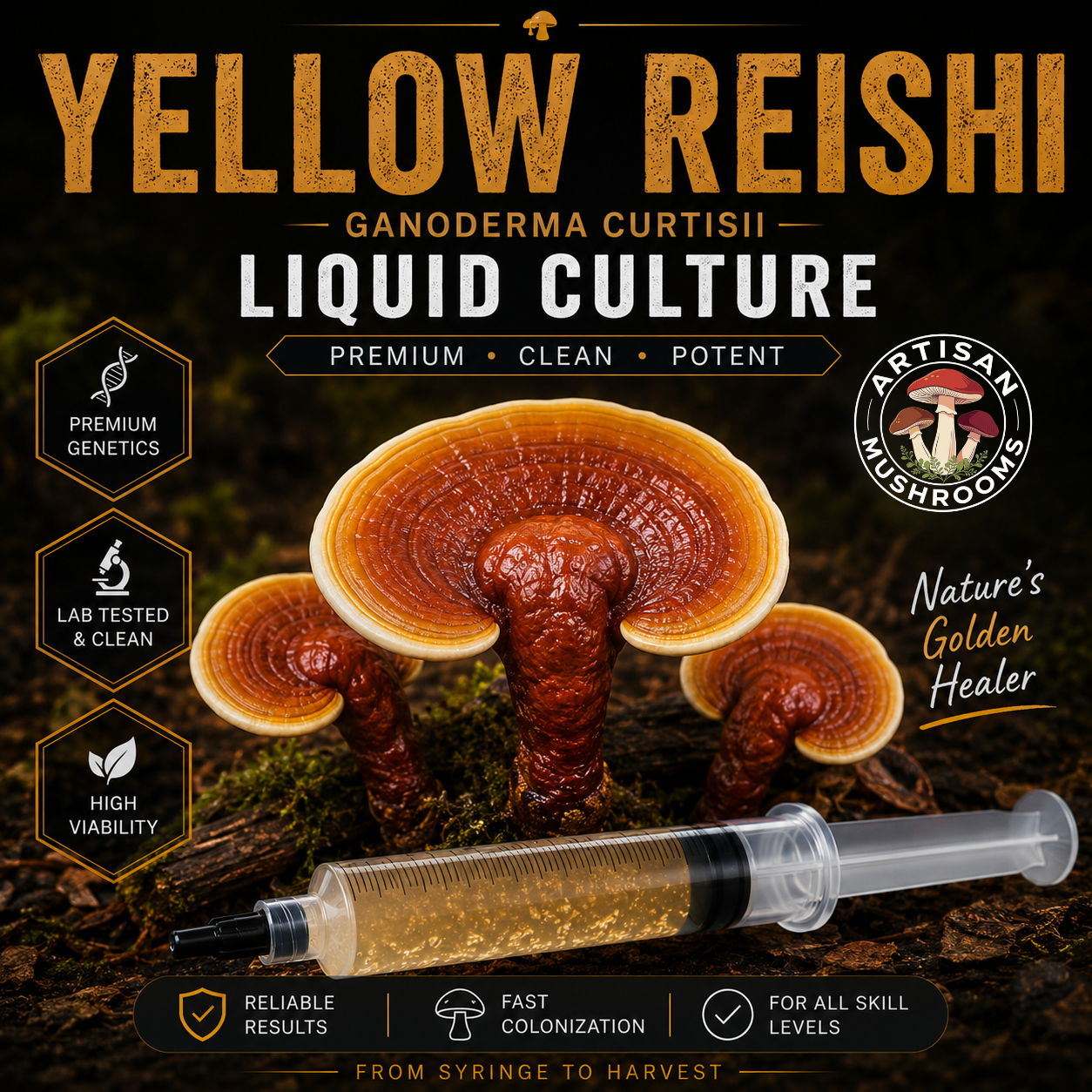
The scientific name for Yellow Reishi is Ganoderma curtisii.
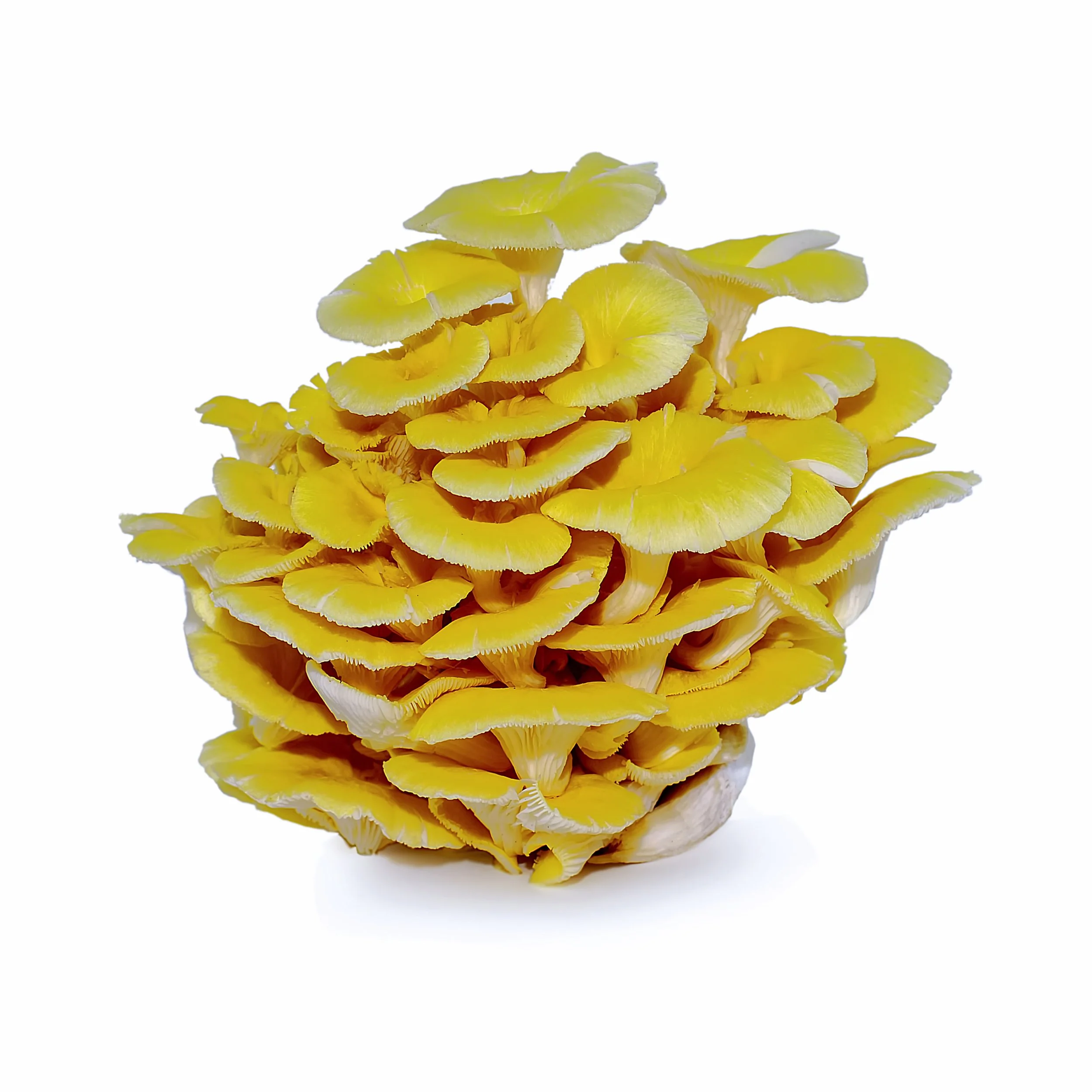
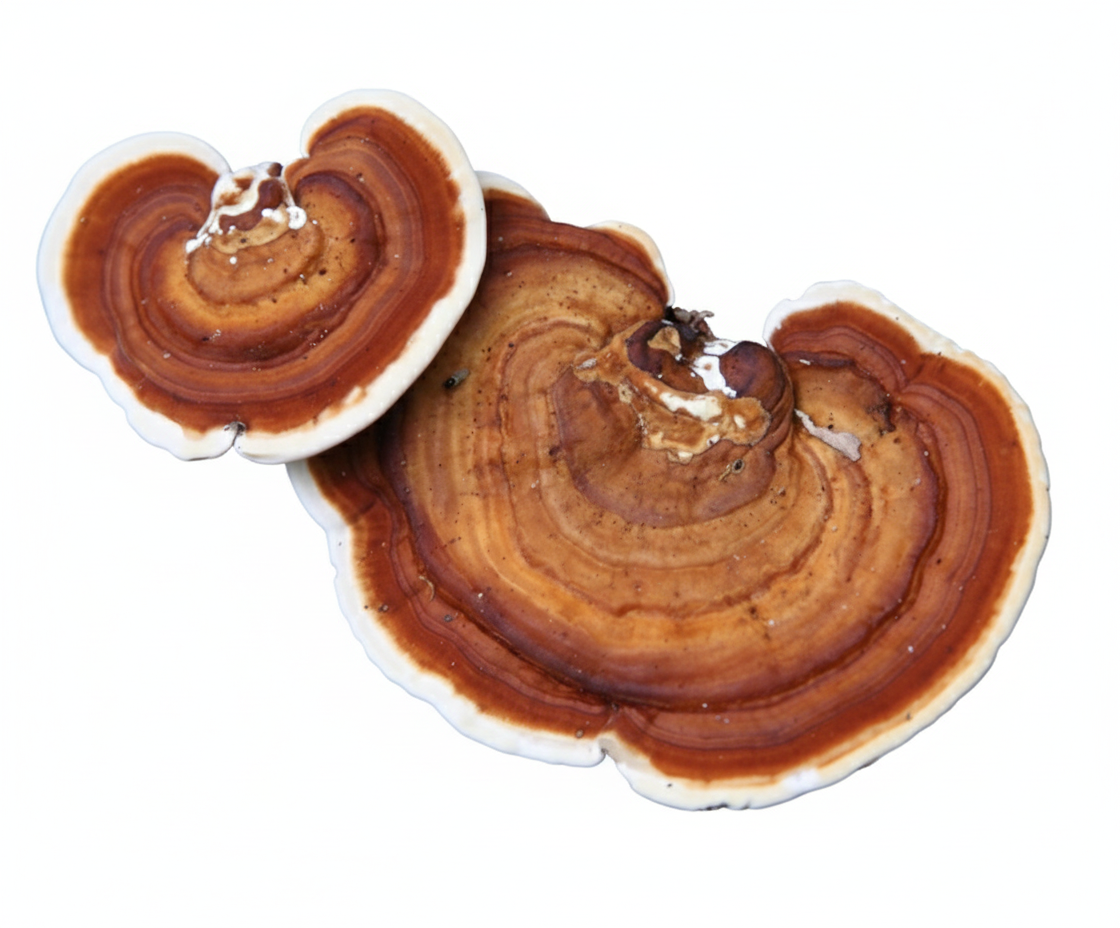
It is a wood-decaying Reishi species known for producing attractive yellow, golden and amber-coloured fruiting bodies. As the mushrooms mature, they may develop darker orange, tan or brown areas and a glossy, lacquered surface.
Yellow Reishi is a tough, woody polypore rather than a soft, fleshy culinary mushroom. It produces spores through fine pores on the underside of the mature cap rather than through gills.
How is Yellow Reishi different from other Reishi species?
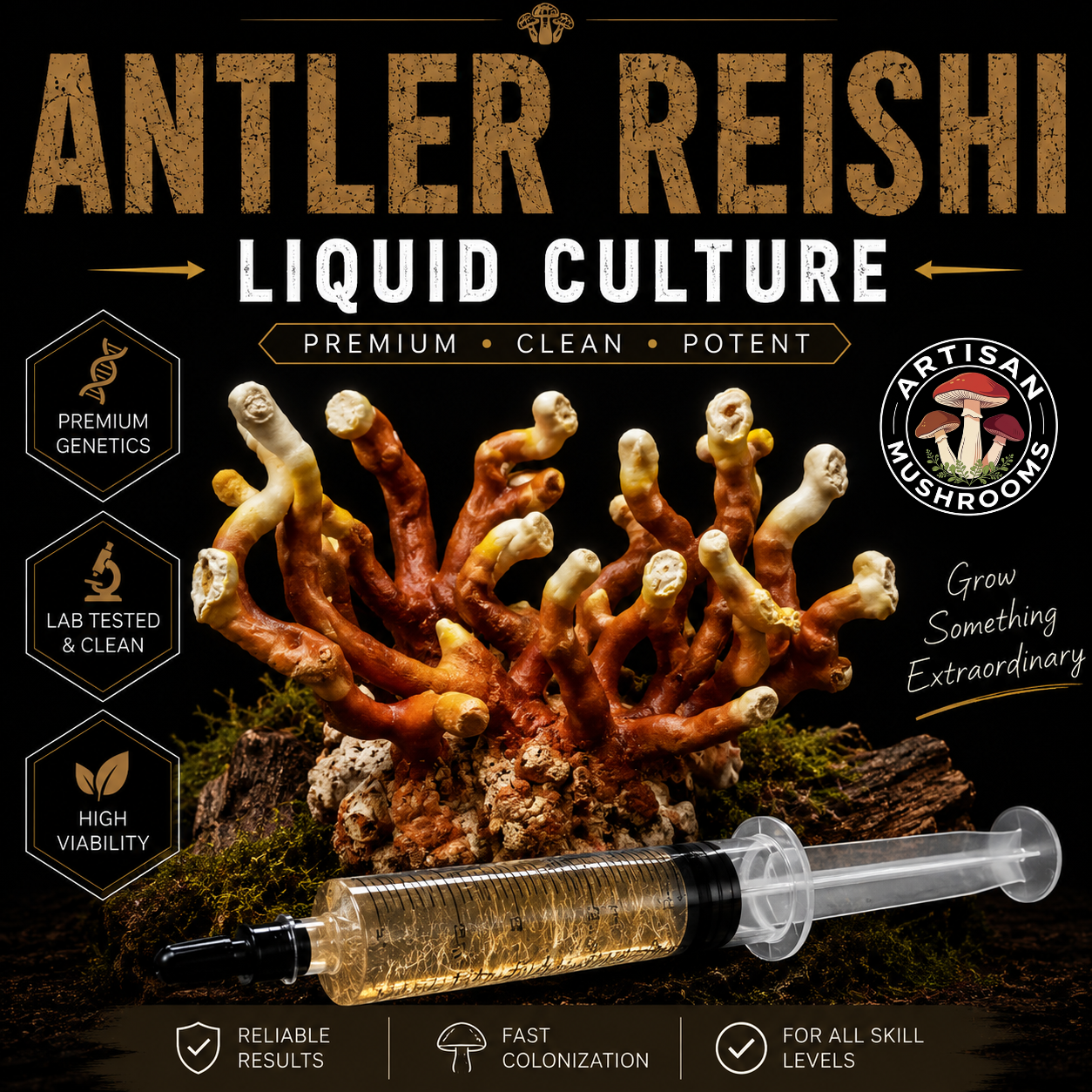
Yellow Reishi is a separate species from Red Reishi, Black Reishi, Hemlock Reishi and Antler Reishi.
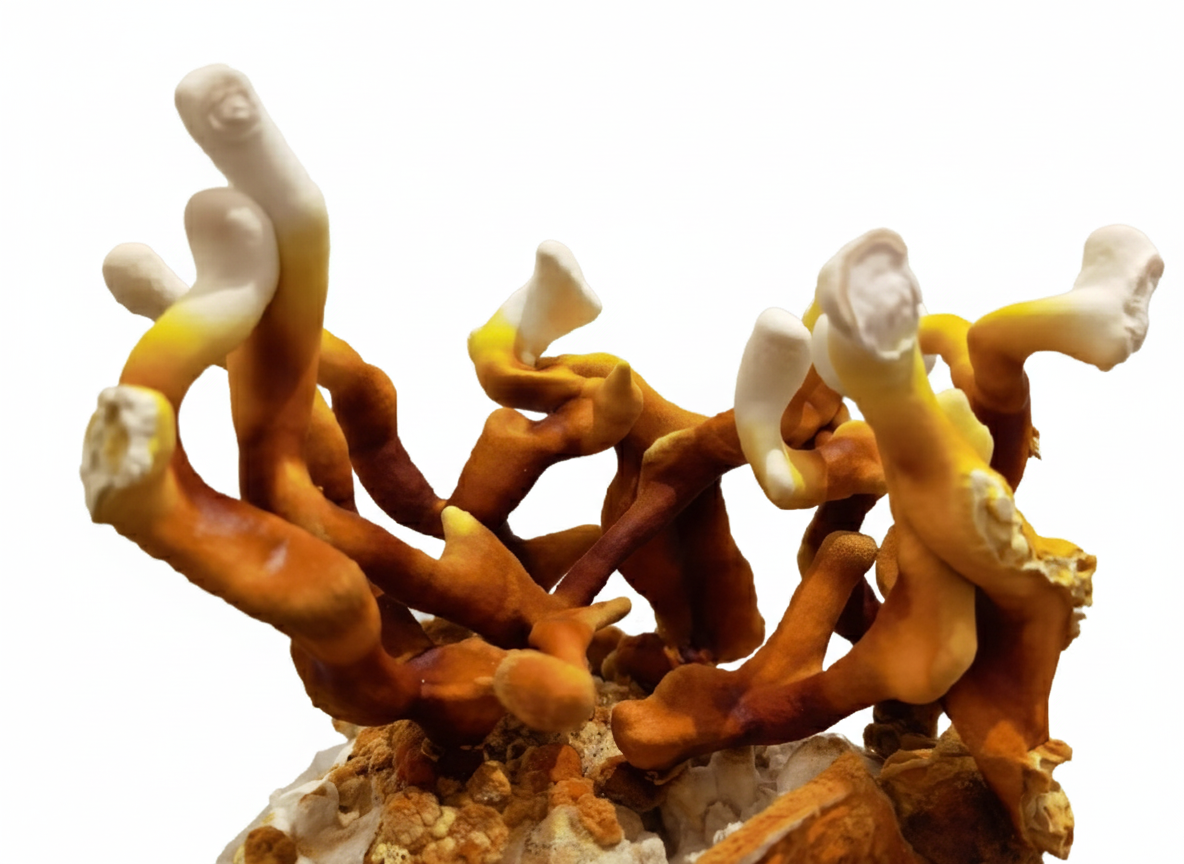
Its most recognisable feature is the yellow-to-golden colouring that develops across the fruiting body. Depending on the growing conditions, it can produce upright antler-like forms, fan-shaped caps or shelf-like conks.
Like other Reishi species, its final shape is strongly influenced by carbon dioxide levels and fresh-air exchange.
Yellow Reishi is generally a warm-growing species and is well suited to indoor cultivation on supplemented hardwood substrate.
What substrate is best for growing Yellow Reishi?
Yellow Reishi grows particularly well on sterilised hardwood-based substrates.
Supplemented hardwood sawdust containing hardwoods such as oak or beech is an excellent choice for indoor cultivation. Adding a nutritious supplement such as wheat bran can support vigorous mycelial growth and fruiting.
Supplemented hardwood substrate must be properly sterilised because its higher nutrient content makes it more susceptible to contamination.
Our 2kg Sterilised Hardwood and Wheat Bran Substrate provides a prepared fruiting substrate suitable for growing Yellow Reishi.
Yellow Reishi can also be cultivated outdoors on suitable hardwood logs and stumps, although outdoor cultivation generally takes considerably longer than growing on sterilised indoor substrate.
Can I inoculate a grow bag directly?
Yes. Yellow Reishi liquid culture can be injected directly into our Sterile Hardwood Mushroom Grow Bag using a sterile needle and the self-healing injection port.
The bag contains sterilised hardwood substrate supplemented with wheat bran, allowing the culture to be introduced without preparing and pressure sterilising your own growing medium.
Yellow Reishi mycelium can colonise a suitable hardwood grow bag directly. However, the more traditional method is to inoculate sterilised grain first.
Once the grain has fully colonised, it can be mixed with a sterilised hardwood fruiting substrate. Using colonised grain helps distribute the mycelium evenly throughout the final substrate and can provide faster, more consistent colonisation.
Can Yellow Reishi liquid culture be used on grain?
Yes. Sterilised grain is commonly used as the first stage of Yellow Reishi cultivation.
The liquid culture can be injected into our 2kg Sterilised Wheat Grain Bag and allowed to colonise the grain, creating Yellow Reishi grain spawn.
Once fully colonised, the grain spawn can be mixed with our 2kg Sterilised Hardwood and Wheat Bran Substrate.
Healthy Yellow Reishi mycelium normally develops as increasingly dense white growth. It can become thick and resilient as it colonises suitable grain and hardwood substrate.
Allow the grain to become fully colonised before transferring it to the final fruiting substrate.
Do you sell sterilised grain and substrate?
Yes. We offer pre-sterilised wheat grain bags, sterilised hardwood and wheat bran substrate, and ready-to-inoculate hardwood grow bags to simplify the cultivation process.
Using prepared grain and substrate removes the need to hydrate, mix and pressure sterilise your own growing media. It reduces the amount of specialist equipment required and can help lower the risk of contamination.
A typical growing process is:
Inoculate a pre-sterilised grain bag with Yellow Reishi liquid culture.
Allow the grain to become fully colonised with mycelium.
Mix the colonised grain spawn with sterilised hardwood and wheat bran substrate.
Allow the hardwood substrate to become fully colonised.
Introduce warm fruiting conditions with high humidity and gentle lighting.
Control fresh-air exchange according to whether antler-shaped or shelf-like fruiting bodies are preferred.
Allow the fruiting bodies to mature and develop their characteristic yellow-to-golden colour.
Harvest before the mushrooms become excessively dry or begin releasing large amounts of spores.
Alternatively, our Sterile Hardwood Mushroom Grow Bag provides a simpler all-in-one option.
The Yellow Reishi liquid culture can be injected directly through the self-healing injection port without preparing separate grain or hardwood substrate.
Is Yellow Reishi suitable for beginners?
Yes. Yellow Reishi can be suitable for beginners, particularly when pre-sterilised grain or a prepared hardwood grow bag is used.
Its mycelium is generally vigorous, and the fruiting bodies are slower to dry out than soft, fleshy mushrooms. This can make environmental fluctuations slightly more forgiving.
However, Yellow Reishi normally takes longer to mature than Oyster mushrooms. Growers also need to understand how airflow and carbon dioxide influence whether the culture produces antlers or broad caps.
Using pre-sterilised grain and ready-to-use hardwood substrate simplifies the process because you do not need to prepare and sterilise the growing media yourself.
The ready-to-inoculate hardwood grow bag is the most straightforward option for customers who want to inject the culture directly into a prepared fruiting substrate.
How should I store the liquid culture?
Keep the Yellow Reishi liquid culture syringe refrigerated at approximately 2°C to 4°C until you are ready to use it. Do not freeze it.
For the best viability, use the culture within three months of receiving it.
Before inoculation, allow the syringe to come closer to room temperature and shake it gently to distribute the Yellow Reishi mycelium throughout the nutrient solution.
Always keep the protective cap fitted while the syringe is in storage. Attach a new sterile needle immediately before inoculating grain, agar or a grow bag.
How much liquid culture should I use?
The amount of liquid culture required depends on the size and type of growing medium.
For one of our sterile LME agar plates, one or two small drops are normally sufficient.
A small grain jar may require approximately 1 to 2 ml, while a larger grain or hardwood grow bag may require approximately 5 to 10 ml.
Using too much liquid culture can introduce excess moisture into the grain or substrate, which may increase the risk of bacterial contamination.
When inoculating our 2kg Sterilised Wheat Grain Bag, approximately 5 to 10 ml can be used and distributed across several areas of the grain.
Does the syringe contain mushroom spores?
No. Yellow Reishi liquid culture contains living Ganoderma curtisii mycelium suspended in a sterile nutrient solution.
It is not a mushroom spore solution.
Because the mycelium is already actively growing, liquid culture can provide faster and more predictable colonisation than starting from spores.
The culture can be used to inoculate sterilised grain, a suitable hardwood grow bag or a sterile LME agar plate.
What conditions does Yellow Reishi need to colonise?
Yellow Reishi generally colonises well under warm conditions.
Suitable starting conditions include:
Temperatures of approximately 24°C to 28°C
Darkness or low ambient light
A clean and stable growing environment
Gas exchange through the bag’s filter patch
No direct sunlight
Minimal disturbance while the mycelium becomes established
The grain or hardwood substrate should be allowed to become fully colonised before fruiting conditions are introduced.
Colonisation time will depend on the temperature, substrate density, inoculation rate and amount of liquid culture or grain spawn used.
Avoid prolonged excessive heat. Although Reishi prefers warmth, temperatures that are too high can weaken the mycelium, dry the substrate and increase the risk of bacterial contamination.
What conditions does Yellow Reishi need to fruit?
Yellow Reishi generally performs well under warm and humid fruiting conditions.
Suitable starting conditions include:
Temperatures of approximately 22°C to 28°C
Relative humidity of approximately 85% to 95% during early growth
Gentle indirect daylight or artificial lighting
Fresh-air exchange adjusted to the desired fruiting shape
No direct sunlight
A clean and stable growing area
High humidity is especially important while the first antlers or primordia are forming. As the fruiting bodies mature and become firmer, humidity can be reduced slightly.
Water should not remain continuously on the developing mushrooms. Excessive surface moisture combined with poor airflow can encourage bacterial problems or uneven growth.
A digital thermometer and hygrometer can help monitor temperature and humidity throughout colonisation and fruiting.
How do I grow Yellow Reishi antlers?
Antler-shaped Yellow Reishi is encouraged by maintaining elevated carbon dioxide levels and limiting fresh-air exchange.
Once the substrate is fully colonised:
Allow the first white or yellow growths to form inside the upper section of the bag.
Leave sufficient air space above the substrate for the antlers to develop.
Keep the bag mostly closed while allowing limited gas exchange through its filter patch.
Provide warm temperatures, high humidity and gentle lighting.
Avoid opening the bag completely during early antler formation.
Allow the antlers to grow upwards through the humid air space.
Limited fresh air encourages the fruiting bodies to remain narrow and branch into antler-like forms rather than expanding into broad caps.
The bag should still have suitable filtered gas exchange. Completely sealing the culture without gas exchange is not recommended.
How do I encourage Yellow Reishi to form caps?
Broad, shelf-like caps are encouraged by increasing fresh-air exchange after the antlers have begun developing.
Once the antlers have reached a suitable size:
Open or cut the bag to introduce more fresh air.
Maintain high surrounding humidity.
Continue providing gentle indirect lighting.
Avoid strong, drying airflow.
Allow the antler tips to flatten and expand into fan-shaped caps.
As carbon dioxide levels decrease, the growing tips may begin widening and producing the characteristic shelf-like Reishi form.
If fresh-air exchange remains limited, the culture may continue producing antlers without developing broad caps.
How should a Yellow Reishi grow bag be opened for fruiting?
The best opening method depends on the fruiting shape you want.
For antler growth, the bag can remain mostly closed, with the filter patch providing limited gas exchange. Leave enough air space above the substrate for the antlers to grow.
For shelf-like caps, increase fresh-air exchange by opening the top of the bag or making a suitable cut once antler growth is established.
Yellow Reishi may also be side-fruited through a controlled opening. This can encourage shelf-like mushrooms to grow outward from the side of the block.
Avoid removing all the plastic from the substrate. Keeping most of the block covered helps retain moisture and prevents unnecessary drying.
Why is my Yellow Reishi only producing antlers?
Antler growth is normally caused by elevated carbon dioxide and limited fresh-air exchange.
This is not a sign that the culture is unhealthy. Antler-shaped Reishi is a normal fruiting form.
To encourage caps:
Increase fresh-air exchange.
Open or cut the bag near the developing antlers.
Maintain high humidity after increasing ventilation.
Continue providing gentle indirect light.
Avoid placing the mushrooms in strong, drying airflow.
The antler tips may gradually flatten and expand after fresh-air levels increase.
Why is my Yellow Reishi producing caps instead of antlers?
Cap development normally occurs when the fruiting bodies receive stronger fresh-air exchange and carbon dioxide levels are relatively low.
If you prefer antler growth, reduce fresh-air exchange while ensuring that the bag continues to receive filtered gas exchange.
Do not completely seal the culture without ventilation.
Both antler-shaped and shelf-like growth are normal forms of Yellow Reishi. The preferred shape is largely a matter of cultivation method and grower preference.
Why does my Yellow Reishi have white growing tips?
White or pale growing margins are normal on actively developing Reishi fruiting bodies.
The newest growth often appears white or cream before gradually developing yellow, golden, amber or darker colouring as it matures.
A healthy pale margin can indicate that the fruiting body is still expanding.
If the pale area stops growing, becomes soft, develops an unpleasant smell or shows unusual coloured mould, inspect the growing conditions for contamination or excessive moisture.
Why is my Yellow Reishi changing colour?
Yellow Reishi can change colour considerably as it develops.
Young fruiting bodies may begin white or pale yellow. As they mature, they may develop:
Bright yellow growth
Golden or amber bands
Orange or tan areas
Darker brown mature sections
A glossy or lacquered surface
Colour can also be influenced by strain genetics, temperature, humidity, lighting and maturity.
A changing colour pattern is normally part of healthy Reishi development, provided that the fruiting body remains firm and continues growing.
What is the brown dust around my Yellow Reishi?
A fine brown or rust-coloured dust around mature Yellow Reishi is usually a deposit of mushroom spores.
Reishi can release large quantities of brown spores as the caps mature. The spores may collect on the fruiting body, bag, shelves and nearby surfaces.
This does not normally indicate contamination.
Harvest before heavy spore release if you want to minimise cleaning. Fruiting Reishi should also be grown in a well-ventilated area away from frequently occupied living or sleeping spaces.
People who are sensitive to airborne particles should take additional care around mature, heavily sporulating mushrooms.
When should Yellow Reishi be harvested?
Yellow Reishi can be harvested once the fruiting bodies have reached the desired size, become firm and developed their mature colour.
For shelf-like growth, signs of maturity may include:
The pale growing edge has stopped expanding.
The cap has become firm and glossy.
The colour has deepened.
Brown spores have begun appearing.
For antler growth, harvest when the branches are fully developed and firm but before they become excessively dry or release large quantities of spores.
Use a clean, sturdy knife or pruning tool to cut the tough fruiting bodies close to the substrate.
Yellow Reishi has a dense, woody texture and may be difficult to remove by twisting.
Can a Yellow Reishi block produce more than one flush?
Yes. A healthy Yellow Reishi block may produce additional growth after the first harvest.
After harvesting:
Remove remaining fruiting-body material from the opening.
Allow the block to rest.
Keep it in a clean area with moderate humidity.
Prevent the substrate from drying out completely.
Return it to warm, humid fruiting conditions.
Maintain fresh-air exchange appropriate to the desired fruiting shape.
Later flushes may be smaller or slower than the first.
The productive life of the block will depend on its moisture level, cleanliness and the amount of nutrition remaining in the substrate.
Where are your Yellow Reishi cultures shipped from?
All Yellow Reishi liquid cultures are prepared fresh under sterile laboratory conditions and shipped directly from Ireland.
Each order includes a 10 ml Yellow Reishi liquid culture syringe, a sterile 18G needle and an alcohol wipe.
Fast shipping is available to customers across Ireland, the UK, Europe, the United States and Canada.