

Mushroom Contamination Guide: How to Identify Mould, Bacteria and Healthy Mycelium
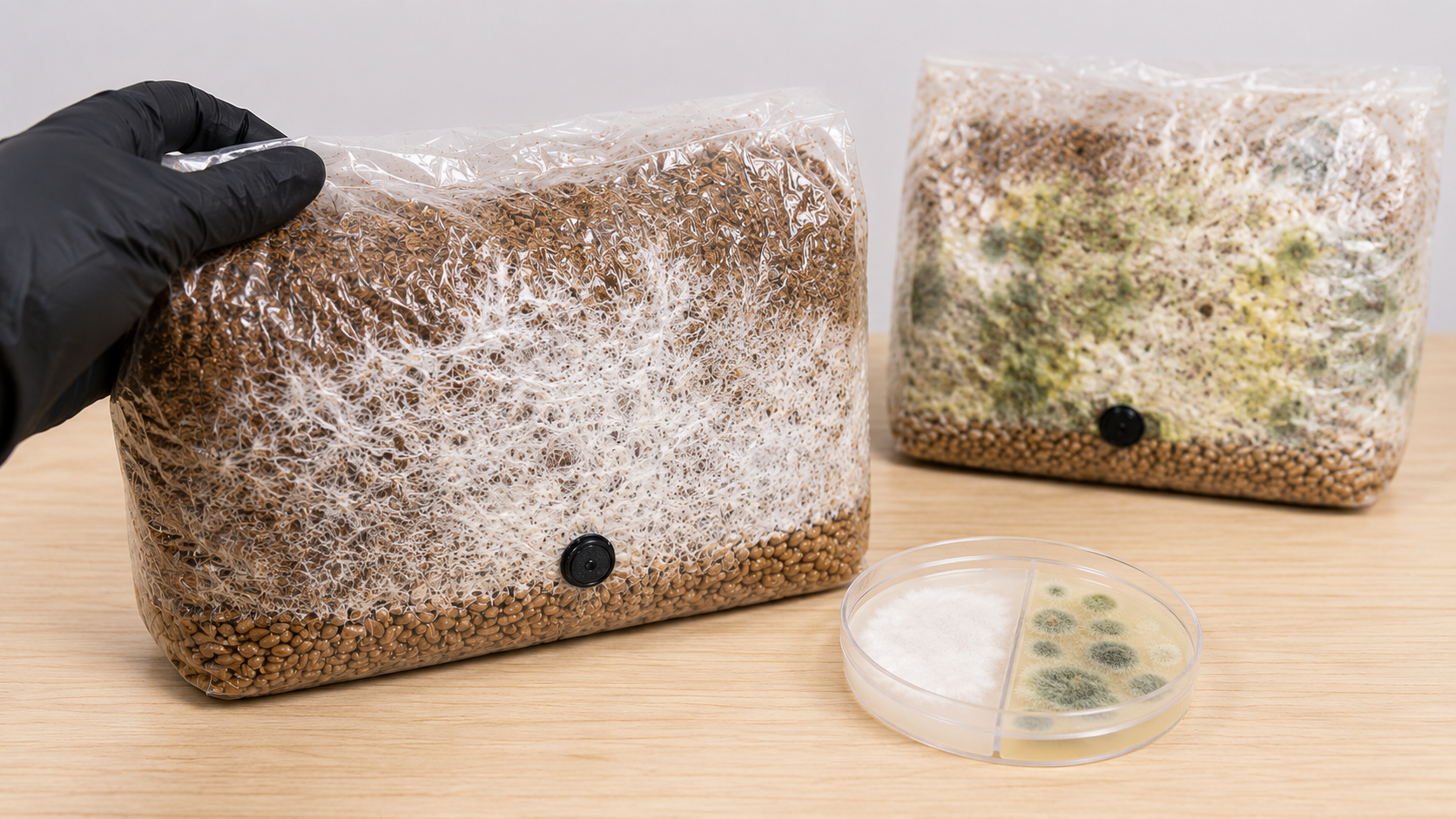
Contamination is one of the most common problems in mushroom cultivation. It can appear on agar plates, inside liquid culture, between grains or across a fruiting substrate. Some warning signs are obvious, while others can be confused with healthy mushroom mycelium.
This beginner-friendly guide explains how to recognise healthy mycelium, common moulds, bacterial contamination and yeast. It also covers what to do with a suspicious grow, when agar may be cleaned by transferring healthy growth, and how to reduce contamination in future projects.
Important Safety Note
Do not open or deliberately smell a heavily contaminated grain bag, grow block or culture container indoors. Keep it away from other mushroom projects and avoid breathing in visible spores.
Colour and appearance can suggest a problem, but they cannot always identify the exact organism. When the contents are wet, foul-smelling, rapidly discoloured or clearly overrun, the safest option is normally to isolate and discard the project.
Healthy Mycelium vs Contamination
Healthy Mycelium Often Looks Like
- White or pale cream growth
- Fine threads, branching strands or dense white patches
- Growth spreading outwards from the inoculation point
- Grain gradually becoming joined together
- A fresh, mild mushroom-like smell when the container is safely opened at the correct stage
Contamination Warning Signs
- Green, black, pink, red or vivid orange growth
- Grey growth spreading unusually quickly across the surface
- Wet, greasy, slimy or uncolonised grain
- Sour, rotten, fermented or strongly sweet odours
- Rapidly expanding patches with a texture unlike the surrounding mycelium
Healthy Growth Can Vary by Species
Oyster mushroom mycelium often becomes thick and bright white. Lion’s Mane can remain fine, wispy and difficult to see. Some Reishi cultures develop dense white growth and coloured fruiting tissue as they mature.
Compare suspicious areas with the rest of the same culture rather than expecting every mushroom species to look identical.
What Healthy Mycelium Looks Like at Each Stage
Healthy Mycelium on Agar
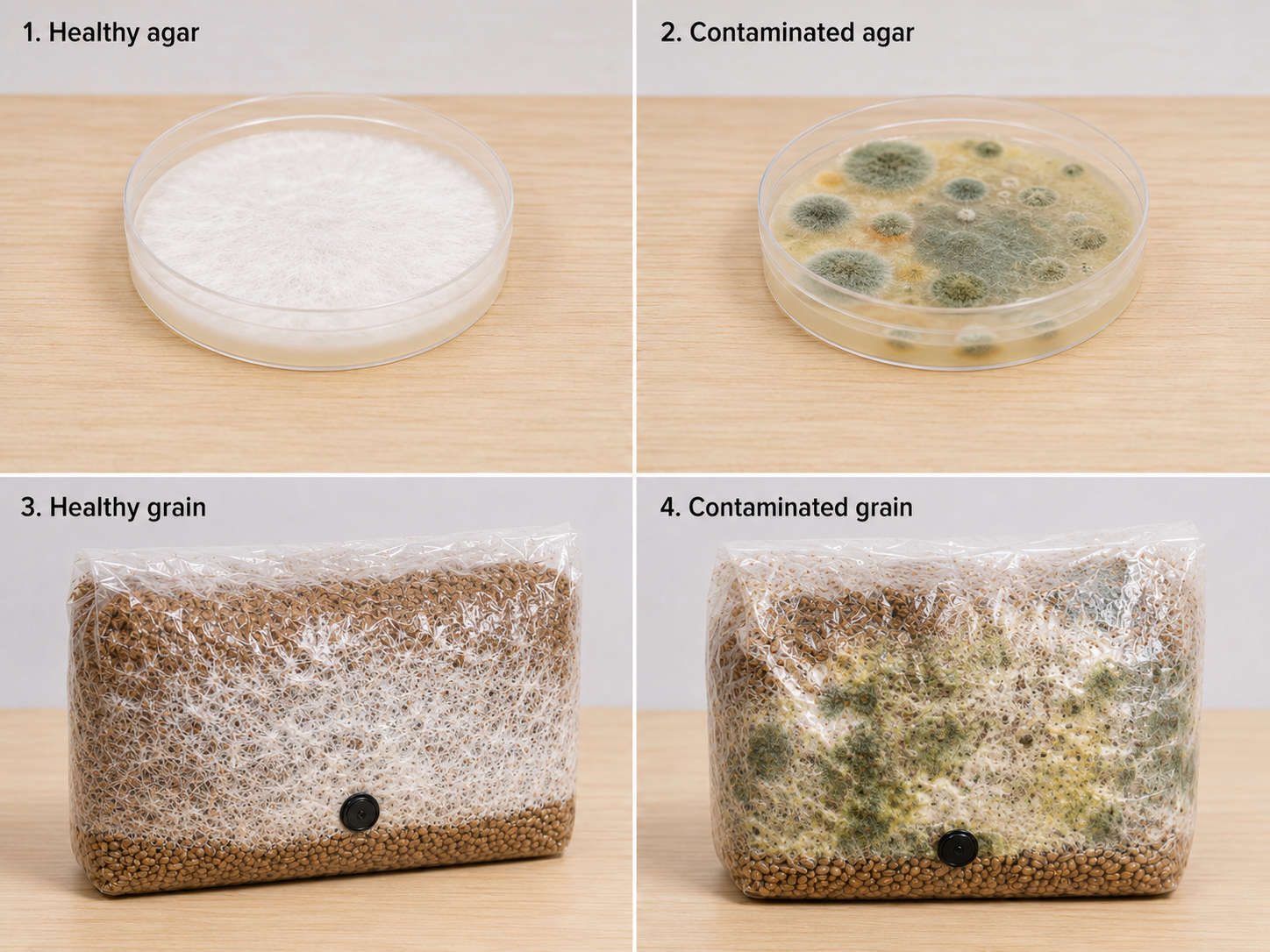
Healthy mushroom mycelium usually grows outwards from the inoculation point in white or pale strands. It may look evenly circular, rope-like, fluffy or slightly irregular depending on the mushroom species and culture.
The clear surface of a sterile LME agar plate makes it easier to inspect growth before transferring a culture into a larger quantity of grain.
Healthy Mycelium in a Grain Bag
Healthy mycelium normally begins close to the inoculation points and gradually spreads between individual grains. The colonised grains may become joined into firm white clusters.
Condensation alone does not prove contamination. Look for the combined pattern of growth, grain texture, colour and any wet or uncolonised areas.
Healthy Mycelium in a Hardwood or Bulk Substrate
Healthy growth should gradually spread through the substrate rather than appearing as an isolated, brightly coloured patch. A fully colonised block often becomes paler, firmer and more tightly bound together.
Some species colonise densely, while others remain less visually white. Allow enough time and judge the entire block rather than one small area.
Common Types of Mushroom Contamination
Green Mould and Trichoderma
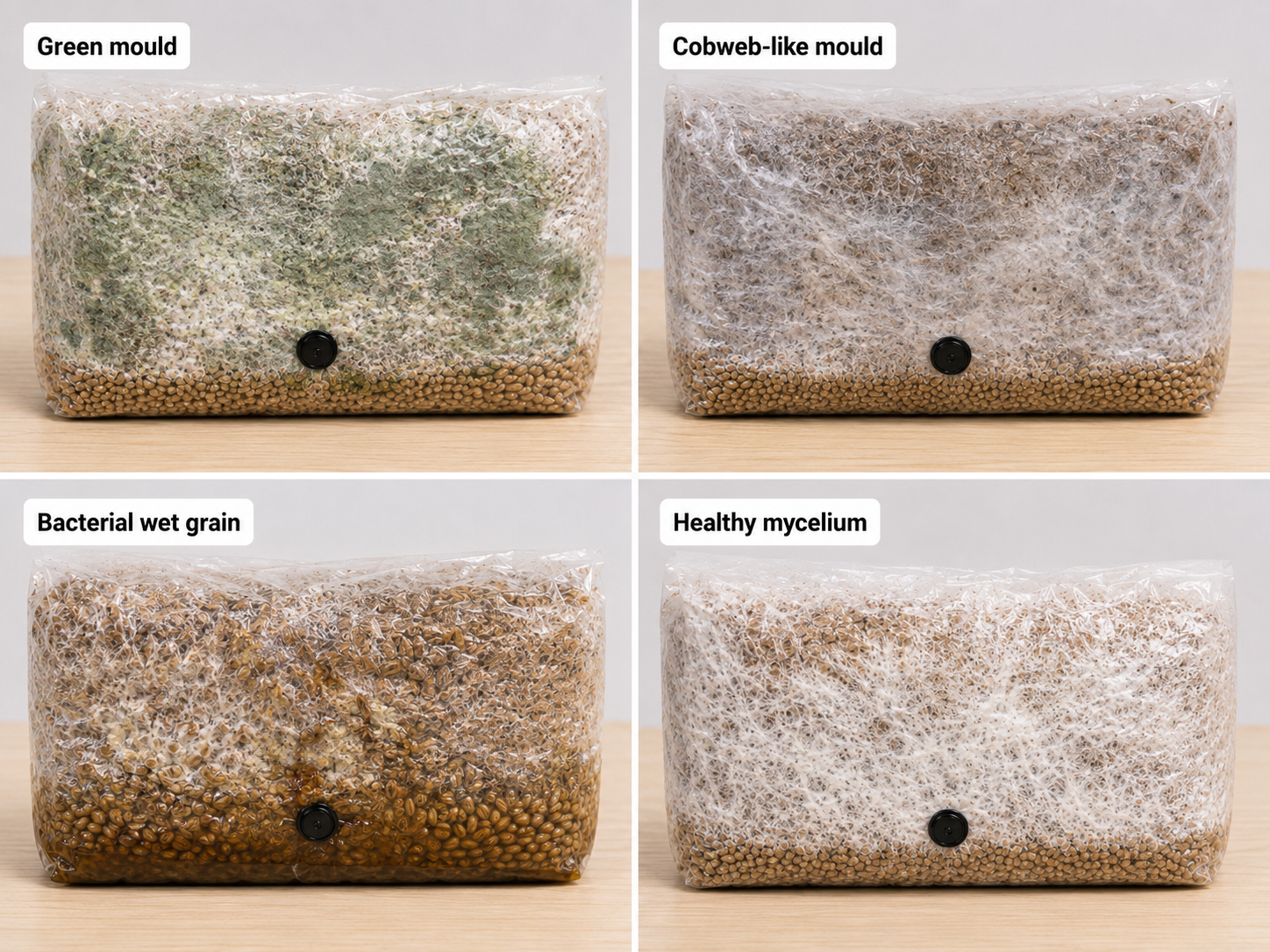
Trichoderma is one of the best-known contaminants in mushroom growing. It may begin as a fast-growing white patch before producing green spores. This early white stage is one reason it can initially be mistaken for mushroom mycelium.
Common warning signs include:
- A bright or dusty green patch
- White growth that changes to green
- Rapid spread across grain or substrate
- A sharp boundary between the patch and healthy mycelium
Do not open a green, heavily sporulating bag indoors. Isolate it from clean cultures and discard it without disturbing the contaminated area.
Cobweb-Like Grey Mould
True cobweb mould is often described as thin, grey and extremely fast growing. It may spread across an exposed casing layer or fruiting surface much faster than mushroom mycelium.
Beginners frequently mistake ordinary aerial mycelium for cobweb mould. Healthy mushroom growth is generally whiter and connected to the colonised substrate, while suspicious grey growth may look loose, dull and web-like.
Appearance alone is not always enough for a certain identification. If grey growth is spreading rapidly or is accompanied by an unpleasant smell, isolate the project.
Bacterial Wet Spot or Sour Grain
Bacterial contamination may not produce a brightly coloured mould. Instead, the grain can look excessively wet, greasy, swollen or slimy. Mushroom mycelium may grow around the affected grains without fully colonising them.
Possible signs include:
- Wet or glossy grains pressed against the bag
- Uncolonised patches surrounded by mycelium
- Yellow-brown liquid collecting in the bottom
- Sour, fermented, rotten or strongly sweet odours
- Mycelium that repeatedly stalls after mixing
A badly affected grain bag is generally unsuitable for transferring into a fruiting substrate because the bacteria can spread throughout the new material.
Yeast Contamination
Yeast may appear as creamy, off-white or slightly shiny patches. On agar, it can form smooth colonies that look wetter and less fibrous than mushroom mycelium.
In liquid culture or grain, yeast may be associated with cloudiness, fermentation, bubbles or a sweet, alcoholic or bread-like smell.
Because yeast can be pale rather than brightly coloured, testing a liquid culture on agar is useful when its cleanliness is uncertain.
Pink, Red or Orange Contamination
Vivid pink, red or orange growth should be treated cautiously. These colours are not normal for colonising grain or plain agar used for most gourmet mushroom cultures.
Keep the container closed, isolate it and do not attempt to smell or rescue a heavily affected bag. Dispose of it safely and clean the area where it was stored.
Black or Very Dark Mould
Black, dark brown or charcoal-coloured growth can indicate mould or sporulation. It should not be confused with the natural colour of the substrate or with dark bruising on certain mushroom species.
A rapidly expanding dark patch, especially one with a dusty surface, should be isolated and discarded without opening the container indoors.
Do Not Rely on Colour Alone
Mushroom bruising, substrate particles, metabolites and developing fruiting tissue can sometimes create unusual colours. Look at the rate of spread, texture, moisture, smell and the overall health of the culture.
Signs That Are Not Always Contamination
Blue or Blue-Grey Bruising
Some mushroom mycelium and fruiting bodies can bruise blue or blue-grey after pressure, handling, dryness or impact.
Bruising usually remains within damaged mycelium rather than forming a new fuzzy or dusty colony. If the colour continues spreading independently across the substrate, treat it as suspicious.
Yellow Liquid or Mycelial Metabolites
Small amber or yellow droplets are sometimes called metabolites. They can appear when mycelium is ageing, stressed, too warm or competing with another organism.
A few droplets do not automatically mean the grow has failed. Large amounts of liquid combined with slimy grain, stalled growth or a bad smell are more concerning.
Condensation Inside the Bag
Condensation can form when the temperature inside the bag differs from the surrounding room. It is common during active colonisation.
Clear droplets on the plastic are less concerning than greasy, decomposing grain or pools of discoloured liquid inside the substrate.
Thin or Wispy Mushroom Mycelium
Not every mushroom culture becomes thick and cottony. Lion’s Mane, for example, may remain fine and difficult to see during early colonisation.
Check whether the growth begins at the inoculation point and progresses consistently through the grain or substrate.
What to Do When Contamination Appears
Step 1: Isolate the Project
Move the suspicious plate, jar or sealed bag away from clean cultures. Keep it closed while you assess it.
Do not handle clean cultures immediately after touching a contaminated container. Wash your hands and change or clean gloves first.
Step 2: Inspect Without Disturbing It
Examine the colour, texture and rate of spread through the closed container. Photographing the same area on consecutive days can help show whether a patch is expanding.
Avoid squeezing a contaminated bag or opening it simply to confirm the smell.
Step 3: Decide Whether to Transfer or Discard
Heavily contaminated grain bags and fruiting blocks should normally be discarded. Cutting away the visible patch rarely removes contamination that has already spread microscopically through the material.
Agar is different. An experienced grower may sometimes transfer a clean, leading edge of mushroom mycelium onto a fresh sterile plate before the contaminant reaches it.
Do not transfer from a plate when the clean and contaminated growth are already mixed together or when the entire plate is overrun.
Step 4: Dispose of Contaminated Material Safely
Keep a contaminated bag sealed. Place it inside a second bag before moving it through the growing area.
Dispose of heavily contaminated material according to local household waste arrangements. Avoid opening or emptying a mouldy bag inside your home, laboratory or fruiting room.
Step 5: Clean the Growing Area
- Remove loose substrate and visible debris
- Clean shelves and nearby hard surfaces
- Wash reusable containers before their next use
- Replace damaged injection ports, filters or bags
- Wash hands before returning to clean culture work
Cleaning is most effective after physical debris has been removed. Do not mix cleaning products, and always follow the label instructions for the product being used.
How to Reduce Contamination
Clean-Culture Checklist
- Start with a healthy culture from a reliable source
- Test uncertain liquid culture on sterile agar before inoculating grain
- Use properly hydrated and fully sterilised grain
- Keep sterile needles sealed until immediately before use
- Clean injection ports and allow disinfectant to dry
- Do not touch sterile needle tips, agar surfaces or open containers
- Keep filters dry, unobstructed and undamaged
- Label cultures with the species and inoculation date
- Separate clean culture work from fruiting and compost areas
- Discard questionable material before it can contaminate other projects
A ready-to-inoculate sterilised wheat grain bag removes the grain hydration and pressure-sterilisation stages. A fresh sterile syringe needle and an intact self-healing injection port also help reduce unnecessary exposure during inoculation.
Frequently Asked Questions
Can I Cut the Contaminated Part Out of a Grow Bag?
This is not recommended for a heavily contaminated grain bag or fruiting block. The visible patch may be only part of the contamination, and opening the bag can spread spores through the growing area.
Can Healthy Mycelium Defeat Contamination?
Mushroom mycelium may temporarily grow around a small bacterial area or compete with another fungus, but this does not make the culture clean. Contamination can reappear after mixing or transferring the material.
Should I Smell the Bag to Check It?
Do not open a suspicious bag simply to smell it. Visible mould, wet decomposing grain or rapidly spreading discolouration is enough reason to isolate it.
Is White Fluffy Growth Always Healthy Mycelium?
No. Some moulds begin white before producing coloured spores. Watch the growth pattern, speed, texture and whether it changes colour over time.
How Can I Test Liquid Culture for Contamination?
Place a very small sample of liquid culture onto a sterile agar plate using clean technique. Agar allows the growth to spread across a visible surface, making mould, bacteria and yeast easier to notice before the culture is used on a full grain bag.
Read the complete beginner’s guide to mushroom liquid culture for more information about preparation, storage and use.
Can a Contaminated Bag Be Fruited Outdoors?
Moving a questionable grow outdoors does not make it clean or guarantee safe mushrooms. Do not use material that is heavily mouldy, rotten or foul-smelling for food production.
Why Does Contamination Keep Returning?
Repeated contamination may point to one or more recurring problems:
- An unclean starting culture
- Insufficient sterilisation
- Grain that is too wet
- Damaged filters or injection ports
- Touching sterile surfaces during inoculation
- Opening cultures in a room with strong air movement
- Contaminated reusable tools or containers
Change one part of the process at a time and keep clear notes so the source is easier to identify.
Useful Supplies for Cleaner Mushroom Cultivation
Sterile agar plates are useful for testing liquid culture and inspecting growth before it reaches a full grain bag. Ready-to-inoculate grain bags remove several preparation stages, while sterile needles and sound injection ports help keep the inoculation process closed.
Continue Learning
- Complete Beginner’s Guide to Mushroom Liquid Culture
- Substrate Preparation: Essential Guide for Mushroom Growing Success
- Browse All Mushroom Growing Guides
The Most Reliable Rule
Healthy mycelium should progress consistently through clean, properly prepared material. When growth becomes wet, foul-smelling, rapidly discoloured or visibly overrun by another organism, isolate it early rather than risking the rest of your mushroom projects.