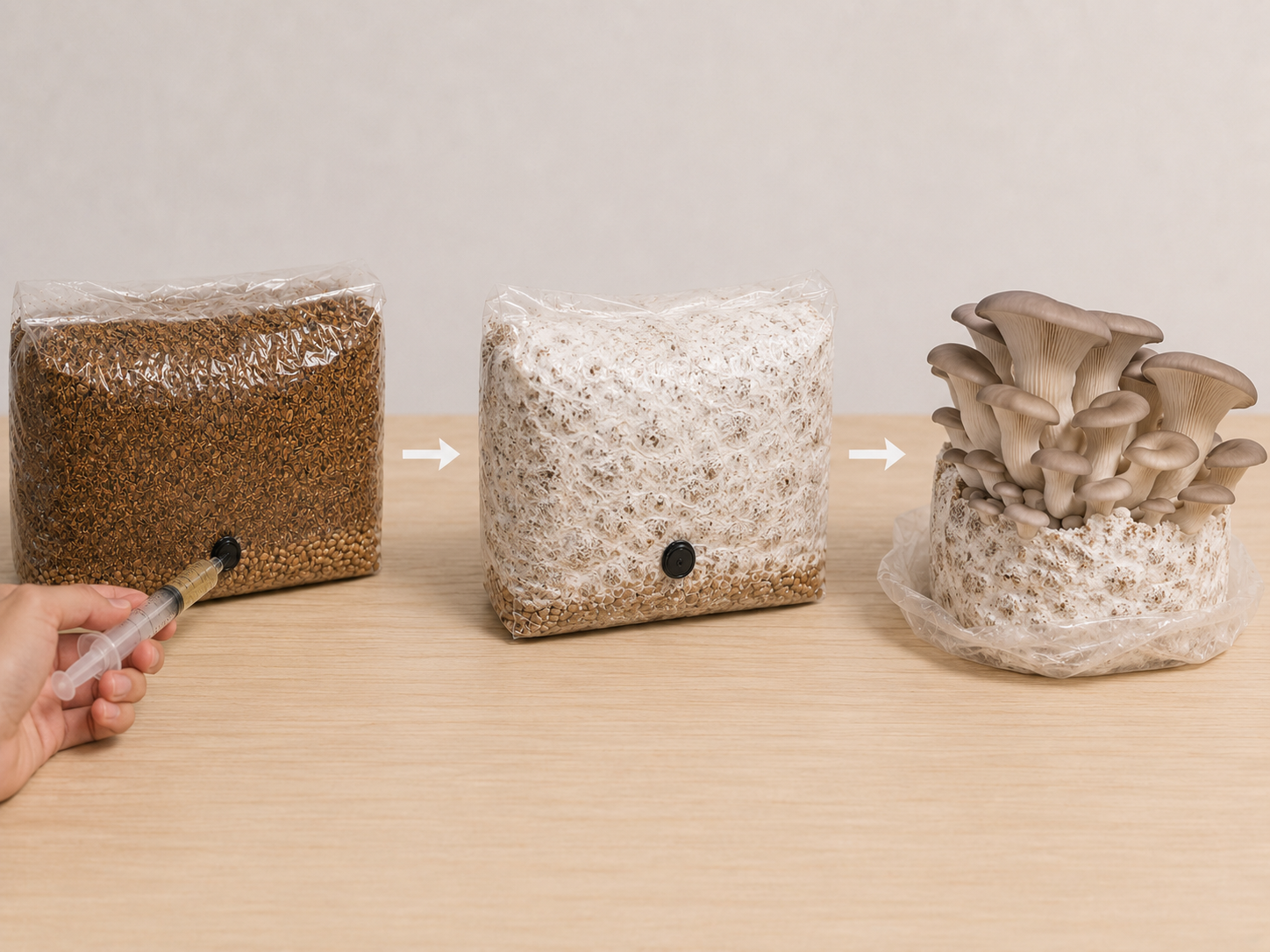
Liquid Culture vs Agar Culture vs Grain Spawn: Which Should You Use?
Liquid culture, agar culture and grain spawn are all used to move living mushroom mycelium into a new growing medium, but they are not interchangeable. Each one represents a different stage of mushroom cultivation and requires a different level of equipment and clean handling.
This beginner-friendly comparison explains what each option contains, how it is used, its main advantages and limitations, and which starting material is most suitable for your next mushroom-growing project.
Quick Answer
- Choose liquid culture when you want the simplest way to inoculate a sealed grain bag or all-in-one grow bag through an injection port.
- Choose an agar culture when you want to inspect, preserve, isolate or expand mushroom genetics and can work with open plates cleanly.
- Choose grain spawn when you want colonised grain that is ready to mix directly into a suitable bulk substrate or outdoor mushroom bed.
The Three Options at a Glance
Liquid Culture
Living mushroom mycelium suspended in a sterile nutrient solution.
Best for injecting sealed grain bags and beginner grow bags through a self-healing injection port.
Agar Culture
Living mushroom mycelium growing across a nutrient gel inside a Petri dish.
Best for inspecting cultures, making transfers, preserving genetics and advanced culture work.
Grain Spawn
Sterilised grain that has already been colonised by living mushroom mycelium.
Best for mixing into hardwood, straw, woodchips or another suitable fruiting substrate.
| Feature | Liquid Culture | Agar Culture | Grain Spawn |
|---|---|---|---|
| Physical form | Mycelium in nutrient liquid | Mycelium on solid nutrient gel | Mycelium colonising cereal grain |
| Main use | Inoculating sterile grain or compatible grow bags | Culture inspection, isolation, cloning and expansion | Inoculating bulk fruiting substrate |
| Typical beginner difficulty | Low when using a sealed injection port | Moderate because the plate must be opened | Low when mixed into prepared substrate cleanly |
| Useful equipment | Sterile syringe needle and injection port | Still-air box or flow hood, sterile scalpel and clean plates | Prepared substrate, clean gloves and a suitable container or filter bag |
| Can cleanliness be inspected easily? | Not always; hidden contamination can be difficult to see | Yes; growth is visible across the plate surface | Partly; colour, recovery and grain condition can be observed |
| Ready for bulk substrate? | Usually no; first used to colonise grain, unless the grow bag is specifically designed for direct injection | No; normally transferred to grain first | Yes |
Important: Sterilised Grain Is Not Yet Grain Spawn
A sterilised grain bag contains hydrated, pressure-sterilised grain but no mushroom culture. It becomes grain spawn only after it has been inoculated and fully colonised by mushroom mycelium.
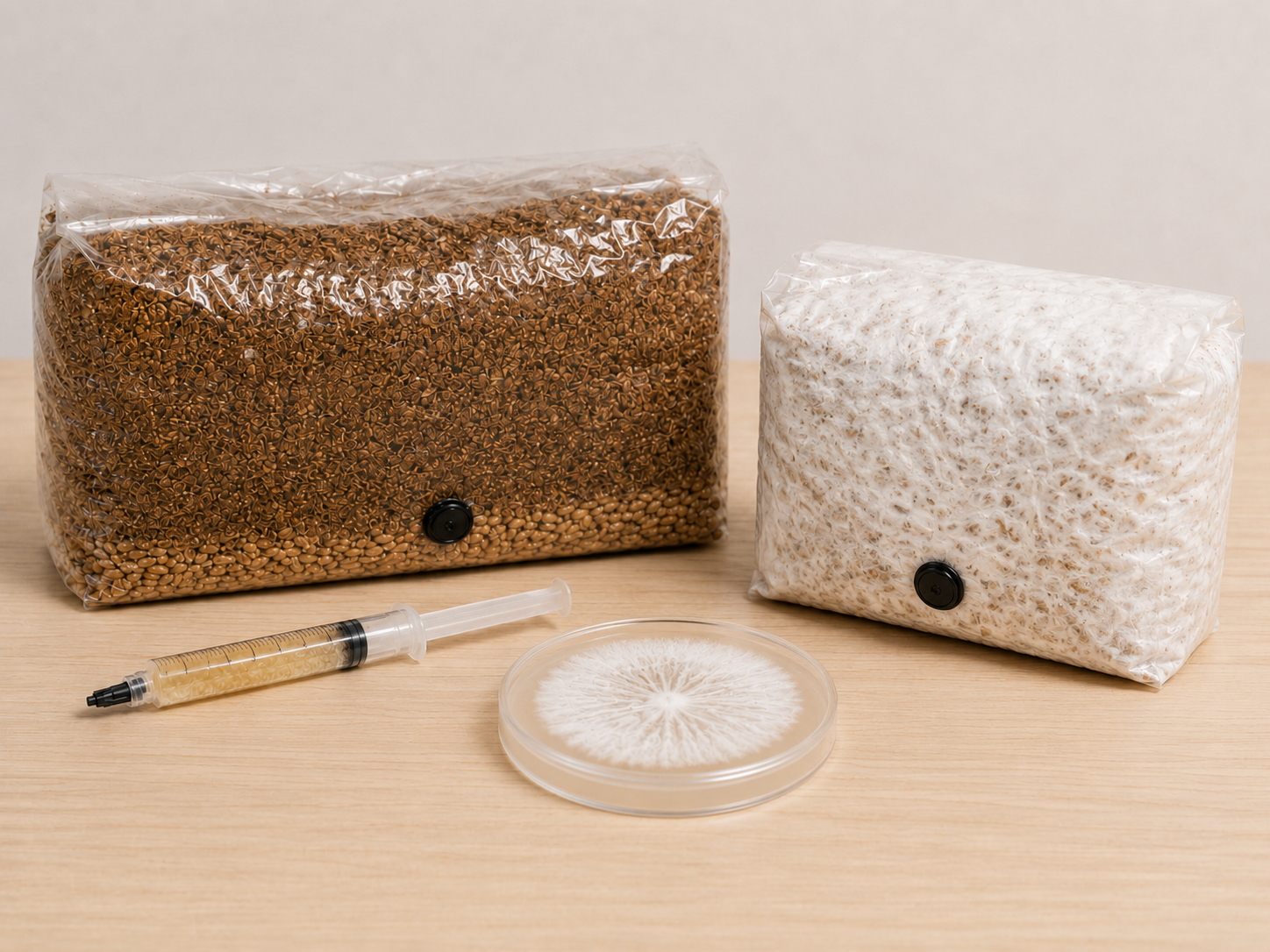
What Is Liquid Culture?
What Liquid Culture Contains
Liquid culture contains living mushroom mycelium suspended in a sterile, nutrient-rich liquid. The mycelium is already established, so it does not need to germinate before it begins colonising a suitable growing medium.
A prepared liquid culture is commonly supplied in a syringe so it can be injected through the self-healing port of a sterile grain bag or compatible all-in-one grow bag.
Main Advantages of Liquid Culture
- Simple to inject through a self-healing port
- The grain bag can remain sealed during inoculation
- Suitable for beginners using ready-made sterile bags
- A small amount can inoculate more than one container
- Established mycelium can begin colonising without spore germination
- Easy to distribute across several areas of a grain bag
Limitations of Liquid Culture
- Contamination may not be obvious by looking at the syringe
- Using too much can add unnecessary moisture to grain
- It is not normally mixed directly into an open bulk substrate
- A sterile needle and suitable injection point are required
- Untested culture may contaminate an entire grain bag
When cleanliness is uncertain, place a small sample onto a sterile agar plate before using the culture on a larger quantity of grain.
Best Uses for Liquid Culture
- Inoculating a sterilised wheat grain bag
- Inoculating an all-in-one mushroom grow bag
- Expanding a clean culture into multiple grain containers
- Testing a culture on blank agar
- Starting a beginner grow without opening the cultivation bag
Browse mushroom liquid cultures or read the complete beginner’s guide to mushroom liquid culture.
What Is an Agar Culture?
What an Agar Culture Contains
An agar culture is living mushroom mycelium growing across a solid, nutrient-rich gel inside a Petri dish. The flat surface makes the growth visible and gives the grower access to selected sections of the culture.
Agar is commonly used to maintain genetics, clone mushroom tissue, isolate clean growth, germinate spores and prepare transfers to grain or liquid culture.
Agar Culture vs Blank Agar Plate
These are different products:
- An agar culture already contains living mycelium from a named mushroom species.
- A blank sterile agar plate contains nutrient gel but no mushroom culture. It is ready for you to inoculate, test or clone.
Browse ready-grown agar cultures or sterile blank agar plates.
Main Advantages of Agar Culture
- Growth can be inspected directly through the plate
- Healthy leading growth can be selected for transfer
- Contamination is often easier to notice than in liquid culture
- Useful for preserving and expanding valuable genetics
- Suitable for cloning fresh mushroom tissue
- Can be transferred to fresh agar, sterile grain or liquid media
Limitations of Agar Culture
- The plate must be opened for transfers
- Open work requires careful sterile technique
- A still-air box or laminar-flow hood is strongly preferred
- A sterile scalpel or suitable transfer tool is needed
- Agar wedges should not be forced through an injection port
- It is less convenient than a syringe for a first beginner grow
Best Uses for Agar Culture
- Maintaining a mushroom culture library
- Checking and cleaning culture growth
- Cloning selected mushrooms
- Making agar-to-agar transfers
- Inoculating sterile grain under clean conditions
- Starting clean liquid culture from selected mycelium
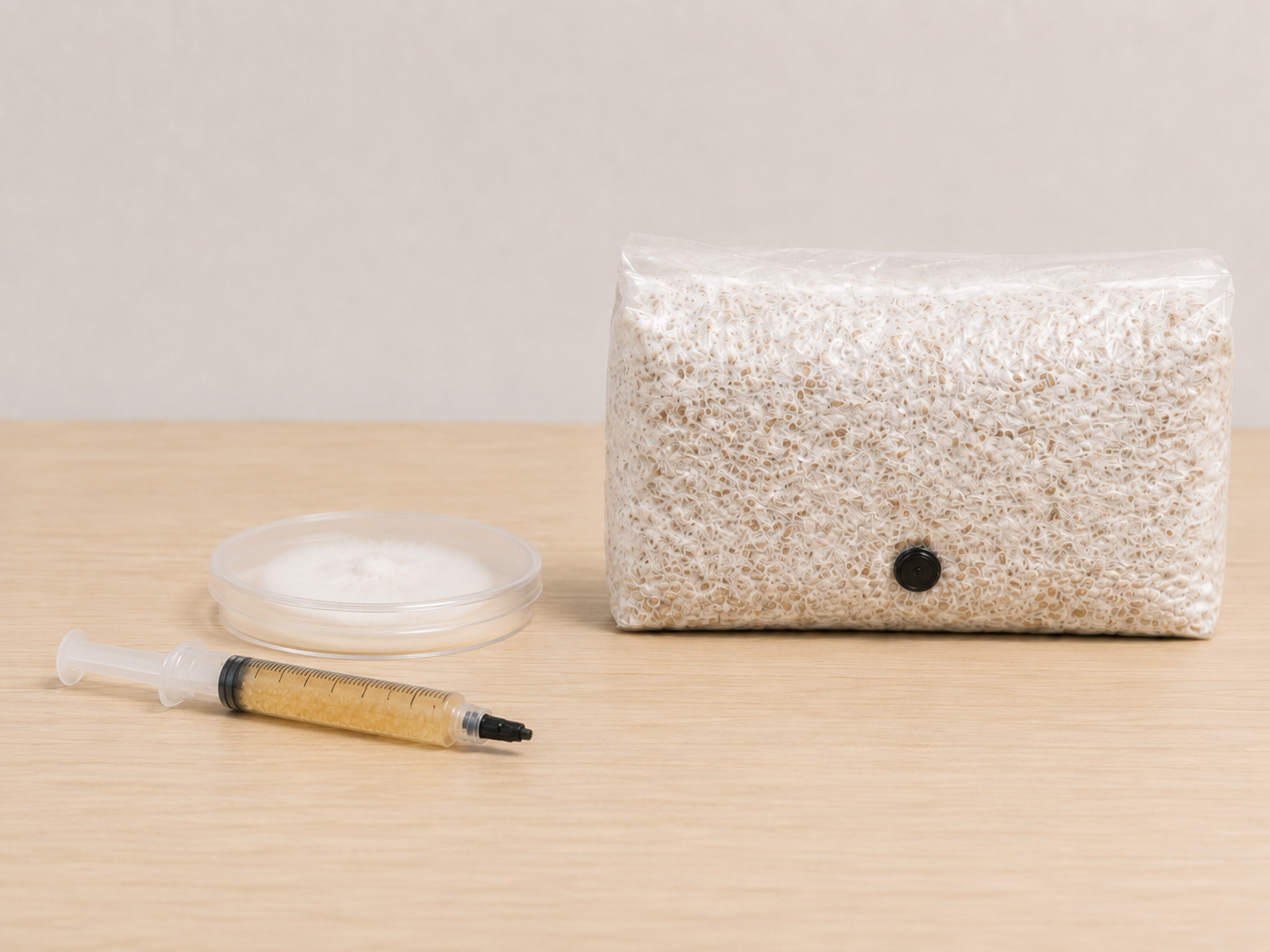
What Is Grain Spawn?
What Grain Spawn Contains
Grain spawn is hydrated, sterilised cereal grain that has already been colonised by mushroom mycelium. Each colonised grain becomes an inoculation point when the spawn is mixed through a larger fruiting substrate.
Grain spawn is not normally the final growing medium. It is the living starter material used to colonise hardwood substrate, straw, woodchips, prepared compost or another species-appropriate material.
Main Advantages of Grain Spawn
- Already colonised and ready to use
- Provides many separate inoculation points
- Spreads evenly when mixed through a substrate
- Removes the need to inoculate and incubate your own grain
- Useful for indoor fruiting blocks and outdoor mushroom beds
- A practical choice when speed and convenience are priorities
Limitations of Grain Spawn
- It is bulkier than a syringe or agar plate
- Freshly prepared spawn may require a longer dispatch time
- It normally needs a separate fruiting substrate
- The bag must be opened when it is mixed into substrate
- It should be used while the mycelium remains vigorous
- The final substrate must match the mushroom species
Grain Spawn vs Sterilised Grain Bag
A sterilised grain bag and grain spawn can look similar, but they are at different stages:
- Grain spawn: already inoculated and colonised, ready to mix into substrate.
- Sterilised grain bag: contains no mushroom culture and must first be inoculated with liquid culture or agar.
Choose fresh mushroom grain spawn when you want active colonised grain that is ready for substrate. Choose a sterilised wheat grain bag when you want to inoculate and produce your own spawn.
Best Uses for Grain Spawn
- Mixing into supplemented hardwood substrate
- Inoculating pasteurised straw for Oyster mushrooms
- Establishing Wine Cap or Oyster mushroom beds in woodchips
- Producing indoor fruiting blocks
- Expanding into additional sterilised grain under clean conditions
Browse the grain spawn range for currently available options.
Which One Should You Choose?
I Am a Complete Beginner Using a Sealed Grow Bag
Choose liquid culture.
A syringe and sterile needle allow you to inoculate a compatible bag through its self-healing port without opening the bag. This is usually the most straightforward starting method for a beginner.
A ready-to-inoculate hardwood mushroom grow bag includes grain and hardwood substrate in the same sealed bag and is designed for this type of inoculation.
I Want to Learn Culture Work and Preserve Genetics
Choose an agar culture.
Agar gives you a visible culture surface and allows selected mycelium to be transferred to fresh plates, grain or liquid media. It is the most useful option for cloning, isolation and long-term culture work.
I Want the Fastest Route to Inoculating Bulk Substrate
Choose grain spawn.
The grain is already colonised, so it can be broken up and mixed into a suitable prepared substrate. You avoid the earlier grain-inoculation and grain-colonisation stages.
I Want to Produce My Own Grain Spawn
Choose liquid culture plus a sterilised grain bag for the simplest closed inoculation method.
Choose agar culture plus sterilised grain when you have suitable clean-transfer equipment and want greater control over the culture.
I Want to Test Whether a Liquid Culture Is Clean
Use a blank sterile agar plate.
Place a small sample of the liquid culture onto the agar and observe how it grows before using the syringe on a full grain bag. Read the mushroom contamination guide for signs of healthy and suspicious growth.
Simple Beginner Workflow
- Select a healthy mushroom liquid culture.
- Inject it into a sterilised grain bag or compatible all-in-one bag.
- Allow the grain to colonise completely.
- Use the colonised grain as spawn for a suitable substrate.
- Allow the new substrate to colonise before introducing fruiting conditions.
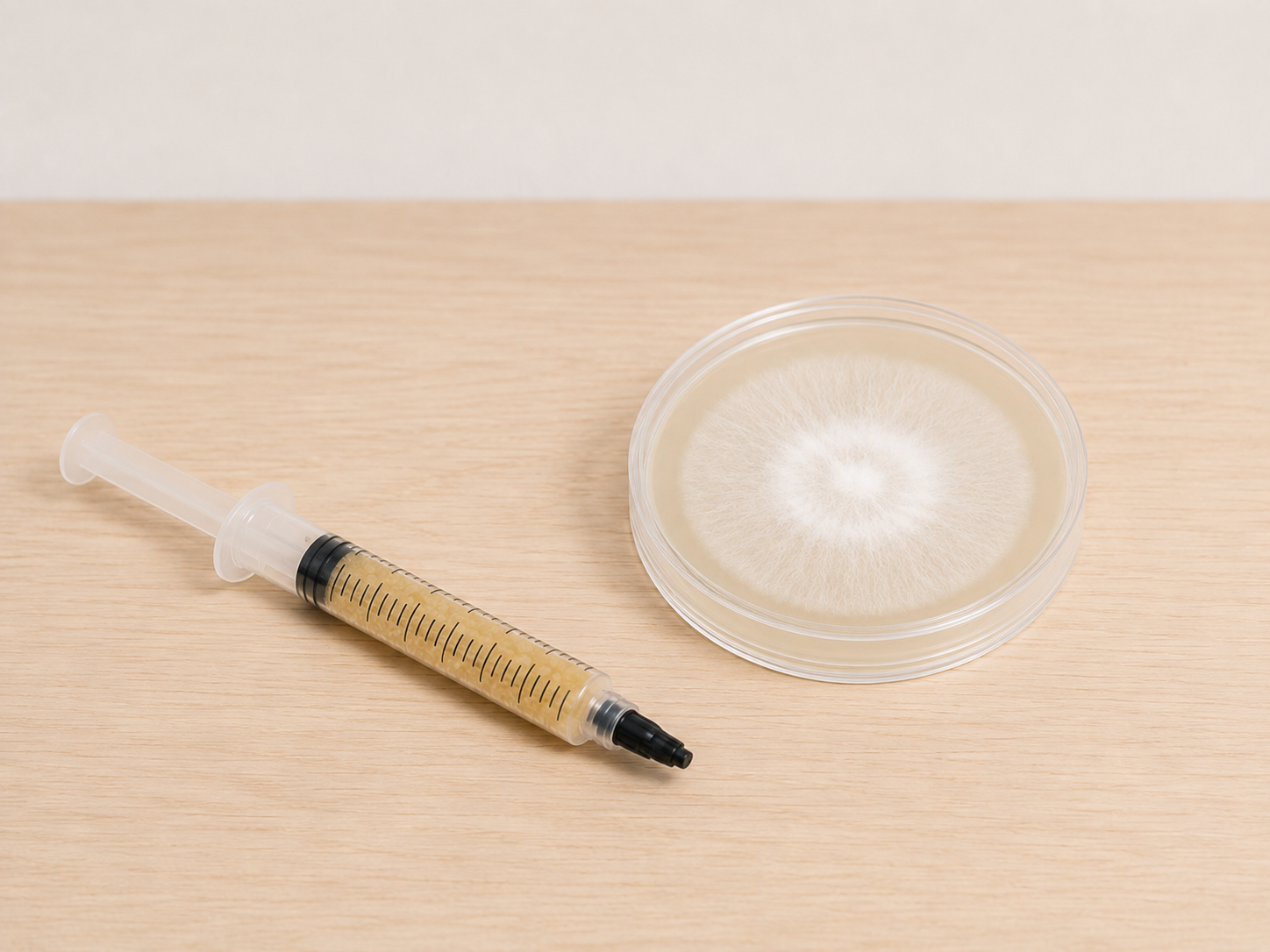
Frequently Asked Questions
Is Liquid Culture the Same as Grain Spawn?
No. Liquid culture is mycelium suspended in nutrient liquid. Grain spawn is sterilised grain that has already been colonised by mycelium.
Liquid culture is commonly used to create grain spawn. Grain spawn is then used to inoculate a larger fruiting substrate.
Is an Agar Culture the Same as an Agar Plate?
Not always. An agar culture is an agar plate that already contains living mushroom mycelium. A blank agar plate contains only sterile nutrient gel and must still be inoculated.
Can I Inject an Agar Culture Through a Bag’s Injection Port?
No. A solid agar wedge should not be forced through an injection port. Agar is normally transferred into a grain container while the container is open under suitable clean conditions.
Can I Inject Liquid Culture into Grain Spawn?
No. Grain spawn already contains established mushroom mycelium. Additional liquid culture is unnecessary and can add moisture, introduce contamination or mix different cultures.
Can I Fruit Mushrooms Directly from Grain Spawn?
Grain alone is not normally the recommended final fruiting medium. It may dry quickly, contaminate after opening and produce limited results.
Mix the grain spawn into a species-appropriate substrate such as hardwood, straw, woodchips or prepared mushroom compost.
Which Option Has the Lowest Contamination Risk?
No living culture is completely free from contamination risk.
For a beginner, injecting prepared liquid culture through a self-healing port reduces open-air handling. Agar allows culture cleanliness to be inspected more easily, but transfers require the plate and receiving container to be opened. Grain spawn removes the earlier culture-expansion stages but must still be mixed into substrate cleanly.
Which Option Stores for the Longest?
Storage depends on the mushroom species, culture age, cleanliness and temperature. Agar cultures are often used for maintaining genetics because they can be transferred to fresh plates. Refrigerated liquid cultures can also remain useful for an extended period.
Grain spawn is generally intended for timely use because mature mycelium continues ageing and consuming the grain.
Can One Method Be Used to Make Another?
Yes. Common workflows include:
- Agar culture to fresh agar
- Agar culture to liquid culture
- Agar culture to sterilised grain
- Liquid culture to sterilised grain
- Liquid culture to blank agar for testing
- Grain spawn to additional sterilised grain
- Grain spawn to a bulk fruiting substrate
Choose the Right Starting Material
The best choice depends on what you want to do next. Liquid culture is the simplest route into a sealed grain or all-in-one bag. Agar culture offers the greatest visibility and control for culture work. Grain spawn is the most direct option for inoculating prepared bulk substrate.