 Image 1 of 2
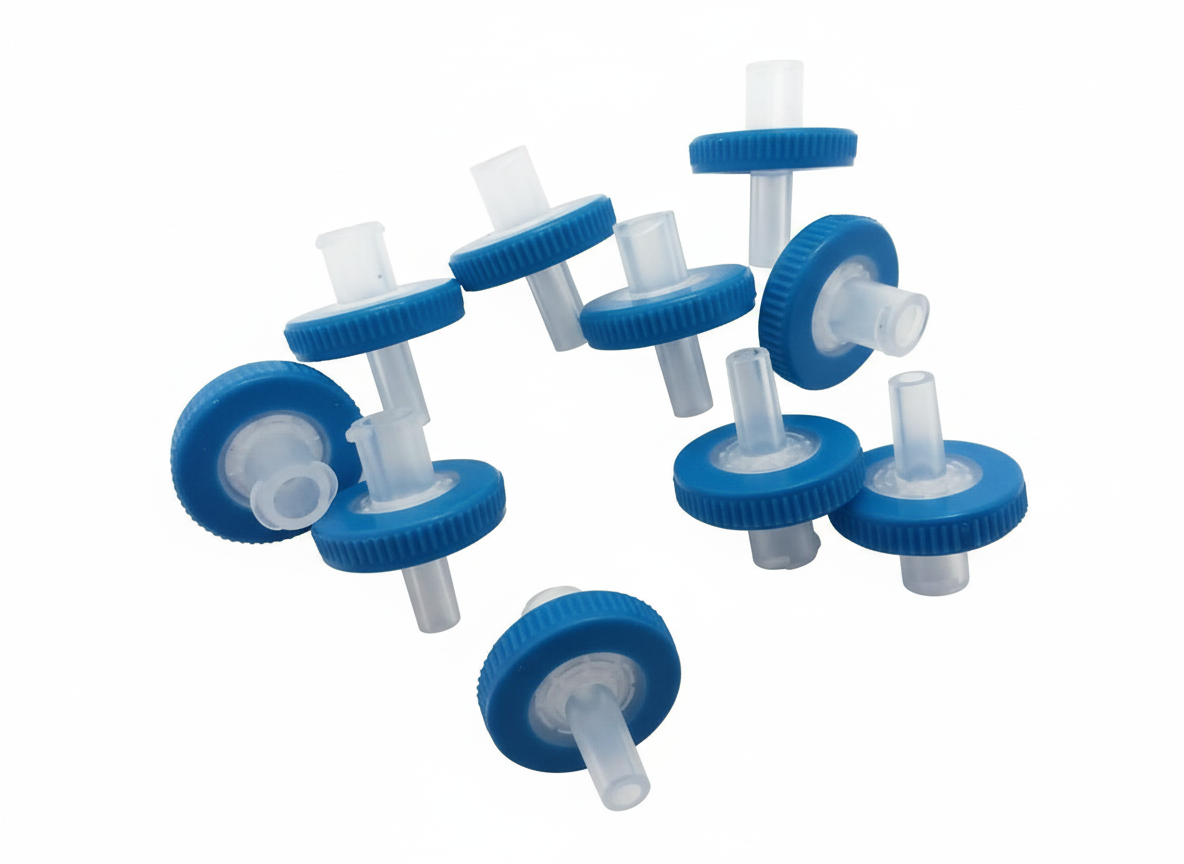 Image 2 of 2
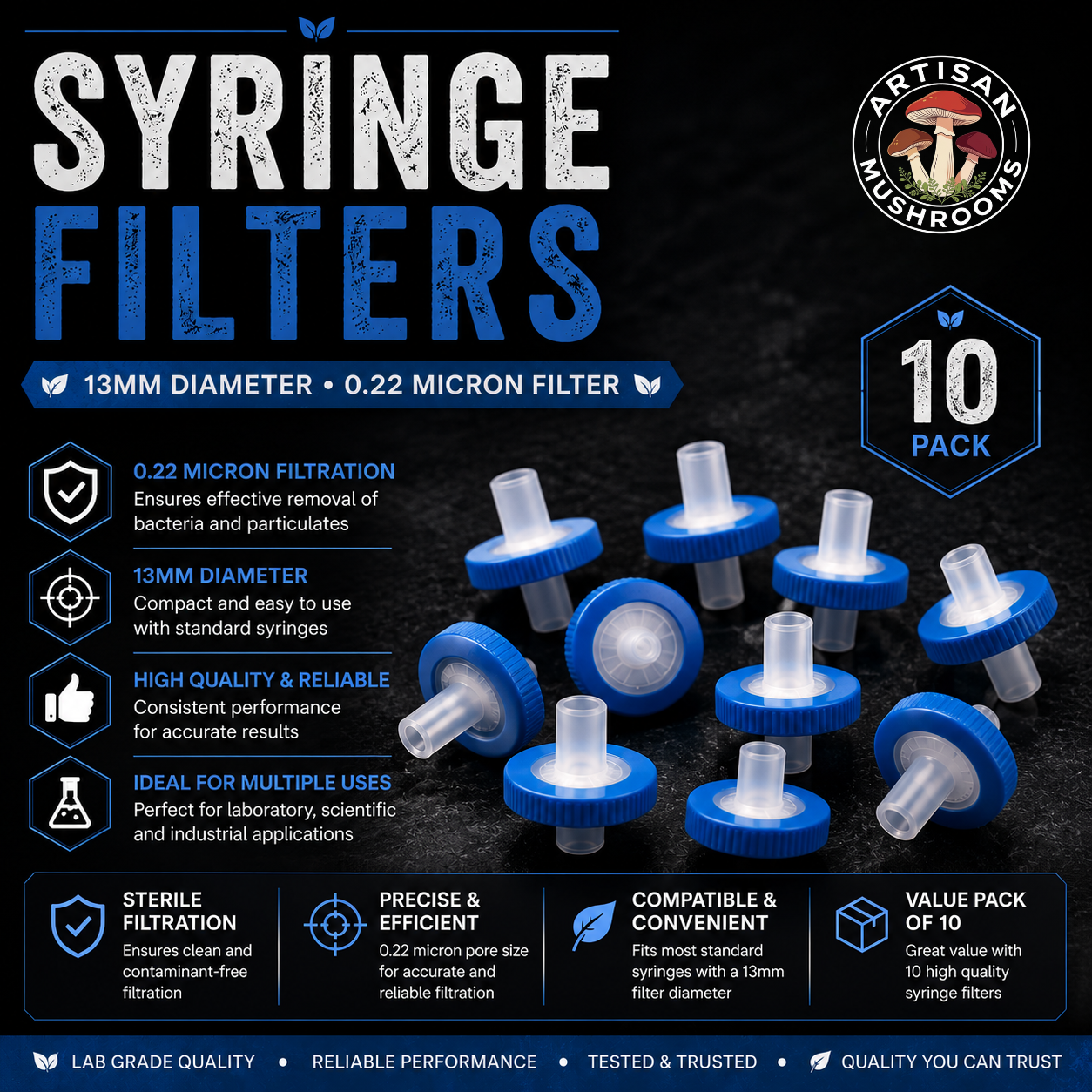
Syringe Filters 13mm Diameter - 0.22 Micron Filter - Pack Of 10

13mm 0.22 Micron Syringe Filters FAQ
What is included in each pack?
Each pack contains:
10 syringe filters
13 mm diameter filter housing
0.22 micron filtration membrane
Protective packaging for storage and delivery
Are the syringe filters supplied sterile?
No. These syringe filters are not supplied sterile.
They must be cleaned or sterilised using a method appropriate for the intended application before being introduced into sterile culture work.
Do not use a filter directly from the packaging in a sterile liquid-culture or laboratory setup without suitable preparation.
What are 0.22 micron syringe filters used for?
These filters are suitable for mycology and general laboratory applications, including:
Filtered gas exchange in liquid-culture jars
Modified culture jar lids
Filtering compatible laboratory liquids
Filtering air or gases
Media-preparation projects
Custom laboratory equipment
When used in sterile culture work, the filter and complete lid assembly must be prepared appropriately before use.
What does 0.22 micron mean?
The 0.22 micron rating refers to the approximate pore size of the filter membrane.
The fine membrane is designed to remove very small particles and many common microbial contaminants from compatible air, gas or liquid streams.
A 0.22 micron rating does not mean that the unused filter is already sterile.
It also does not guarantee removal of every virus, dissolved chemical, toxin or contaminant.
What does 13mm diameter mean?
The circular filter housing measures approximately 13 mm across.
Its compact size makes it suitable for small culture jars, modified lids and laboratory filtration projects where a larger filter is unnecessary.
Can these filters be used on liquid-culture jars?
Yes. They are commonly fitted to liquid-culture jar lids to provide filtered gas exchange.
Growing mushroom mycelium consumes oxygen and releases carbon dioxide. A filtered vent allows gases to move through the lid while helping reduce the entry of airborne contaminants.
A modified liquid-culture lid commonly contains:
One syringe filter for gas exchange
One self-healing injection port for adding or withdrawing culture
The completed lid and filter assembly must be sterilised or prepared appropriately before sterile culture use.
What is an airport lid?
An airport lid is a modified culture jar lid containing:
A filtered gas-exchange port
A self-healing injection port
The syringe filter allows filtered air exchange, while the injection port allows a sterile needle to enter the jar without removing the lid.
Both fittings must form secure seals around the lid openings.
How should the filter be prepared before sterile culture work?
The correct preparation method depends on the materials used in the filter housing and membrane.
When fitting the filter to a liquid-culture or media jar:
Install it securely into the lid.
Check for gaps around the fitting.
Confirm that the filter materials are compatible with your intended sterilisation method.
Sterilise or prepare the complete lid assembly appropriately.
Allow it to cool or dry fully before use.
Avoid touching the filter connections after preparation.
Do not pressure sterilise, boil or heat the filter unless its materials are confirmed as suitable for that process.
Can the filters be pressure sterilised?
Only pressure sterilise the filters if their membrane and housing materials are confirmed as heat and pressure resistant.
Different syringe filters may contain different membrane materials, adhesives and plastic housings.
An unsuitable filter may:
Warp
Crack
Melt
Separate internally
Lose filtration performance
Develop leaks around the housing
Do not assume that every 0.22 micron syringe filter is autoclavable.
Should the filter touch the liquid culture?
No. When used as a gas-exchange filter, it should remain above the liquid.
Avoid:
Overfilling the jar
Tilting the jar until liquid reaches the filter
Shaking liquid directly against the membrane
Allowing condensation to soak the filter
Submerging the filter
A wet membrane may restrict airflow and may no longer perform reliably as a dry gas-exchange filter.
Why should the filter remain dry?
When used for air exchange, the membrane must remain open enough for gases to pass through it.
Liquid can block the small pores and significantly reduce airflow.
A wet filter may cause:
Restricted gas exchange
Pressure changes inside the jar
Stalled culture growth
Contamination movement through the wet membrane
Liquid leaking into the filter housing
Keep the culture level well below the lid.
How is the filter fitted to a jar lid?
Installation depends on the design of the lid and filter connection.
The filter must fit securely so that unfiltered air cannot enter around its outside edge.
A suitable installation may use:
A correctly sized push-fit opening
A compatible threaded fitting
A suitable Luer connection
A heat-resistant sealing material
A purpose-made culture jar lid
Inspect the completed lid for gaps, cracks and loose fittings before use.
Do I still need a self-healing injection port?
Yes. The syringe filter and injection port perform different functions.
The syringe filter provides filtered gas exchange.
The self-healing injection port provides a puncture point for a sterile needle.
Do not push an inoculation needle through the syringe-filter membrane.
Doing so can damage the filter and create a direct contamination route.
Can the filters be used for liquid filtration?
Yes. They can be used to filter compatible, low-viscosity laboratory liquids.
A basic process is:
Prepare the filter appropriately for the intended work.
Connect it securely to a compatible syringe.
Hold it over a clean receiving container.
Apply slow and steady pressure.
Stop if excessive resistance develops.
Dispose of or clean the filter as appropriate after use.
Do not use excessive force. A blocked filter can cause the connection to separate suddenly.
Can I filter mushroom liquid culture through one?
Do not filter established liquid culture containing mushroom mycelium.
The mycelium can block the 0.22 micron membrane and may be removed from the solution.
Finished liquid culture should normally be tested on a sterile LME agar plate rather than passed through a syringe filter.
Can the filter make a contaminated culture clean?
No. Do not attempt to rescue contaminated liquid culture by filtering it.
Filtration may not remove:
Dissolved microbial waste
Toxins
Contaminants attached to the mycelium
Organisms smaller than the membrane rating
Contamination introduced after filtration
Dispose of contaminated culture safely and begin again with clean materials.
Can thick or cloudy liquids be filtered?
Thick, cloudy or particle-rich liquids may block the membrane quickly.
The filters are best suited to compatible, low-viscosity liquids containing minimal suspended material.
Stop applying pressure if the liquid will not pass through easily.
Can the filters be reused?
For contamination-sensitive work, using a fresh filter for each unrelated culture or project is recommended.
Reuse can result in:
Membrane blockage
Reduced airflow
Retained moisture
Cross-contamination
Damage to the housing
Unreliable filtration
Because the filters are not supplied sterile, they must also be prepared appropriately before their first use.
How can I tell if a filter is blocked?
Possible signs include:
Little or no gas exchange
Liquid visible inside the housing
A wet membrane
Pressure building inside the jar
A vacuum forming as the jar cools
Stalled culture growth
Cracking or deformation
Do not blow through the filter with your mouth to test it.
Replace a wet, damaged or suspected blocked filter.
How should unused filters be stored?
Store unused filters:
Inside their original packaging
In a clean, dry environment
Away from direct sunlight
Away from excessive heat
Protected from dust and moisture
Away from strong chemicals and vapours
Out of reach of children and pets
Remember that the packaging protects them during storage but does not make them sterile.
How should used filters be disposed of?
Dispose of used filters according to the material that has passed through them and your local laboratory-waste rules.
A filter exposed to contaminated culture or biological material should be sealed before disposal.
Do not reuse a filter that has been exposed to visible contamination.
Are these filters intended for medical use?
No. These syringe filters are sold for mycology and general laboratory applications.
They are not supplied for:
Injection into people or animals
Filtering medication
Intravenous applications
Clinical diagnosis
Medical treatment
Where are the syringe filters shipped from?
Each order contains 10 non-sterile 13 mm syringe filters with a 0.22 micron membrane, carefully packed and shipped directly from Ireland.
Fast shipping is available to customers across Ireland, the UK, Europe, the United States and Canada.