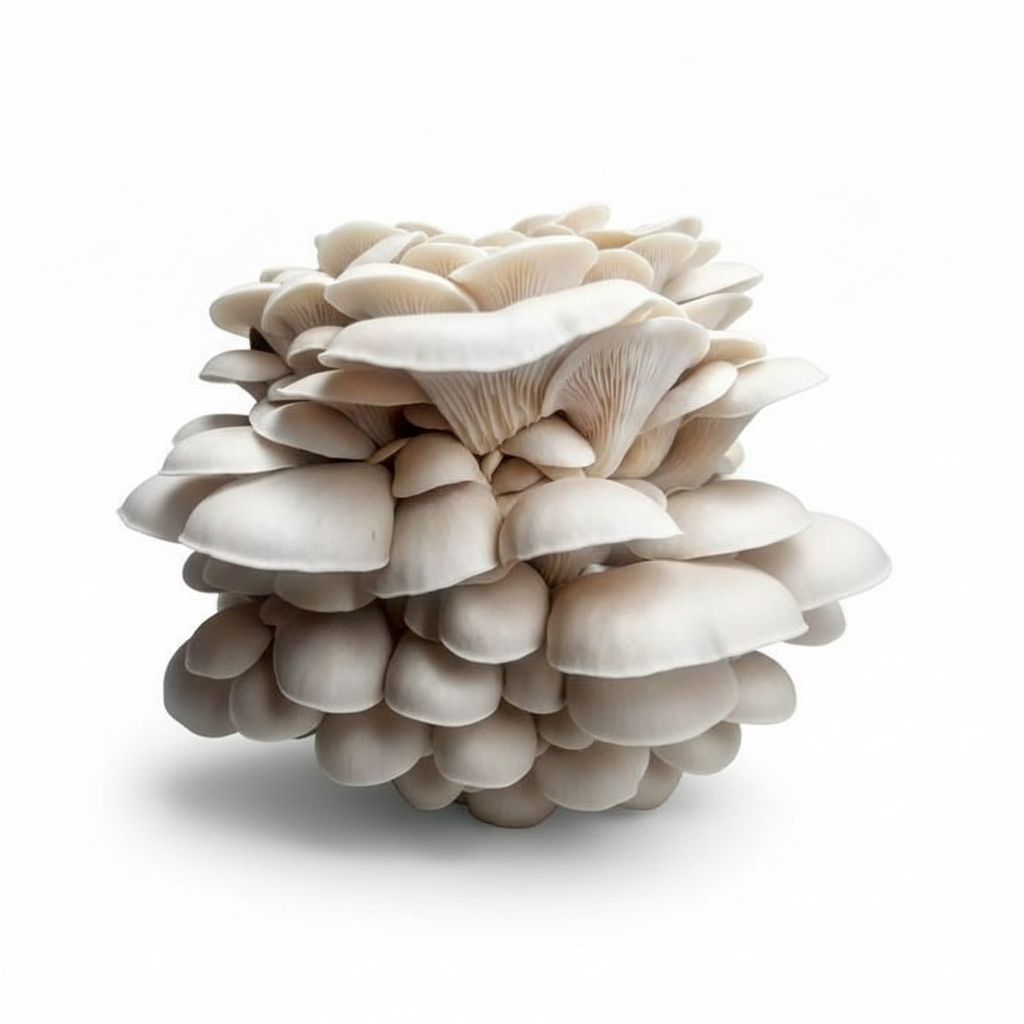
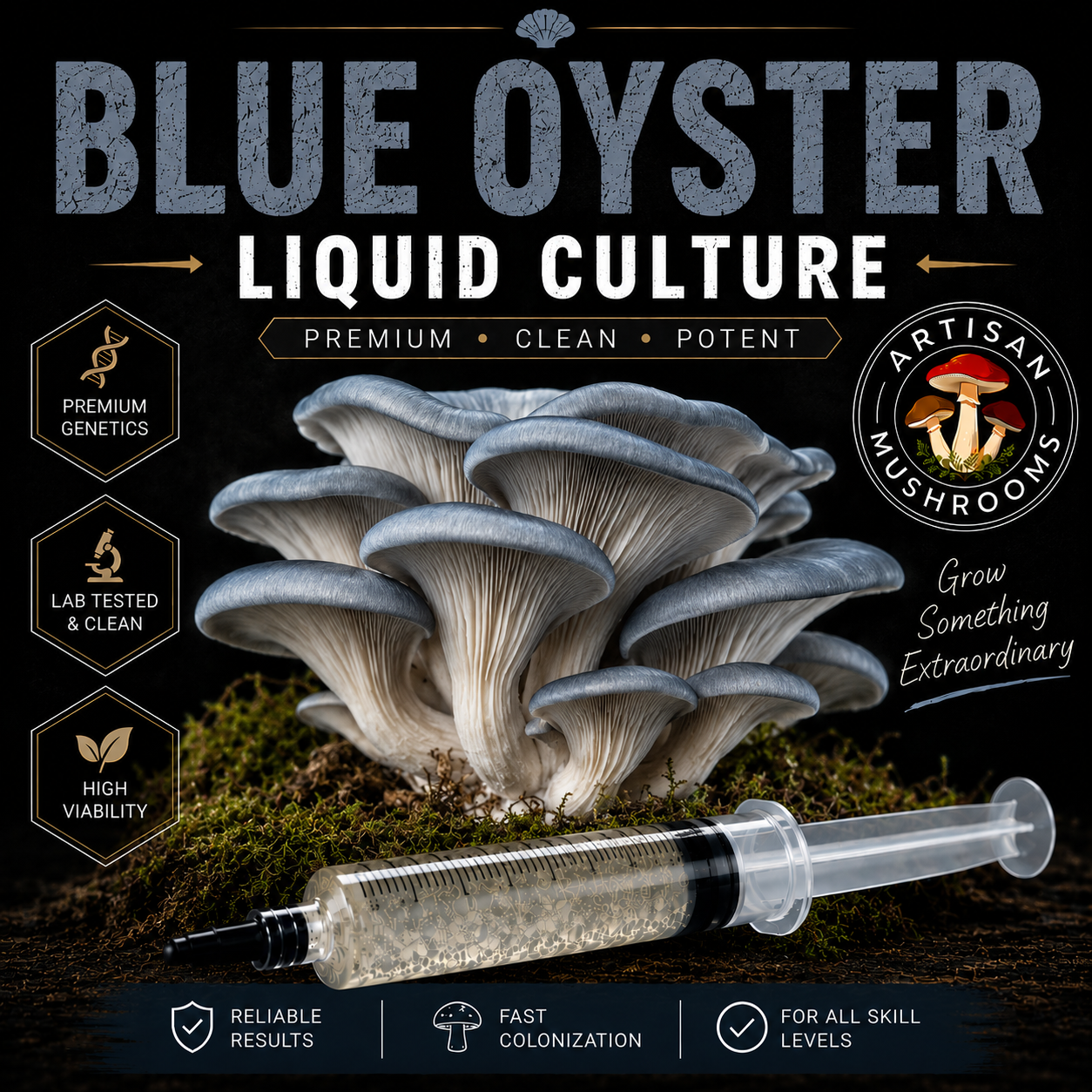
 Image 1 of 3
 Image 2 of 3
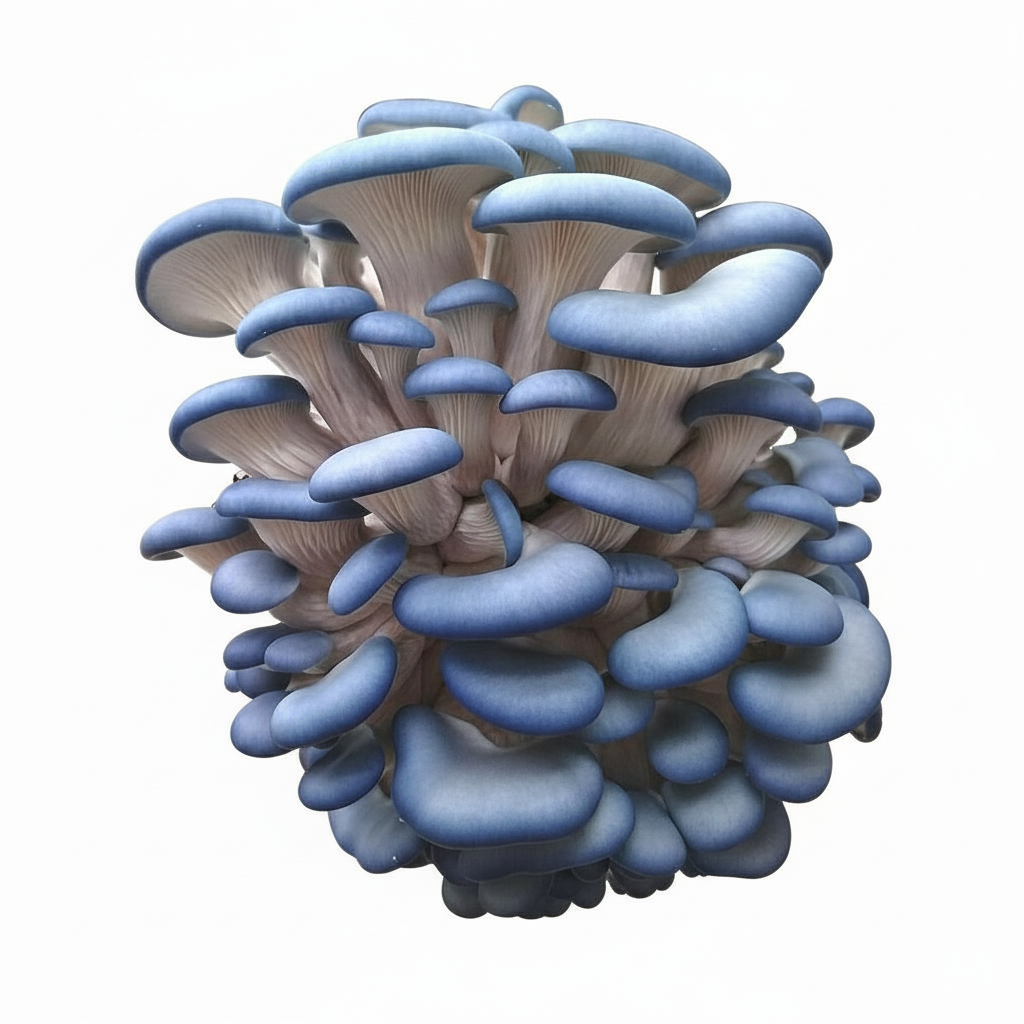 Image 3 of 3

Blue Oyster Liquid Culture FAQ
What is the scientific name of Blue Oyster?
The scientific name commonly used for Blue Oyster is Pleurotus ostreatus var. columbinus. It is also frequently listed more broadly as Pleurotus ostreatus.
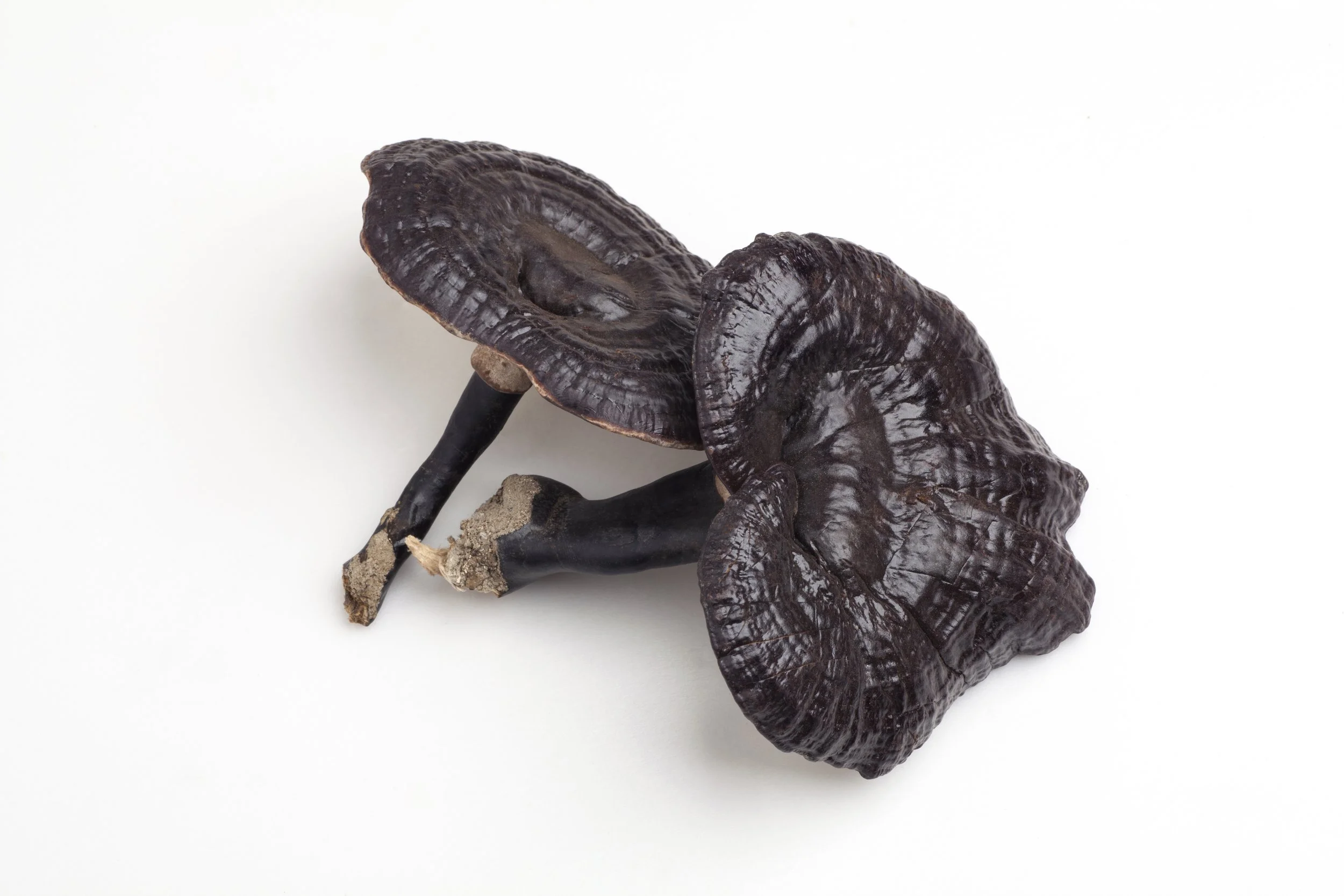
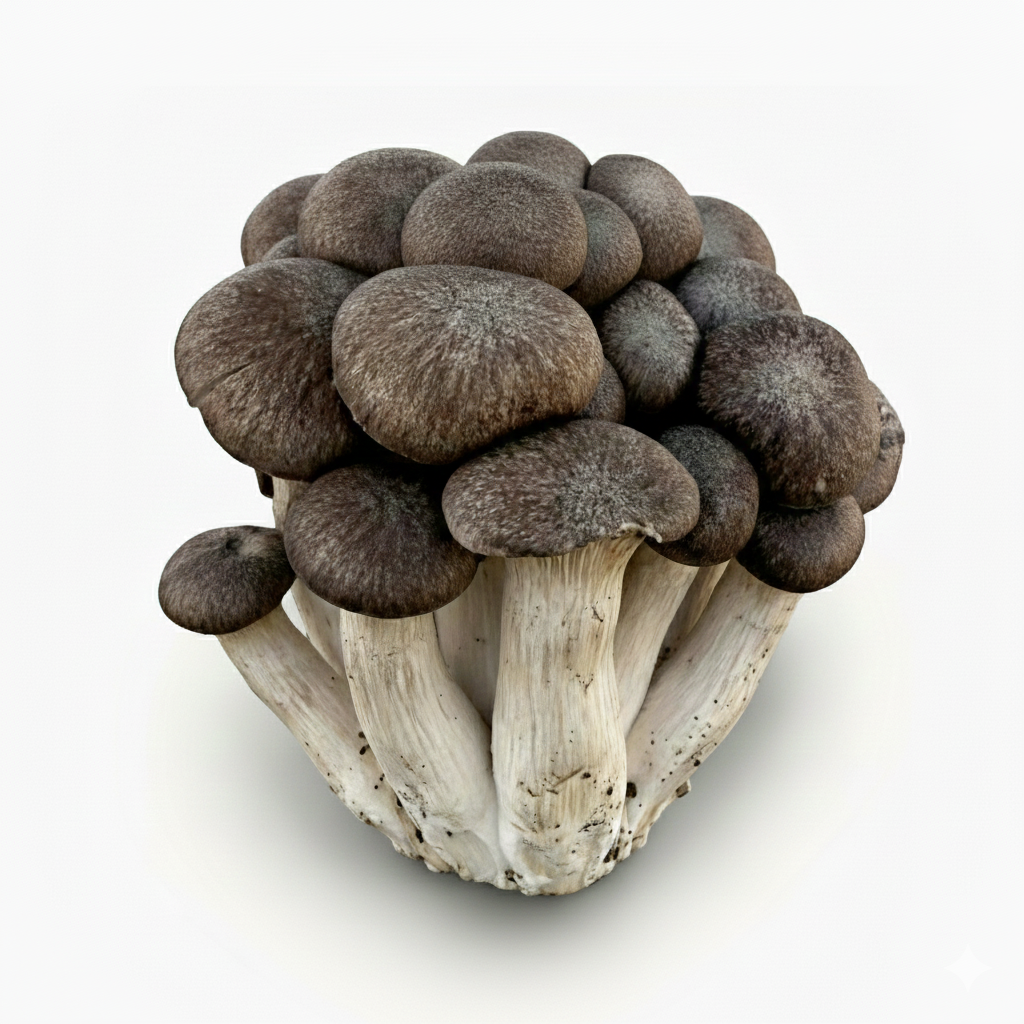
Blue Oyster is a cool-weather Oyster mushroom variety known for producing dense clusters of attractive blue-grey caps and pale stems. The blue colour is normally strongest when the mushrooms are young and grown under cooler fruiting conditions.
What substrate is best for growing Blue Oyster?
Blue Oyster mushrooms grow particularly well on sterilised hardwood-based substrates. Supplemented hardwood sawdust containing hardwoods such as oak or beech is an excellent choice for indoor cultivation.
They can also grow on straw, hardwood pellets, wood-chip blends and other suitable plant-based materials. When using a nutritious supplement such as wheat bran, the substrate must be properly sterilised because supplemented mixtures are more susceptible to contamination.
Our 2kg Sterilised Hardwood and Wheat Bran Substrate provides a prepared fruiting substrate suitable for growing Blue Oyster mushrooms.
For more detailed cultivation information, read our complete Blue Oyster mushroom growing guide.
Can I inoculate a grow bag directly?
Yes. Blue Oyster liquid culture can be injected directly into our Sterile Hardwood Mushroom Grow Bag using a sterile needle and the self-healing injection port.
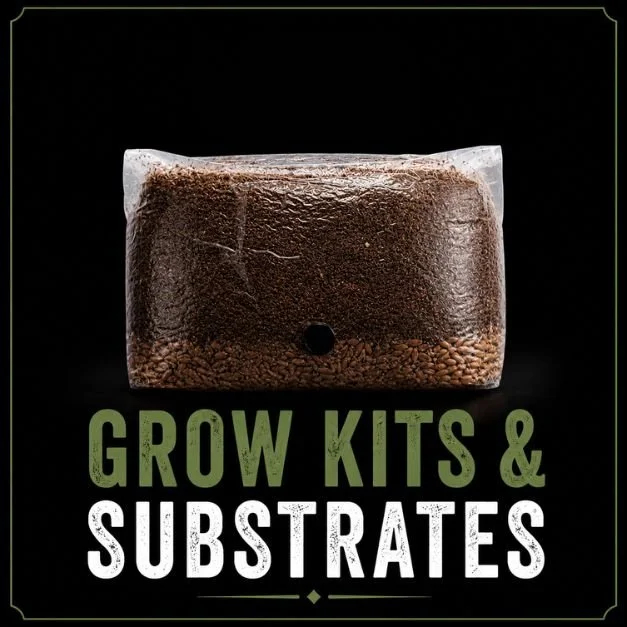
The bag contains a sterilised hardwood-based substrate supplemented with wheat bran, allowing the liquid culture to be introduced without preparing and sterilising your own growing medium.
Blue Oyster mycelium is vigorous and can colonise a suitable hardwood grow bag directly. However, the more traditional method is to first inoculate sterilised grain. Once the grain has fully colonised, it can be mixed with a sterilised hardwood fruiting substrate.
Using colonised grain helps distribute the mycelium evenly throughout the final substrate and can provide faster, more consistent colonisation.
Can Blue Oyster liquid culture be used on grain?
Yes. Sterilised grain is commonly used as the first stage of Blue Oyster cultivation.
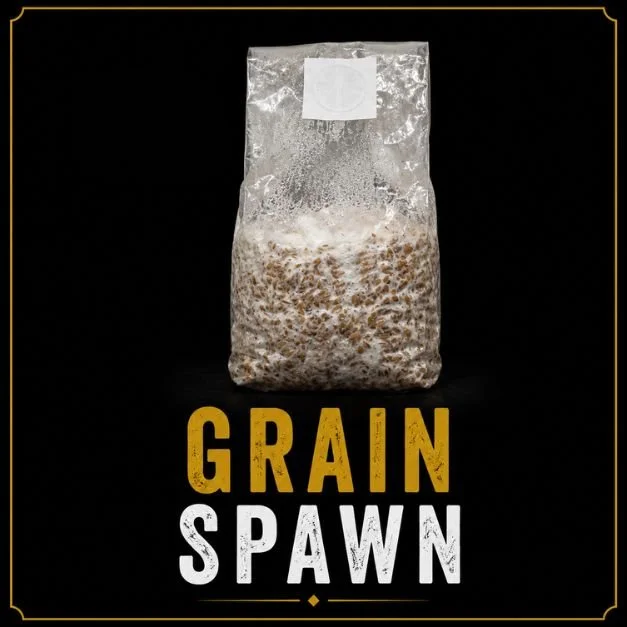
The liquid culture can be injected into our 2kg Sterilised Wheat Grain Bag and allowed to colonise the grain, creating Blue Oyster grain spawn.
Once the grain is fully colonised, it can be mixed with our 2kg Sterilised Hardwood and Wheat Bran Substrate for colonisation and fruiting.
Blue Oyster is known for fast and aggressive mycelial growth, making it one of the more reliable gourmet mushroom species for producing grain spawn.
Do you sell sterilised grain and substrate?
Yes. We offer pre-sterilised wheat grain bags, sterilised hardwood and wheat bran substrate, and ready-to-inoculate hardwood grow bags to simplify the cultivation process.
Using prepared grain and substrate removes the need to hydrate, mix and pressure sterilise your own growing media. It reduces the amount of specialist equipment required and can help lower the risk of contamination.
A typical growing process is:
Inoculate a pre-sterilised grain bag with Blue Oyster liquid culture.
Allow the grain to become fully colonised with mycelium.
Mix the colonised grain spawn with a sterilised hardwood and wheat bran substrate.
Allow the hardwood substrate to become fully colonised.
Introduce cooler fruiting conditions with high humidity, fresh air and indirect light.
Harvest the clusters before the cap edges begin to curl significantly upwards.
Alternatively, our Sterile Hardwood Mushroom Grow Bag provides a simpler all-in-one option. The Blue Oyster liquid culture can be injected directly through the self-healing injection port without preparing separate grain or substrate.
Is Blue Oyster suitable for beginners?
Yes. Blue Oyster is one of the most beginner-friendly gourmet mushroom varieties.
It colonises quickly, grows vigorously and can produce generous clusters when suitable conditions are provided. Its aggressive mycelium can also recover well from minor fluctuations in growing conditions.
Clean handling, suitable humidity and regular fresh-air exchange are still important. Oyster mushrooms produce a significant amount of carbon dioxide during growth, so poor ventilation can result in long stems and small caps.
Using pre-sterilised grain and ready-to-use hardwood substrate simplifies the process because you do not need to prepare and sterilise the growing media yourself.
The ready-to-inoculate hardwood grow bag is the most straightforward option for growers who want to inject the liquid culture directly into a prepared fruiting substrate.
How should I store the liquid culture?
Keep the Blue Oyster liquid culture syringe refrigerated at approximately 2°C to 4°C until you are ready to use it. Do not freeze it.
For the best viability, use the culture within three months of receiving it. Before inoculation, allow the syringe to come closer to room temperature and shake it gently to distribute the Blue Oyster mycelium throughout the nutrient solution.
Always keep the protective cap fitted while the syringe is in storage. Attach a new sterile needle immediately before inoculating grain, agar or a grow bag.
How much liquid culture should I use?
The amount of liquid culture required depends on the size and type of growing medium.
For one of our sterile LME agar plates, one or two small drops are normally sufficient. A small grain jar may require approximately 1 to 2 ml, while a larger grain bag may require approximately 5 to 10 ml.
Using too much liquid culture can introduce excess moisture into the grain, which may increase the risk of bacterial contamination. Always use an appropriate amount for the size of the container.
When inoculating our 2kg Sterilised Wheat Grain Bag, approximately 5 to 10 ml can be used.
Does the syringe contain mushroom spores?
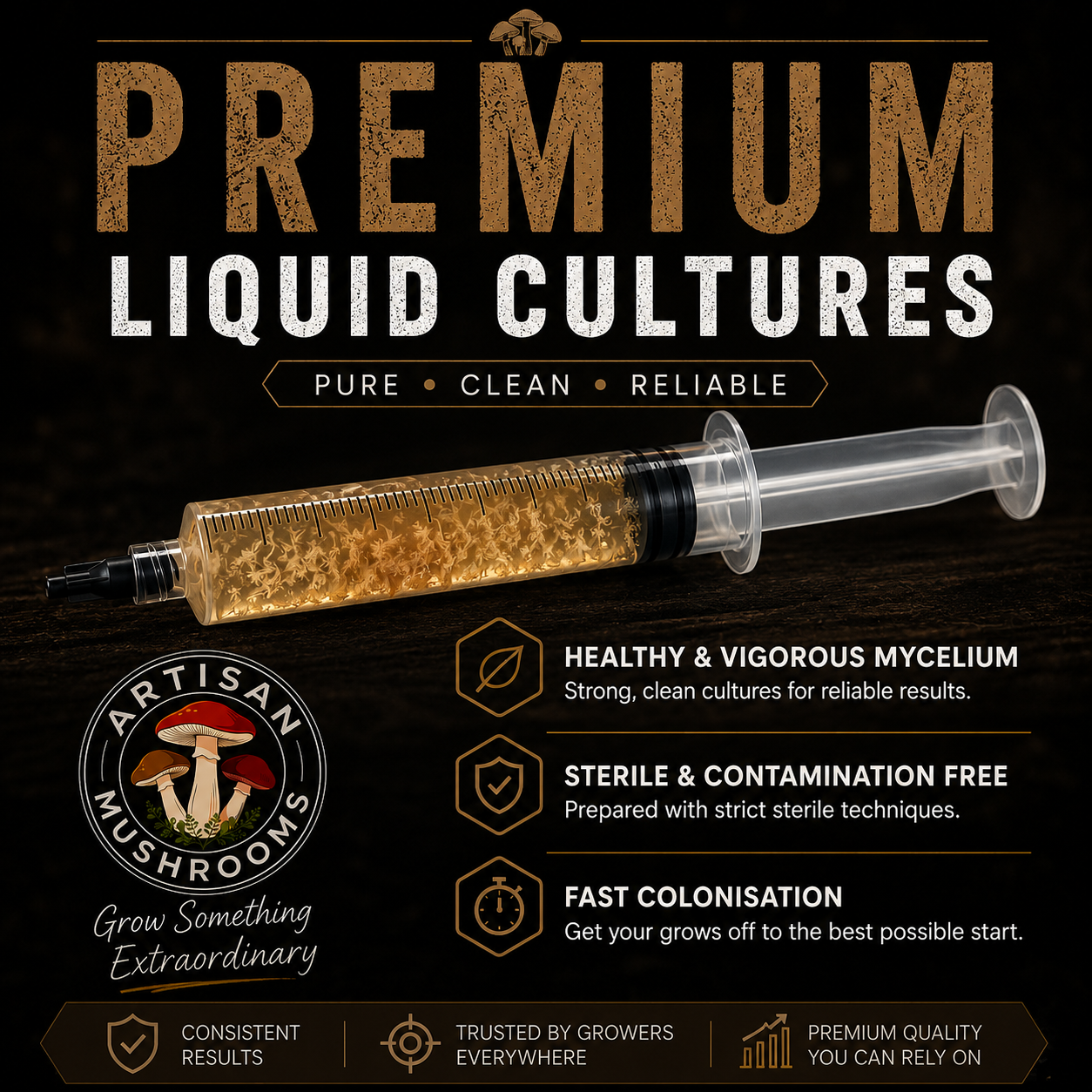
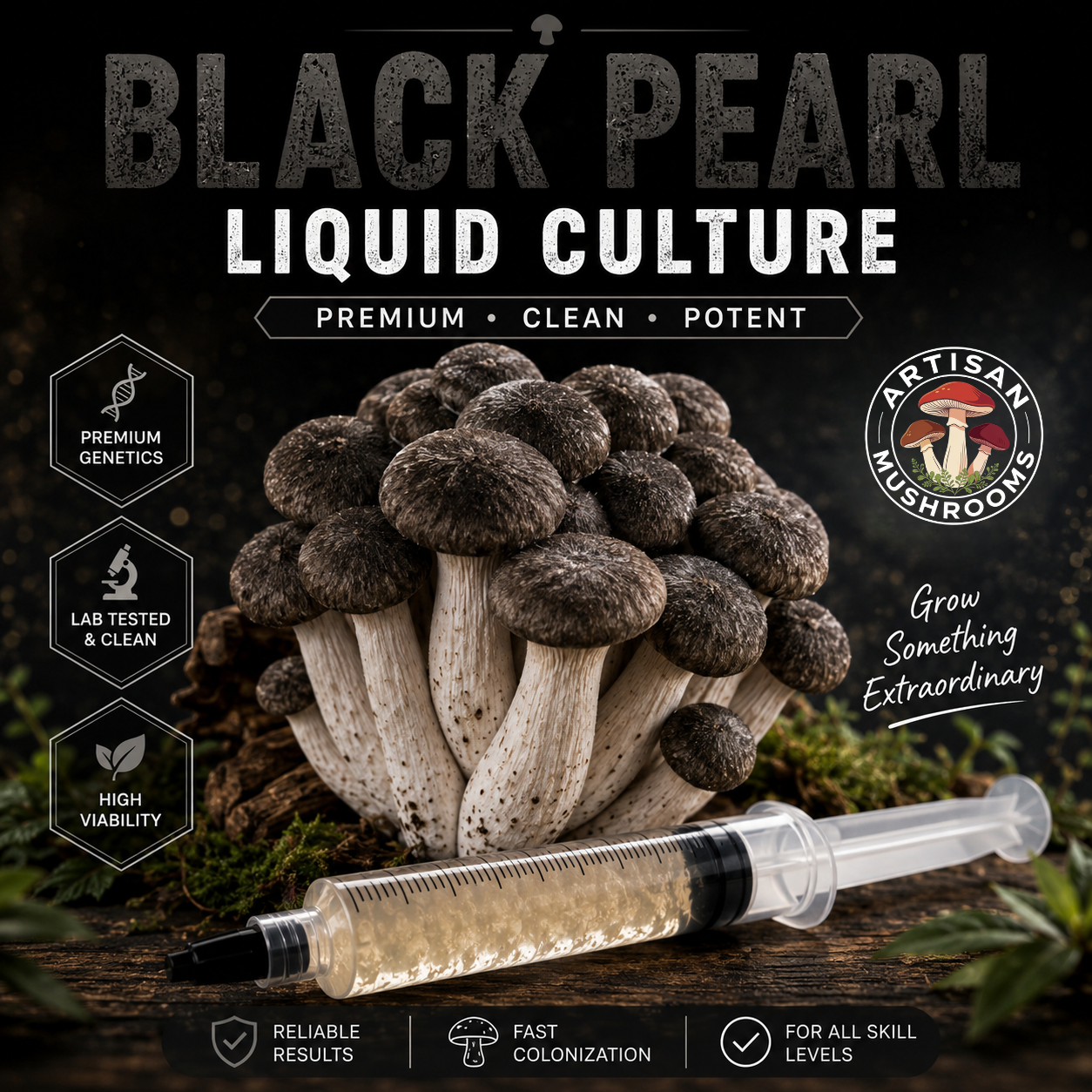
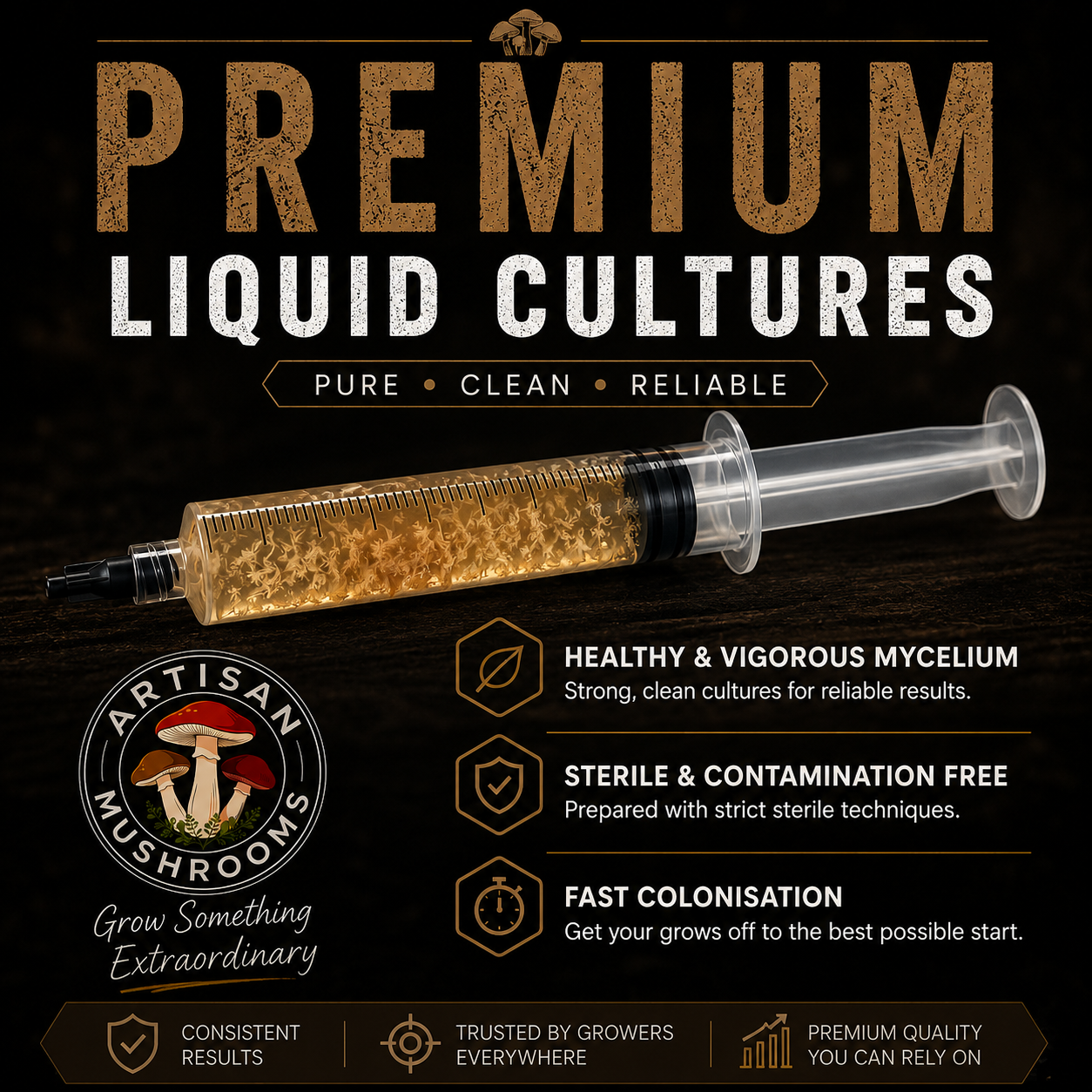
No. Blue Oyster liquid culture contains living Blue Oyster mycelium suspended in a sterile nutrient solution. It is not a mushroom spore solution.
Because the mycelium is already actively growing, liquid culture can provide faster and more predictable colonisation than starting from mushroom spores.
The culture can be used to inoculate sterilised grain, a suitable hardwood grow bag or a sterile LME agar plate.
What conditions does Blue Oyster need to fruit?
Blue Oyster mushrooms prefer cooler fruiting conditions than many other Oyster mushroom varieties.
Suitable fruiting conditions generally include:
Temperatures of approximately 10°C to 18°C
Relative humidity of approximately 85% to 95%
Frequent fresh-air exchange
Gentle indirect daylight or artificial lighting
Cooler fruiting temperatures often help the young caps develop a deeper blue-grey colour. When grown at warmer temperatures, the mushrooms may become paler and more grey or brown as they mature.
Blue Oyster requires plenty of fresh air to form broad, well-developed caps. Insufficient ventilation can result in long stems, small caps and deformed clusters.
High humidity helps prevent the developing caps from drying out or cracking. However, water should not be allowed to collect continuously on the mushrooms, as excessive surface moisture can negatively affect their development.
A digital thermometer and hygrometer can help you monitor the temperature and humidity throughout fruiting.
More detailed instructions are available in our Blue Oyster mushroom growing guide.
Where are your Blue Oyster cultures shipped from?
All Blue Oyster liquid cultures are prepared fresh under sterile laboratory conditions and shipped directly from Ireland.
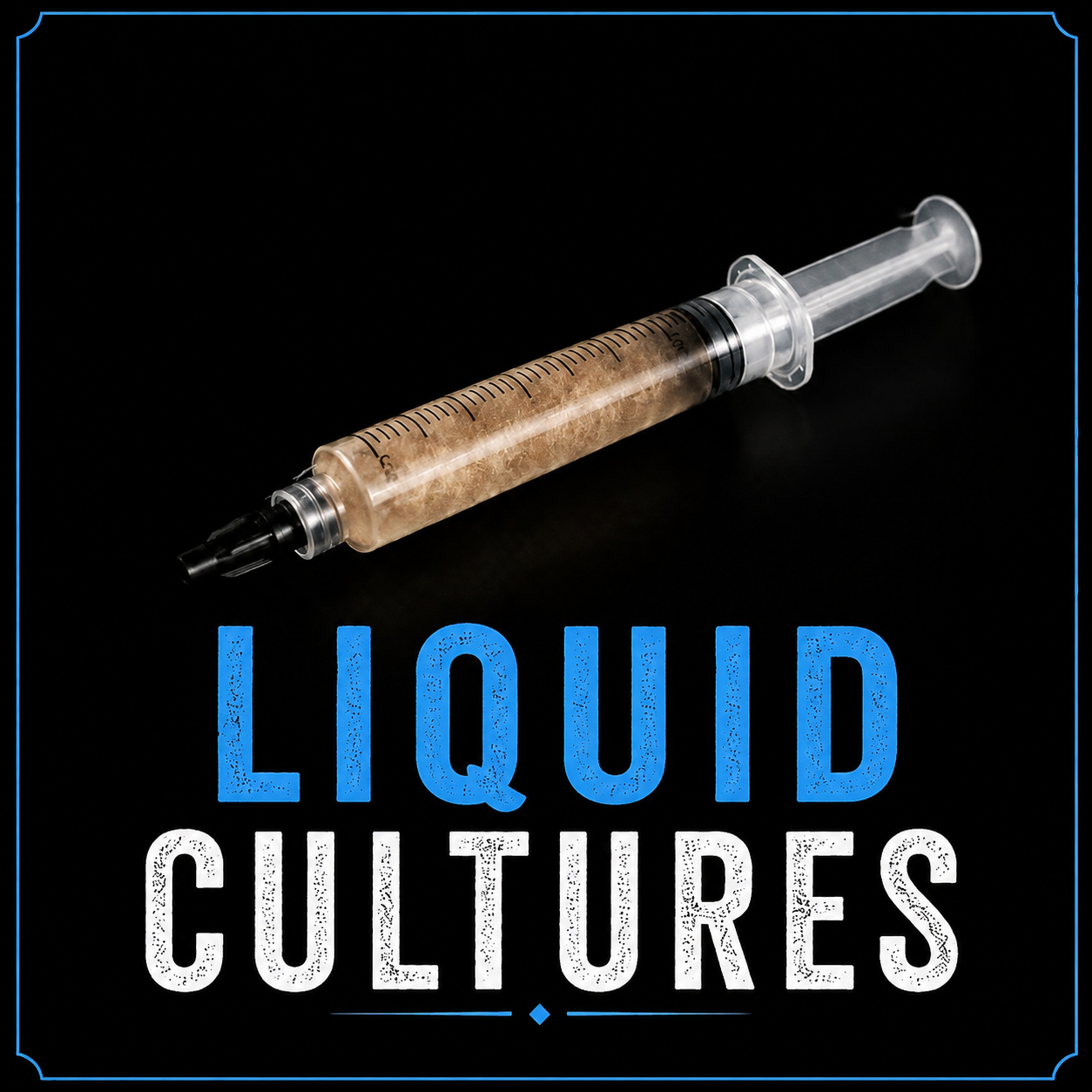
Each order includes a 10 ml Blue Oyster liquid culture syringe, a sterile needle and an alcohol wipe.
Fast shipping is available to customers across Ireland, the UK, Europe, the United States and Canada.