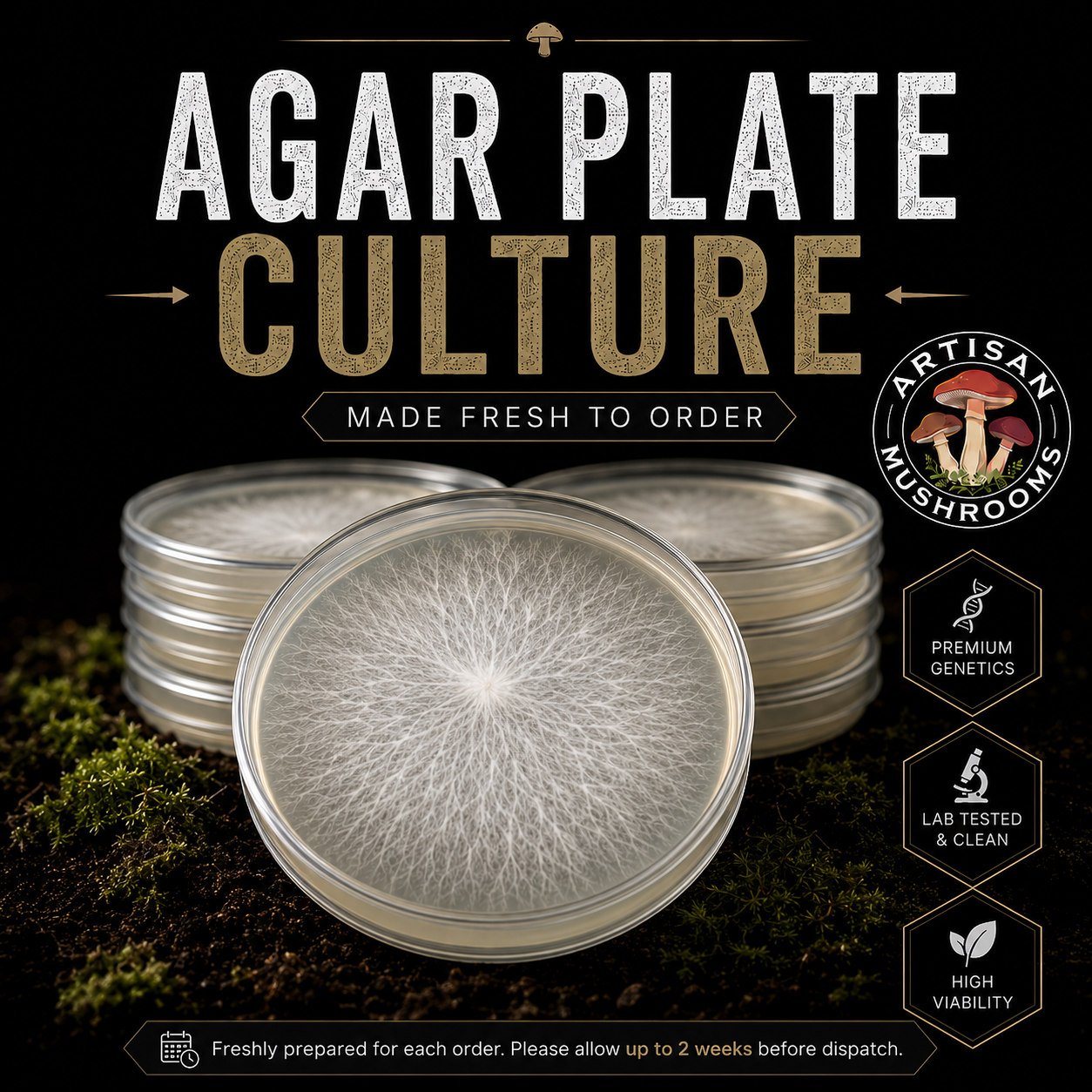
 Image 1 of 3
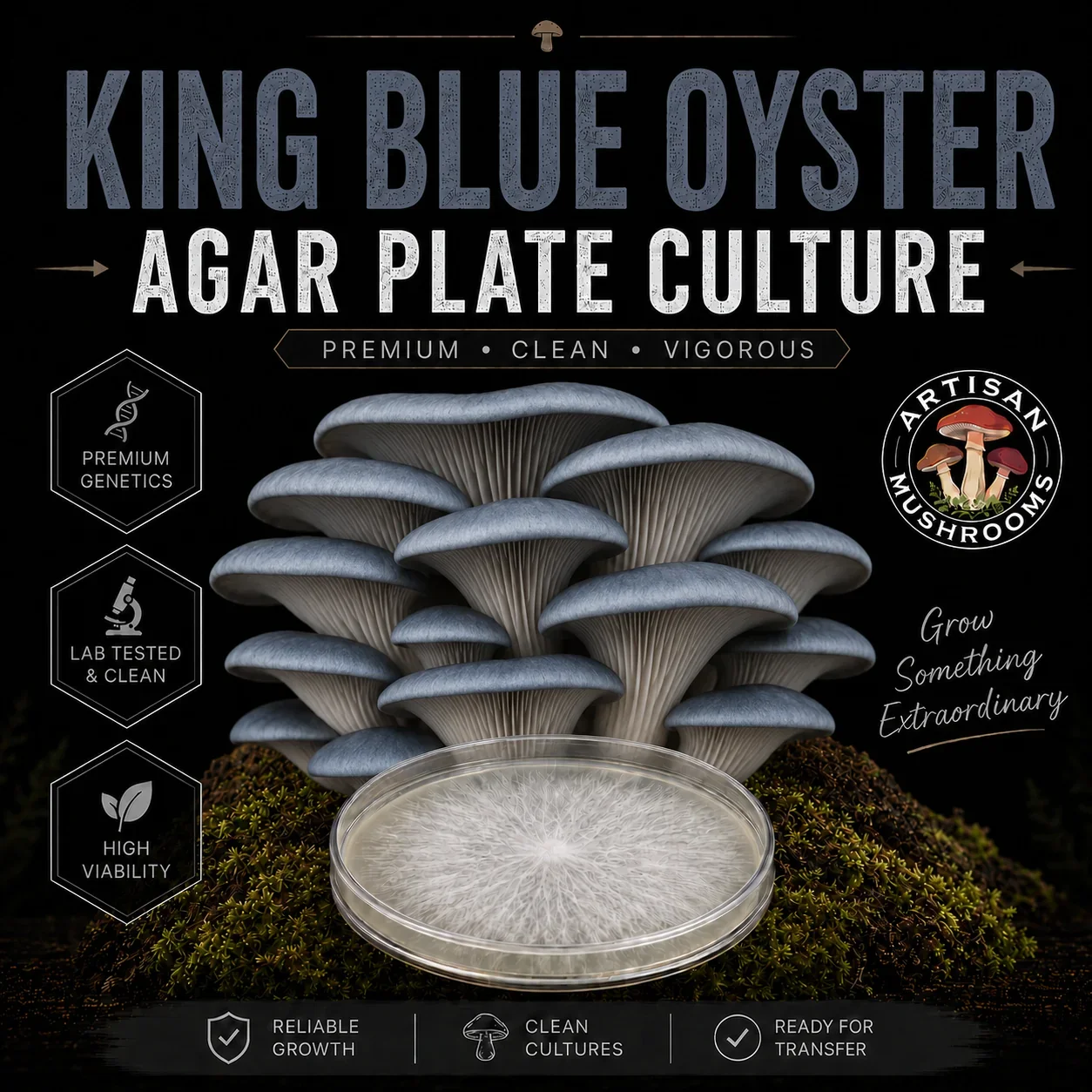
 Image 2 of 3
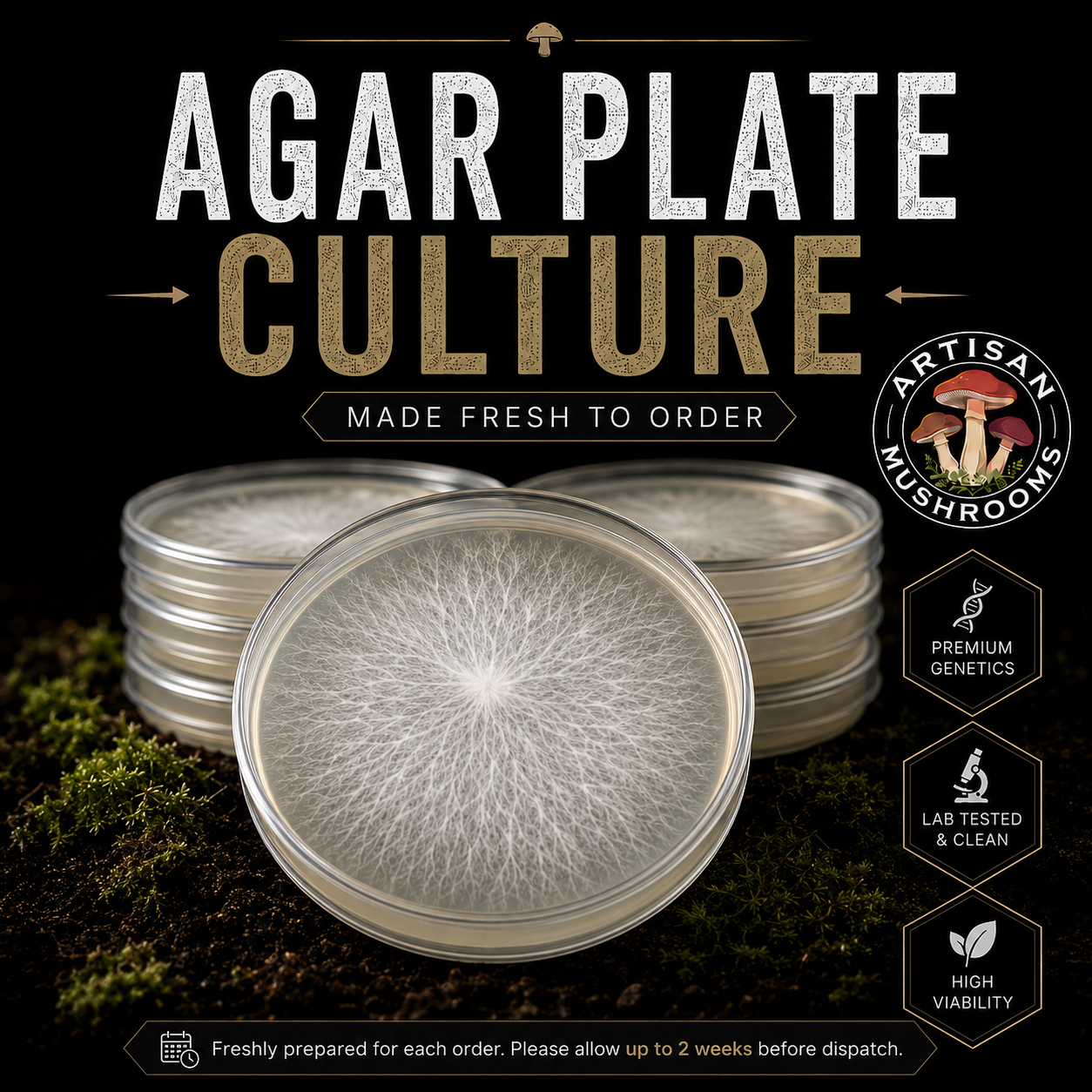 Image 3 of 3
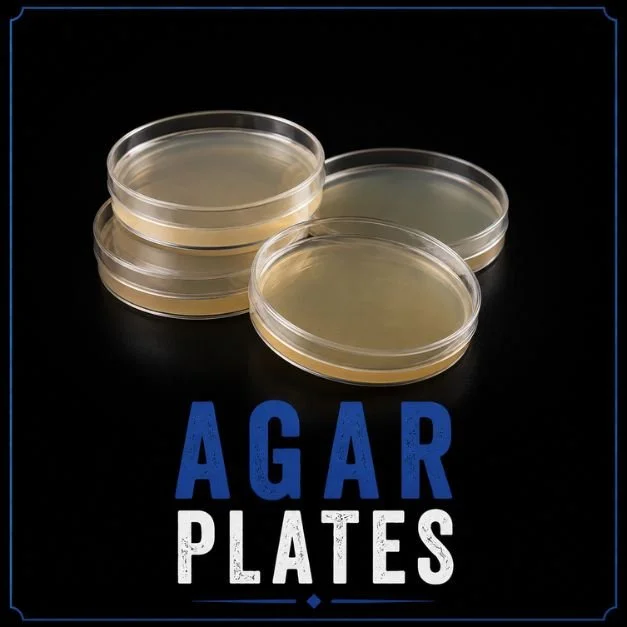
King Blue Oyster Agar Plate Culture

King Blue Oyster Agar Plate Culture FAQs
What is a King Blue Oyster mushroom agar culture?
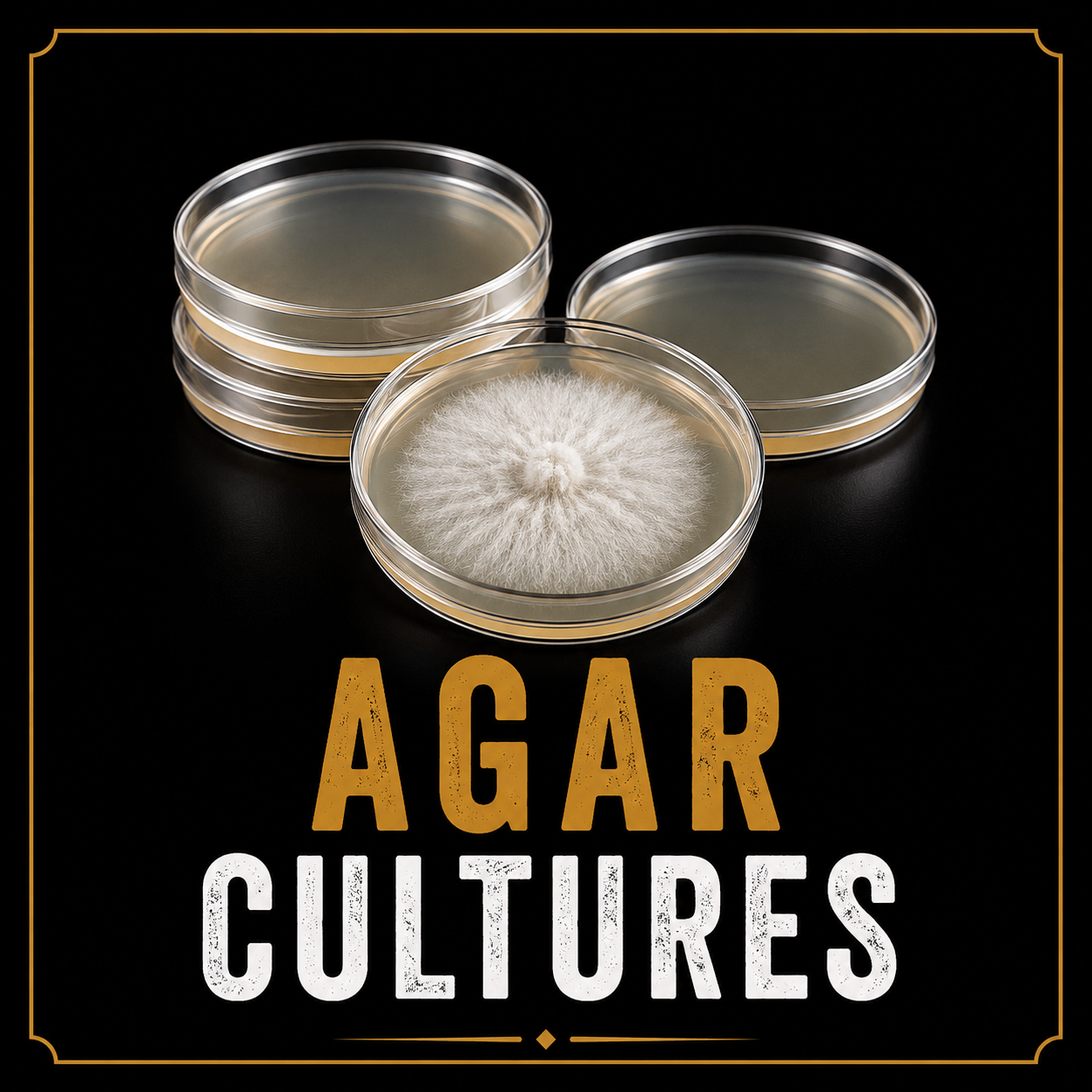
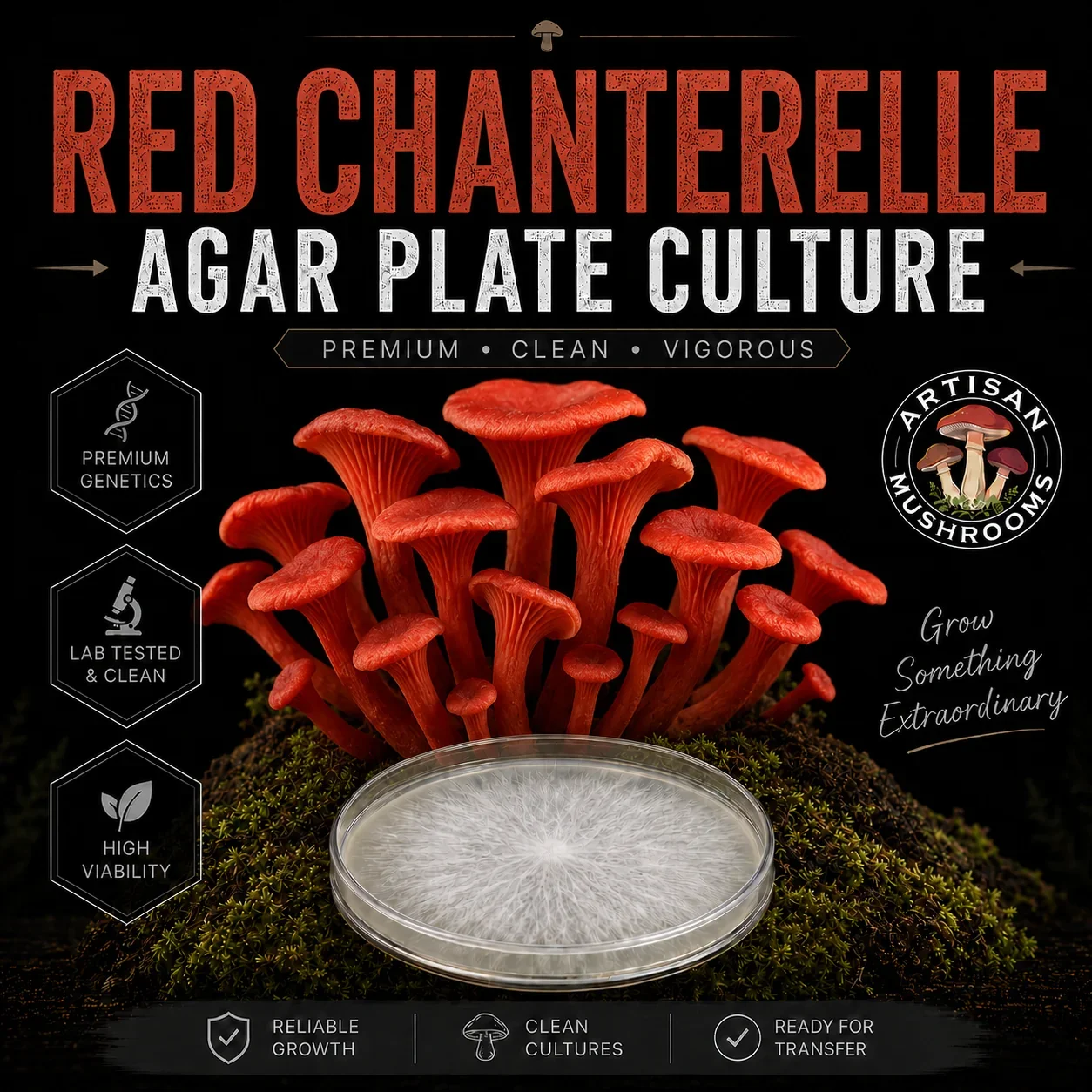
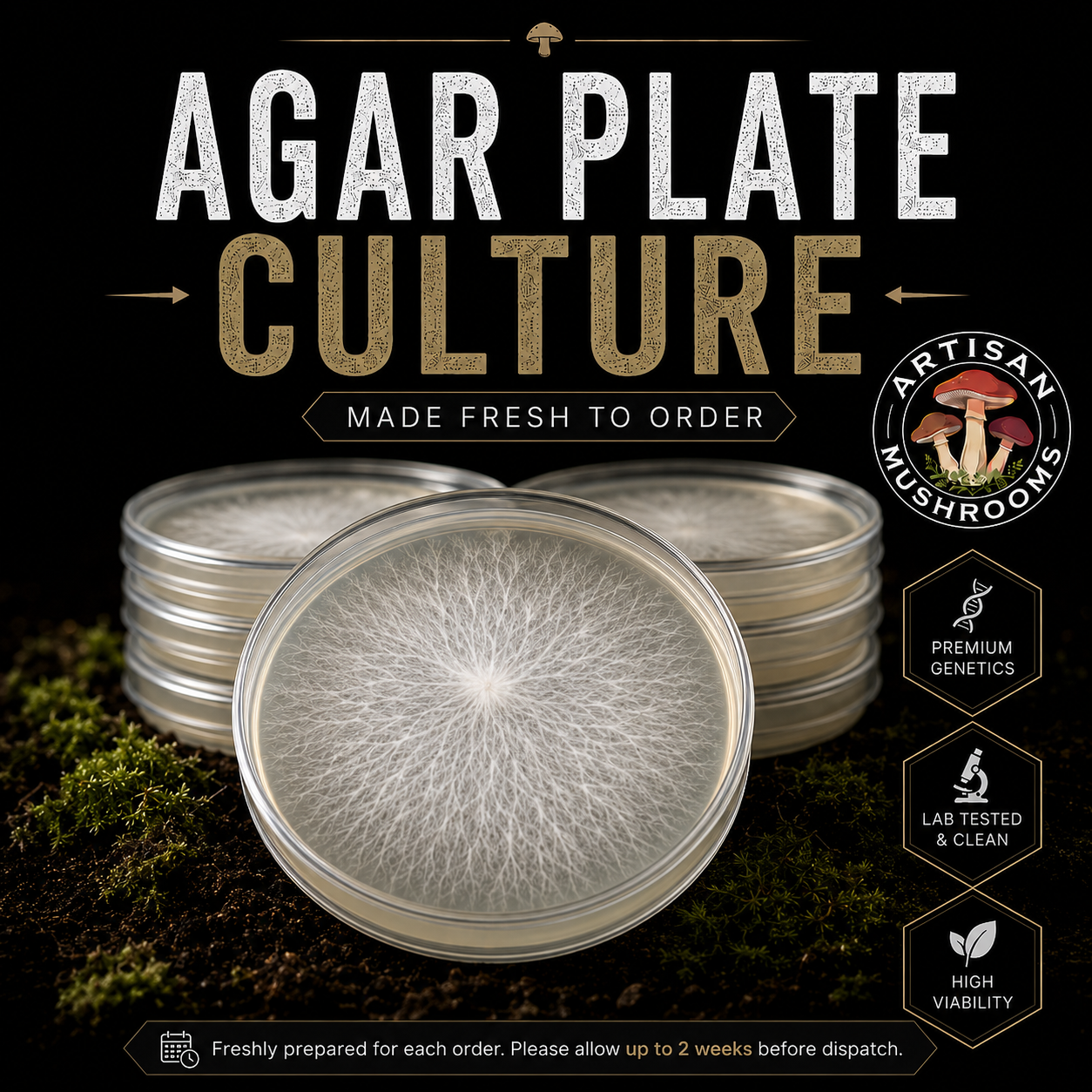
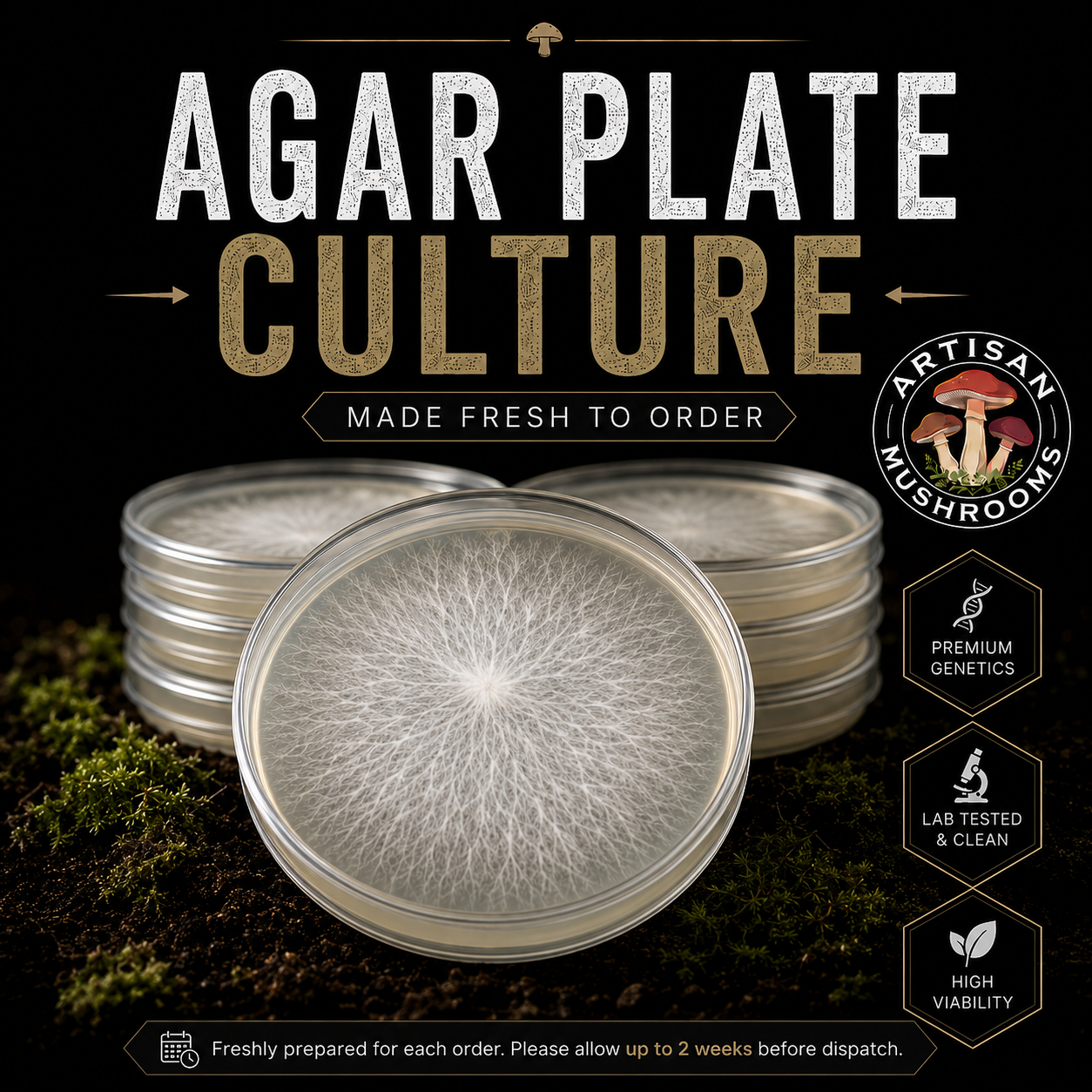
A King Blue Oyster agar plate culture contains living mycelium from the King Blue Oyster mushroom, a cultivated Pleurotus strain, growing across a nutrient-rich agar medium. It provides a clean and versatile starting point for expanding the culture, inoculating sterilised grain or making further agar transfers.
King Blue Oyster mushrooms are known for their blue-grey caps, substantial pale stems and dense clusters. They combine the vigorous growth of oyster mushrooms with a thicker, meatier fruiting form.
How do I use a King Blue Oyster agar plate?
Work in the cleanest environment possible, ideally in front of a laminar flow hood or inside a still-air box.
Using a sterile scalpel:
Cut a small wedge from the healthy outer edge of the mycelium.
Transfer the agar wedge into sterilised grain or onto a fresh agar plate.
Seal the receiving container immediately.
Allow the King Blue Oyster mycelium to colonise before transferring it to a suitable fruiting substrate.
Additional culture transfers can be made using our Light Malt Extract Agar Plates.
Can I inoculate sterilised grain directly from the agar plate?
Yes. Small wedges of colonised King Blue Oyster agar can be transferred directly into sterilised grain.
Adding several small agar wedges at different points inside the grain bag can help the mycelium establish more evenly. Always use sterile tools and minimise the amount of time the bag or plate remains open.
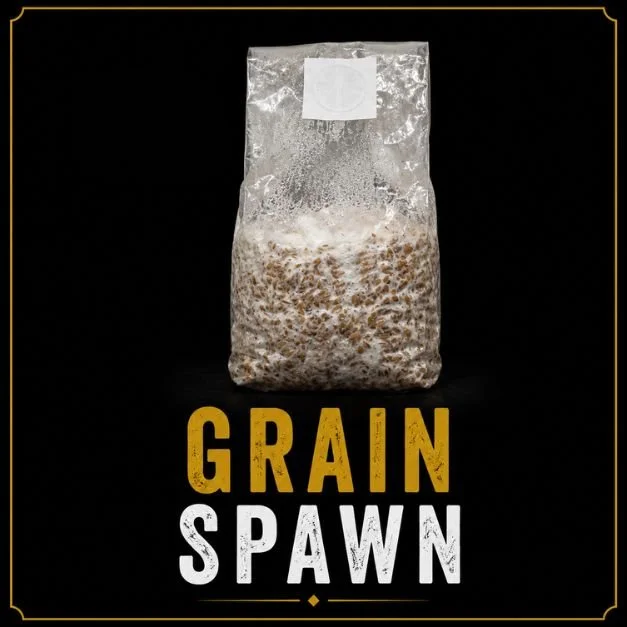
Once the grain is fully colonised, it can be used as King Blue Oyster mushroom grain spawn.
What substrate is suitable for King Blue Oyster mushrooms?
King Blue Oyster mushrooms grow particularly well on hardwood-based substrates, especially supplemented hardwood sawdust.
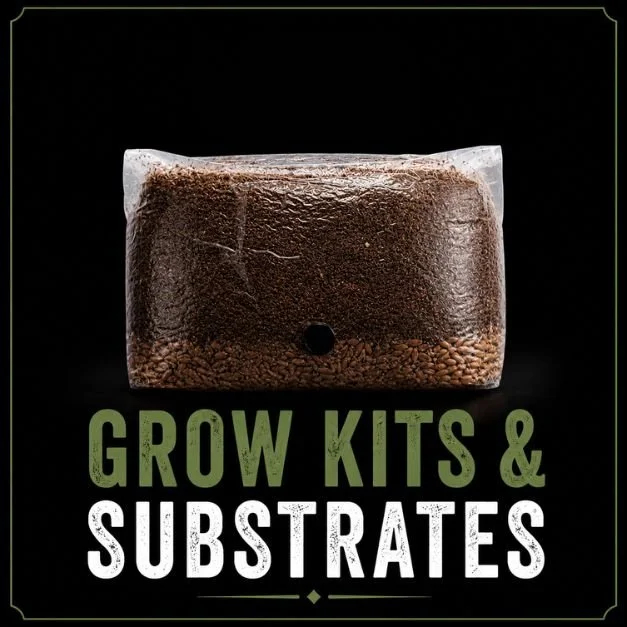
After sterilised grain has fully colonised, it can be transferred into a Sterilised Hardwood Mushroom Grow Bag. These ready-to-inoculate grow bags contain a hardwood-based substrate supplemented with wheat bran.
Growers preparing their own fruiting bags can also use our 2 kg Hardwood and Wheat Bran Bulk Substrate. It provides a nutrient-rich hardwood growing medium suitable for King Blue Oyster mushrooms once inoculated with fully colonised grain spawn.
How long does King Blue Oyster mycelium take to colonise grain?
King Blue Oyster mycelium is generally vigorous. A sterilised grain bag may take approximately two to four weeks to colonise, although the exact time depends on:
The amount of agar transferred
The type and quantity of grain
Incubation temperature
Moisture levels
Sterile technique
The overall vitality of the culture
The grain should appear evenly colonised with healthy white mycelium before it is transferred to a fruiting substrate.
What temperature is best for King Blue Oyster mycelium?
King Blue Oyster mycelium generally colonises well at approximately 20°C to 24°C.
Keep the inoculated grain or agar plate away from direct sunlight, radiators and excessive temperature fluctuations. A Digital Thermometer and Hygrometer can help you monitor the conditions in your growing area.
How should I store my King Blue Oyster agar culture?
Store the sealed King Blue Oyster agar plate in a refrigerator at approximately 2°C to 8°C until you are ready to use it.
Do not freeze the culture. Keep the plate sealed, clean and protected from repeated temperature changes. For the strongest growth, use the culture as soon as reasonably possible after delivery.
How long will the King Blue Oyster agar culture remain viable?
A properly sealed and refrigerated King Blue Oyster agar plate can remain viable for several months. However, cultures are best used while they are fresh and actively growing.
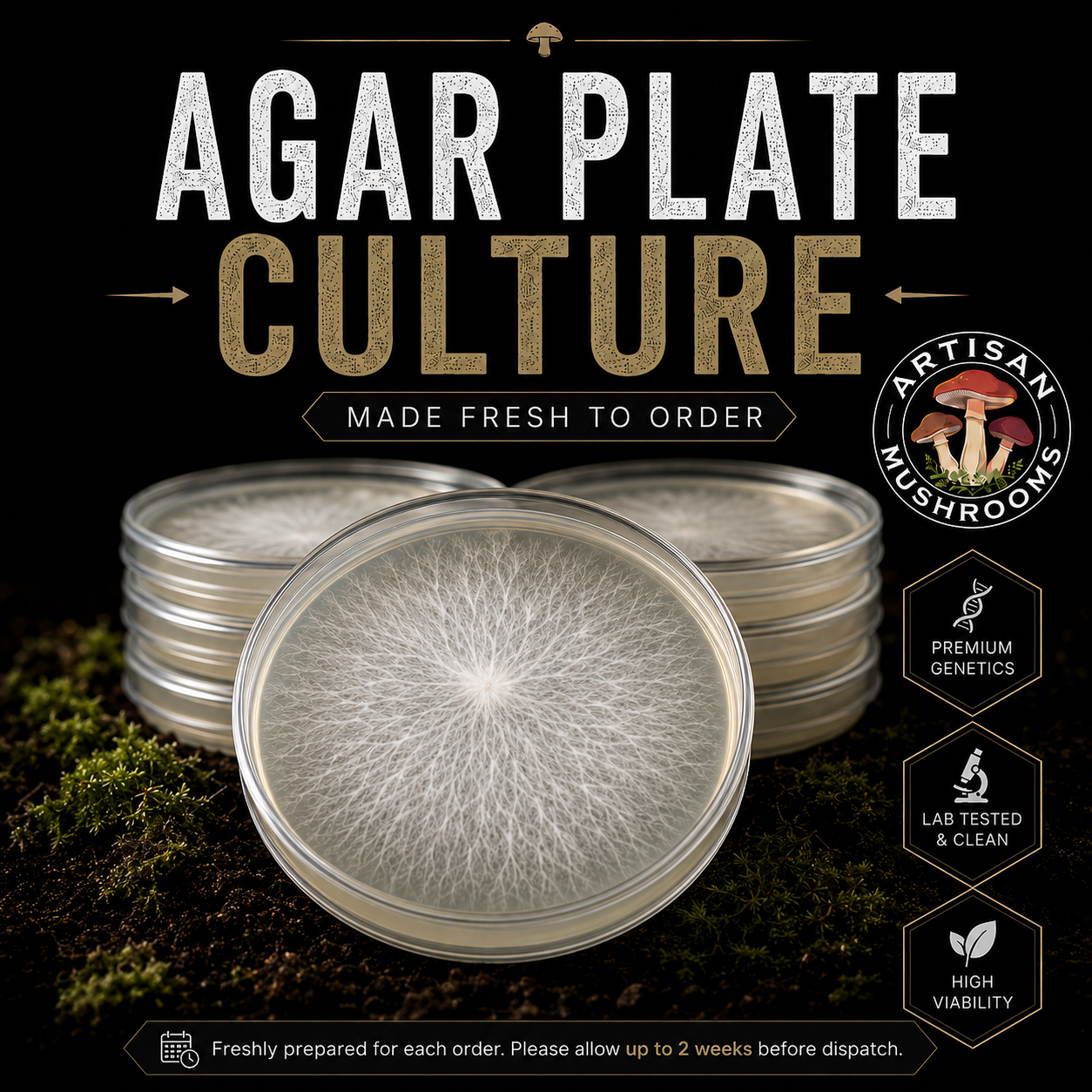
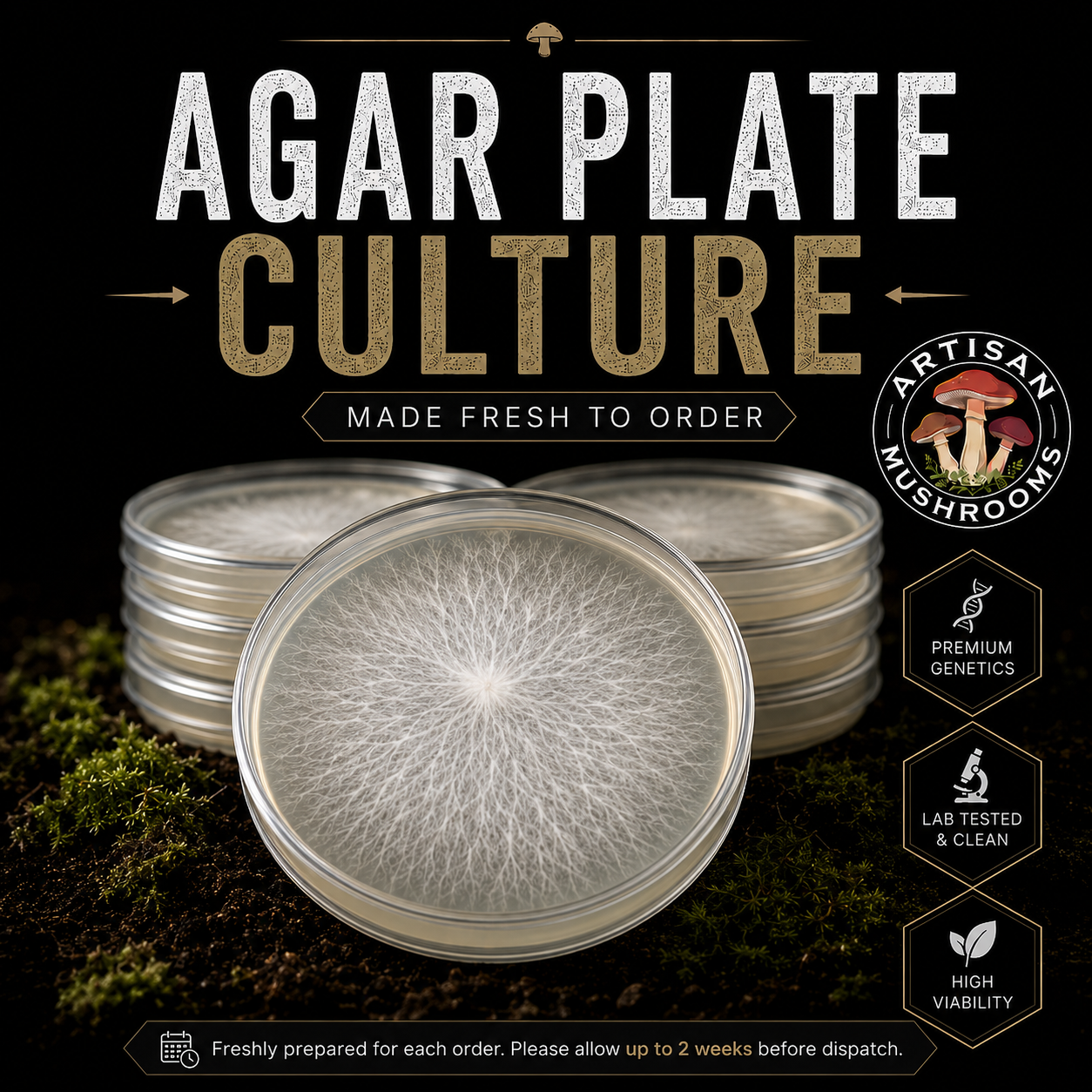
Every Artisan Mushrooms agar culture is made fresh to order to help provide maximum freshness, vitality and vigorous mycelial growth.
Please allow up to two weeks before dispatch while your culture is prepared, colonised and checked.
What does healthy King Blue Oyster mycelium look like on agar?
Healthy King Blue Oyster mycelium is normally white and may appear:
Fine and wispy around the growing edge
Dense and cotton-like as it matures
Rope-like or rhizomorphic
Uneven around the original transfer point
More vigorous around the outer edge of the colony
Mycelium appearance can vary depending on the age of the culture, agar recipe and incubation conditions.
What are the signs of contamination on an agar plate?
Possible signs of contamination include:
Green, black, pink or brightly coloured growth
Wet or greasy-looking patches
Unusual bacterial slime
Strong yellow or brown discolouration
Growth that appears separate from the intended mycelium
Do not open or use a plate that appears contaminated. Keep it sealed and contact Artisan Mushrooms with clear photographs.
Can I make more agar plates from this culture?
Yes. A small piece of healthy King Blue Oyster mycelium can be transferred onto a fresh agar plate to expand and preserve the culture.
Use a sterile scalpel and transfer a small wedge from the clean, actively growing outer edge of the colony. Our Light Malt Extract Agar Plates are suitable for making additional King Blue Oyster culture transfers.
Is King Blue Oyster agar suitable for beginners?
Yes. King Blue Oyster is a good choice for beginners who want a vigorous oyster culture with a thick, substantial fruiting form.
Beginners should use:
A still-air box or laminar flow hood
A sterile scalpel
Gloves
Surface disinfectant
Clean receiving plates or sterilised grain
Careful, deliberate movements
Good sterile technique is essential when working with any mushroom agar culture.
How long does King Blue Oyster take to fruit?
After the grain and hardwood substrate have fully colonised, King Blue Oyster mushrooms may begin producing pins within approximately one to three weeks under suitable fruiting conditions.
They generally benefit from cool to moderate temperatures, high humidity and regular fresh-air exchange. Sufficient fresh air is important for well-formed caps and healthy clusters.
Can I buy King Blue Oyster as a liquid culture instead?
Growers who prefer syringe inoculation can browse our full collection of mushroom liquid cultures.
Liquid culture is convenient for inoculating grain through an injection port, while agar cultures are particularly useful for making clean transfers, expanding genetics and visually inspecting mycelial growth.