 Image 1 of 3
 Image 2 of 3
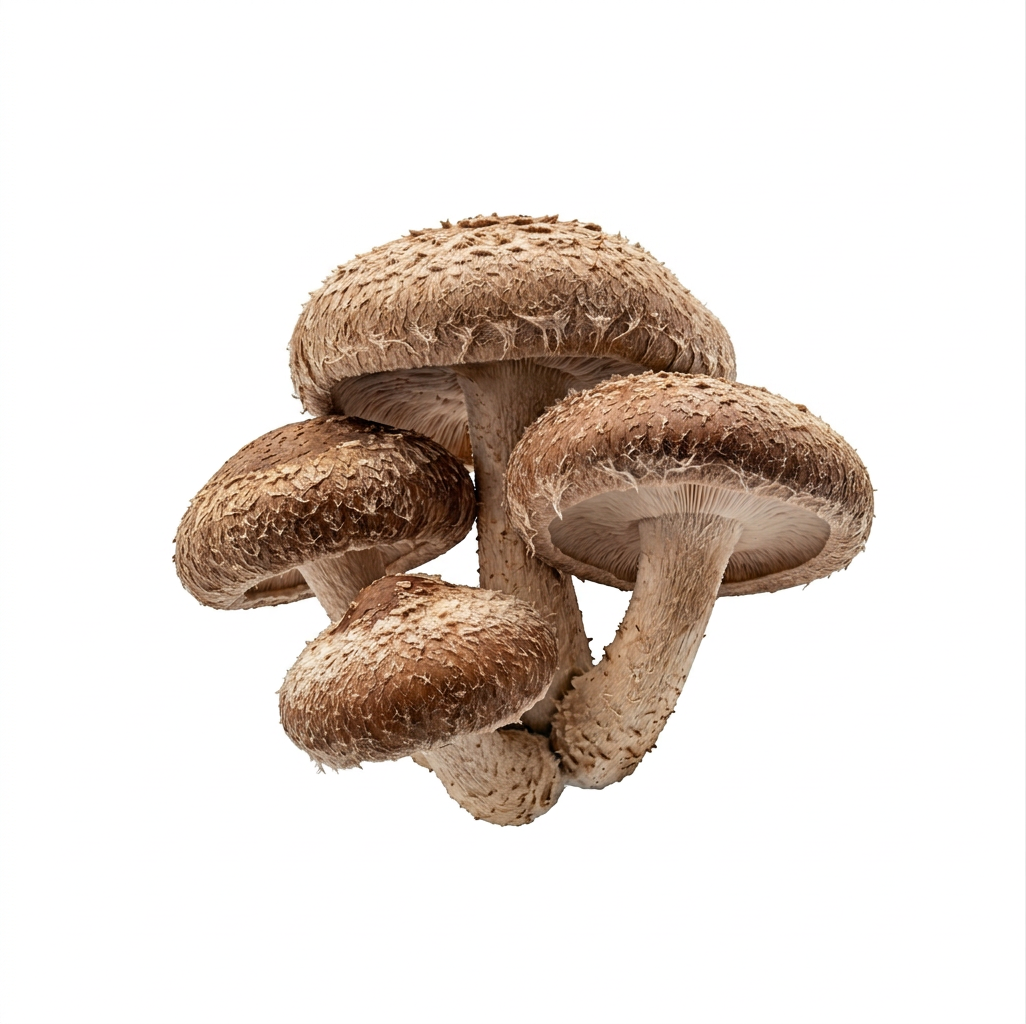 Image 3 of 3
Shiitake Straw Liquid Culture FAQ
What is the scientific name of Shiitake Straw?
The scientific name for Shiitake Straw is Lentinula edodes.
Shiitake Straw is a selected strain rather than a separate mushroom species. It has been chosen for vigorous mycelial growth and reliable performance on properly prepared straw-based substrates.
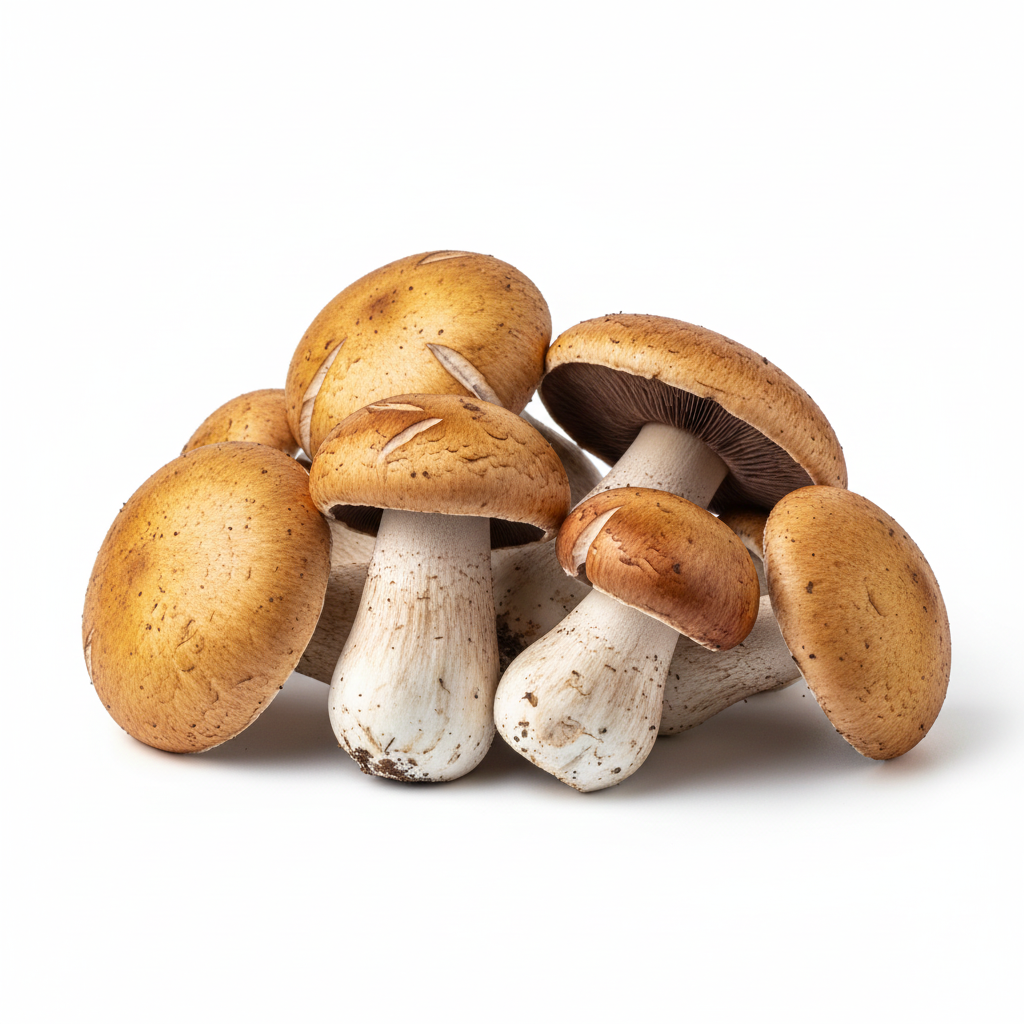
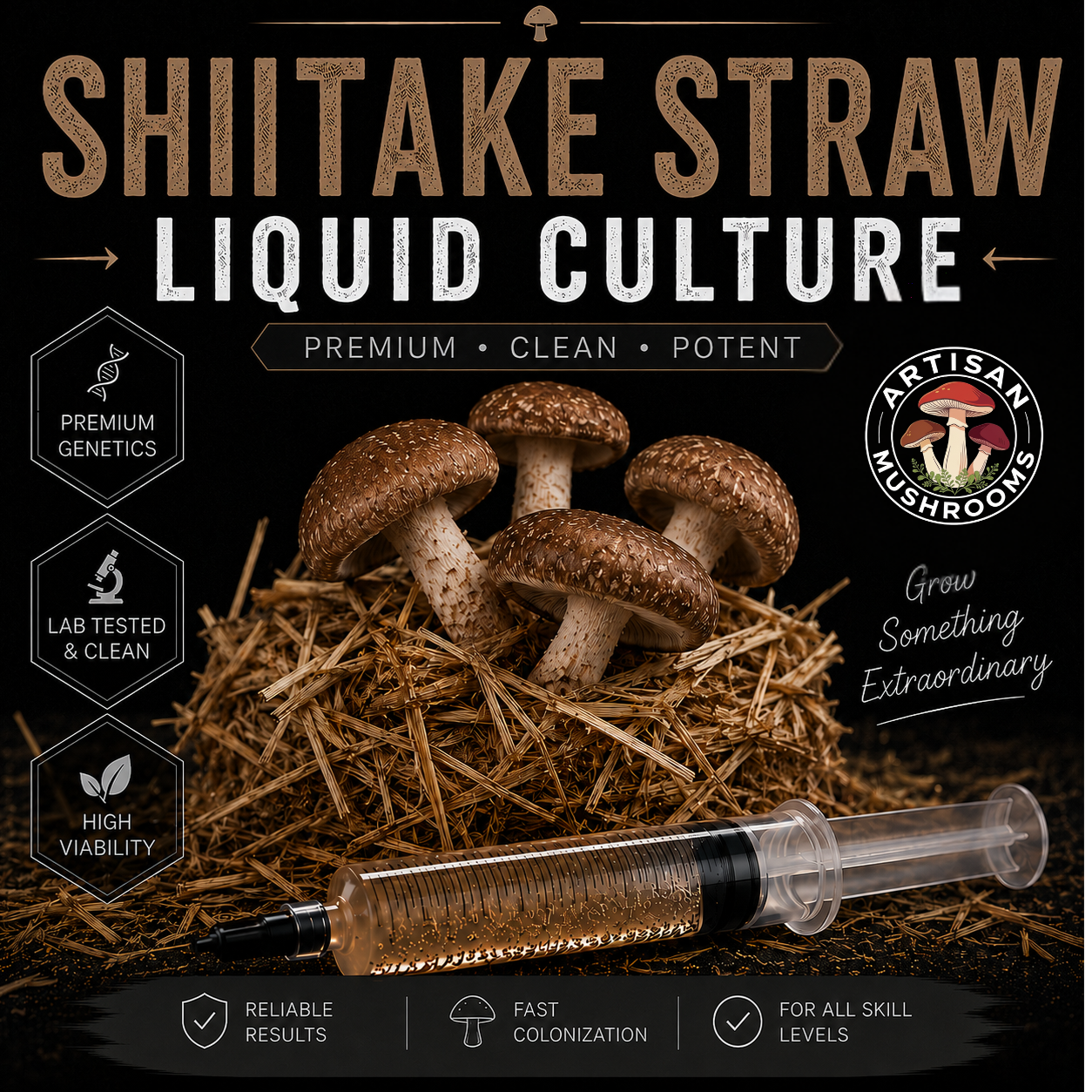
Like other Shiitake mushrooms, it produces attractive brown caps, pale gills and firm stems. Shiitake is valued by growers for its distinctive appearance, rich flavour and firm texture.
How is Shiitake Straw different from other Shiitake strains?
Shiitake Straw is distinguished by its ability to colonise and produce mushrooms on suitable straw-based growing media.
Most Shiitake strains are primarily cultivated on hardwood logs or supplemented hardwood sawdust. This straw-adapted strain offers growers greater flexibility when choosing substrate materials.
Suitable growing media may include:
Properly prepared wheat straw
Cotton straw
Straw and hardwood blends
Supplemented hardwood sawdust
Hardwood pellets
Other suitable plant-based cultivation materials
Although this strain is selected for straw-based cultivation, it can also be grown using traditional Shiitake methods on properly sterilised hardwood substrate.
What substrate is best for growing Shiitake Straw?
Shiitake Straw is particularly well suited to properly prepared straw-based substrates.
Wheat straw is a practical option. The straw should be clean, chopped into manageable pieces, correctly hydrated and thoroughly heat-treated before inoculation.
Straw can also be combined with hardwood sawdust or other suitable ingredients. Any nutrient supplements must be used carefully because highly supplemented substrates are more susceptible to contamination and generally require full sterilisation.
Although this strain is selected for straw, Shiitake remains a wood-decaying species and can also be cultivated on supplemented hardwood sawdust.
Our 2kg Sterilised Hardwood and Wheat Bran Substrate provides a prepared hardwood-based alternative for growers who do not want to process their own straw.
For more detailed information about Shiitake block cultivation, read our Shiitake mushroom growing guide.
Can I inoculate a grow bag directly?
Yes. Shiitake Straw liquid culture can be injected directly into our Sterile Hardwood Mushroom Grow Bag using a sterile needle and the self-healing injection port.
The grow bag contains sterilised hardwood substrate supplemented with wheat bran. Although this is not a straw-based substrate, it provides a suitable traditional growing medium for Lentinula edodes.
After inoculation, leave the bag sealed while the mycelium colonises and the Shiitake block matures.
Shiitake generally grows more slowly than Oyster mushrooms, so the bag may require several weeks or months before it is ready for fruiting.
A second option is to inoculate sterilised grain first. Once fully colonised, the grain spawn can be mixed with a prepared straw-based or hardwood-based fruiting substrate.
Can Shiitake Straw liquid culture be used on grain?
Yes. Sterilised grain is commonly used to produce Shiitake Straw grain spawn.
The liquid culture can be injected into our 2kg Sterilised Wheat Grain Bag and allowed to colonise the grain.
Once fully colonised, the Shiitake Straw grain spawn can be mixed with:
Prepared wheat straw
Straw and hardwood blends
Supplemented hardwood sawdust
Other suitable Shiitake fruiting media
Using colonised grain helps distribute the mycelium evenly throughout the final fruiting substrate.
Shiitake mycelium can appear finer and less densely white than Oyster mushroom mycelium. This does not necessarily indicate weak growth. Allow the grain to become fully colonised before transferring it to the final substrate.
Do you sell sterilised grain and substrate?
Yes. We offer pre-sterilised wheat grain bags, sterilised hardwood and wheat bran substrate, and ready-to-inoculate hardwood grow bags to simplify the cultivation process.
The wheat grain bag can be used to produce Shiitake Straw grain spawn before transferring the colonised grain into a prepared straw or hardwood fruiting substrate.
The separate hardwood and wheat bran substrate can be mixed with fully colonised grain spawn.
The ready-to-inoculate hardwood grow bag provides the simplest option because the Shiitake Straw liquid culture can be injected directly through its self-healing injection port.
Using prepared grain and hardwood substrate removes the need to hydrate, mix and pressure sterilise those materials yourself. It reduces the amount of specialist equipment required and can help lower the risk of contamination.
What is a typical Shiitake Straw growing process?
A typical grain-to-straw growing process is:
Inoculate a pre-sterilised grain bag with Shiitake Straw liquid culture.
Allow the grain to become fully colonised with mycelium.
Prepare and heat-treat a suitable straw-based fruiting substrate.
Allow the prepared substrate to cool completely.
Mix the colonised grain spawn evenly through the straw.
Pack the inoculated straw into a suitable filter bag or growing container.
Allow the substrate to colonise fully.
Allow sufficient time for the Shiitake culture to mature.
Introduce suitable fruiting conditions with high humidity, fresh air and gentle lighting.
Harvest the mushrooms while their cap edges remain slightly curled underneath.
Growers who do not want to prepare straw can use a hardwood-based method instead.
A typical hardwood growing process is:
Inoculate a pre-sterilised wheat grain bag.
Allow the grain to become fully colonised.
Mix the grain spawn with our sterilised hardwood and wheat bran substrate.
Allow the hardwood block to colonise and mature.
Introduce suitable fruiting conditions.
Alternatively, inject the liquid culture directly into our Sterile Hardwood Mushroom Grow Bag.
Is Shiitake Straw suitable for beginners?
Shiitake Straw can be grown successfully by beginners, although it requires more patience and environmental control than fast-growing Oyster mushroom varieties.
The straw-adapted strain gives growers additional substrate options, but straw must still be prepared correctly. Poor hydration, insufficient heat treatment or excessive supplementation can increase the risk of contamination.
Beginners who do not want to prepare and heat-treat straw may find the hardwood method easier.
Using pre-sterilised grain and ready-to-use hardwood substrate removes the need to prepare and pressure sterilise the growing media yourself.
The ready-to-inoculate hardwood grow bag is the most straightforward option for customers who want to inject the culture directly into a prepared Shiitake substrate.
Does straw need to be sterilised before inoculation?
The correct treatment depends on the straw preparation method and whether additional nutrients are included.
Plain straw can sometimes be prepared using a suitable pasteurisation process. This reduces competing organisms while leaving the substrate suitable for colonisation.
Straw containing nutrient-rich supplements is more vulnerable to contamination and generally requires full sterilisation.
Whichever method is used:
Begin with clean, dry straw.
Chop it into manageable pieces.
Hydrate it evenly without leaving it waterlogged.
Apply an appropriate heat treatment.
Allow it to cool completely before inoculation.
Handle the prepared substrate with clean equipment.
Use healthy grain spawn or liquid culture.
Do not inoculate warm or hot substrate, as excessive heat can damage the mycelium.
Can Shiitake Straw be grown on hardwood substrate?
Yes. Shiitake Straw is selected for reliable performance on straw-based substrates, but it remains a strain of Lentinula edodes and can also be cultivated on suitable hardwood-based media.
Supplemented hardwood sawdust containing species such as oak or beech is a traditional Shiitake fruiting substrate.
Our 2kg Sterilised Hardwood and Wheat Bran Substrate can be inoculated using fully colonised Shiitake Straw grain spawn.
Our Sterile Hardwood Mushroom Grow Bag can also be inoculated directly with the liquid culture.
The straw-adapted characteristics provide additional flexibility. They do not prevent the culture from being used with an appropriate hardwood substrate.
How should I store the liquid culture?
Keep the Shiitake Straw liquid culture syringe refrigerated at approximately 2°C to 4°C until you are ready to use it. Do not freeze it.
For the best viability, use the culture within three months of receiving it.
Before inoculation, allow the syringe to come closer to room temperature and shake it gently to distribute the Shiitake mycelium throughout the nutrient solution.
Always keep the protective cap fitted while the syringe is in storage. Attach a new sterile needle immediately before inoculating grain, agar or a suitable substrate.
How much liquid culture should I use?
The amount of liquid culture required depends on the size and type of growing medium.
For one of our sterile LME agar plates, one or two small drops are normally sufficient.
A small grain jar may require approximately 1 to 2 ml.
When inoculating our 2kg Sterilised Wheat Grain Bag or Sterile Hardwood Mushroom Grow Bag, approximately 5 to 10 ml can be used.
Using too much liquid culture can introduce excess moisture into the grain or substrate, increasing the risk of bacterial contamination.
When producing a larger quantity of straw substrate, it is normally better to inoculate the straw using fully colonised grain spawn rather than adding liquid culture directly throughout the entire batch.
Can I inoculate straw directly with liquid culture?
Liquid culture may be used to inoculate a small, properly prepared straw-based substrate, but producing grain spawn first usually provides more inoculation points and more even distribution.
A liquid culture syringe contains active mycelium, but the liquid itself may only reach limited areas within a loosely packed straw substrate.
A more dependable process is:
Use the liquid culture to inoculate sterilised grain.
Allow the grain to become fully colonised.
Break up the colonised grain spawn.
Mix it evenly throughout the prepared straw substrate.
Pack the inoculated straw into a suitable growing container.
This method distributes mycelium across many individual grains, helping the culture establish throughout the straw more efficiently.
Does the syringe contain mushroom spores?
No. Shiitake Straw liquid culture contains living Lentinula edodes mycelium suspended in a sterile nutrient solution.
It is not a mushroom spore solution.
Because the mycelium is already actively growing, liquid culture can provide faster and more predictable colonisation than beginning with spores.
The culture can be used to inoculate sterilised grain, a suitable hardwood grow bag or a sterile LME agar plate.
What conditions does Shiitake Straw need to colonise?
Shiitake Straw generally colonises well under moderate temperatures.
Suitable starting conditions include:
Temperatures of approximately 20°C to 25°C
Darkness or low ambient light
A clean and stable growing environment
Suitable gas exchange
No direct sunlight
Minimal disturbance while the mycelium establishes
Healthy mycelium should gradually spread throughout the grain, straw or hardwood substrate.
The exact colonisation period will depend on the substrate, temperature, inoculation rate, moisture level and growing-container size.
Shiitake generally colonises more slowly than Oyster mushrooms. Allow sufficient time before assuming that a clean, steadily growing substrate has stalled.
Does Shiitake Straw need a maturation period?
Yes. Shiitake generally benefits from a maturation period after the substrate appears fully colonised.
The mycelium needs time to digest and consolidate the substrate before it can support a strong flush of mushrooms.
On hardwood blocks, maturation commonly includes popcorning and browning. The surface develops raised white areas before gradually becoming firmer and brown.
The appearance of a straw-based Shiitake substrate may differ from a traditional hardwood block. It may not always form the same smooth, heavily browned outer rind.
Even so, the substrate should be:
Fully colonised
Firmly held together by mycelium
Free from uncolonised wet areas
Free from contamination
Given additional time to mature after colonisation
Do not introduce fruiting conditions simply because the first visible areas have become white.
What are the popcorning and browning stages?
Popcorning refers to the raised white bumps that commonly develop on the surface of a maturing Shiitake block.
After popcorning, the surface of a hardwood block gradually changes from white to brown. This forms a firm protective outer layer.
Browning is normal and does not usually indicate contamination.
This process is most obvious on supplemented hardwood sawdust blocks. A straw-based block may develop a different surface texture or less uniform browning.
When using our Sterile Hardwood Mushroom Grow Bag, allow the Shiitake block to mature fully and develop a firm brown surface before removing the plastic for fruiting.
What conditions does Shiitake Straw need to fruit?
Suitable Shiitake fruiting conditions generally include:
Temperatures of approximately 14°C to 21°C
Relative humidity of approximately 85% to 95%
Regular fresh-air exchange
Gentle indirect daylight or artificial lighting
A clean growing area
No direct sunlight
Exact temperature preferences can vary between strains.
High humidity is especially important while the first pins are forming. However, the substrate and mushrooms should not remain continuously soaking wet.
Fresh-air exchange helps the mushrooms develop broad caps and balanced stems. Insufficient ventilation can produce long stems and undersized caps.
A digital thermometer and hygrometer can help monitor conditions during colonisation, maturation and fruiting.
Does Shiitake Straw need a cold shock or soak?
A fully colonised and mature Shiitake substrate may benefit from a reduction in temperature and additional hydration before fruiting.
The appropriate method depends on the structure of the substrate.
A mature, firm hardwood block can often be removed from its bag and soaked in clean, cool water for approximately 6 to 12 hours.
A straw-based block may be less dense or more fragile. Avoid soaking it if it is likely to break apart or become waterlogged.
For a straw-based grow, fruiting may instead be encouraged by:
Reducing the temperature
Increasing humidity
Introducing fresh-air exchange
Providing gentle lighting
Carefully rehydrating without saturating the substrate
Do not soak a young, partially colonised or contaminated substrate.
Should the growing bag be removed before fruiting?
The correct method depends on the substrate.
A mature hardwood Shiitake block is normally removed from its bag before fruiting. Wait until it is fully colonised, firm and well browned.
A straw-based substrate may be more fragile. It can sometimes be fruited through controlled openings in the bag rather than removing the plastic completely.
Keeping part of the bag in place can help:
Support the straw substrate
Retain moisture
Reduce drying
Direct mushroom formation towards selected openings
Do not expose a loose or immature straw substrate completely, as it may dry out or fall apart.
Why is my Shiitake Straw substrate fully white but not fruiting?
A fully white substrate may be colonised but not yet mature enough to produce mushrooms.
Possible causes include:
Insufficient maturation time
Fruiting temperatures that are too warm
Low humidity
Poor fresh-air exchange
Inadequate lighting
Excessively wet or dry substrate
Incomplete colonisation inside the block
Lack of a change between incubation and fruiting conditions
If the substrate appears clean and healthy, allow additional maturation time before making major changes.
When using a hardwood block, wait for popcorning and browning before attempting to fruit it.
Why is my straw substrate becoming contaminated?
Straw contamination can result from:
Inadequate pasteurisation or sterilisation
Excessive moisture
Inoculating before the substrate has cooled
Using too little grain spawn
Poorly cleaned equipment
Handling the substrate in an unclean environment
Adding excessive nutrient supplements
Weak or contaminated culture
Growing temperatures that are too warm
Proper substrate preparation is essential.
Testing the liquid culture on one of our sterile LME agar plates before preparing a large batch can help confirm clean mycelial growth.
Using fully colonised grain spawn also provides the Shiitake mycelium with more inoculation points than injecting a small amount of liquid culture directly into a large quantity of straw.
Why are my Shiitake caps thin or pale?
Thin or pale caps can be caused by:
Fruiting temperatures that are too warm
Low humidity
Insufficient fresh-air exchange
Weak lighting
An immature substrate
An exhausted substrate
Delayed harvesting
Maintain suitable humidity and provide regular fresh-air exchange without placing the mushrooms directly in a strong, drying airflow.
Cooler fruiting conditions often encourage firmer, darker and thicker Shiitake caps.
Why are my Shiitake caps cracking?
Some cap cracking and textured patterning can be normal, particularly when Shiitake mushrooms are grown under cooler conditions.
Heavy or irregular cracking may be caused by low humidity, rapid drying or sudden environmental changes.
Increase the surrounding humidity and avoid directing strong airflow at the mushrooms.
Do not continuously spray the caps. Maintain suitable environmental humidity without leaving the mushrooms constantly wet.
When should Shiitake Straw mushrooms be harvested?
Shiitake Straw mushrooms are best harvested when the caps have expanded but their edges remain slightly curled underneath.
Do not wait until every cap becomes completely flat or begins curling upwards.
Overmature Shiitake mushrooms can become drier, release more spores and have a shorter storage life.
Harvest individual mushrooms by gently twisting them away from the substrate or cutting them cleanly near the base with a sterile knife.
Remove any remaining stem material after harvesting.
Can the substrate produce more than one flush?
Yes. A healthy Shiitake Straw substrate may produce more than one flush.
After harvesting:
Remove remaining stem material.
Allow the substrate to rest.
Keep it in a clean area with moderate humidity and airflow.
Do not keep it continuously wet.
Rehydrate carefully when appropriate.
Return it to suitable fruiting conditions.
A firm hardwood block may be soaked again after its resting period.
A straw-based block should be rehydrated more carefully because it may absorb water rapidly or become structurally weak.
Later flushes may be smaller than the first, but a healthy substrate can continue producing mushrooms until its available nutrients are depleted.
Where are your Shiitake Straw cultures shipped from?
All Shiitake Straw liquid cultures are prepared fresh under sterile laboratory conditions and shipped directly from Ireland.
Each order includes a 10 ml Shiitake Straw liquid culture syringe, a sterile 18G needle and an alcohol wipe.
Fast shipping is available to customers across Ireland, the UK, Europe, the United States and Canada.