 Image 1 of 2
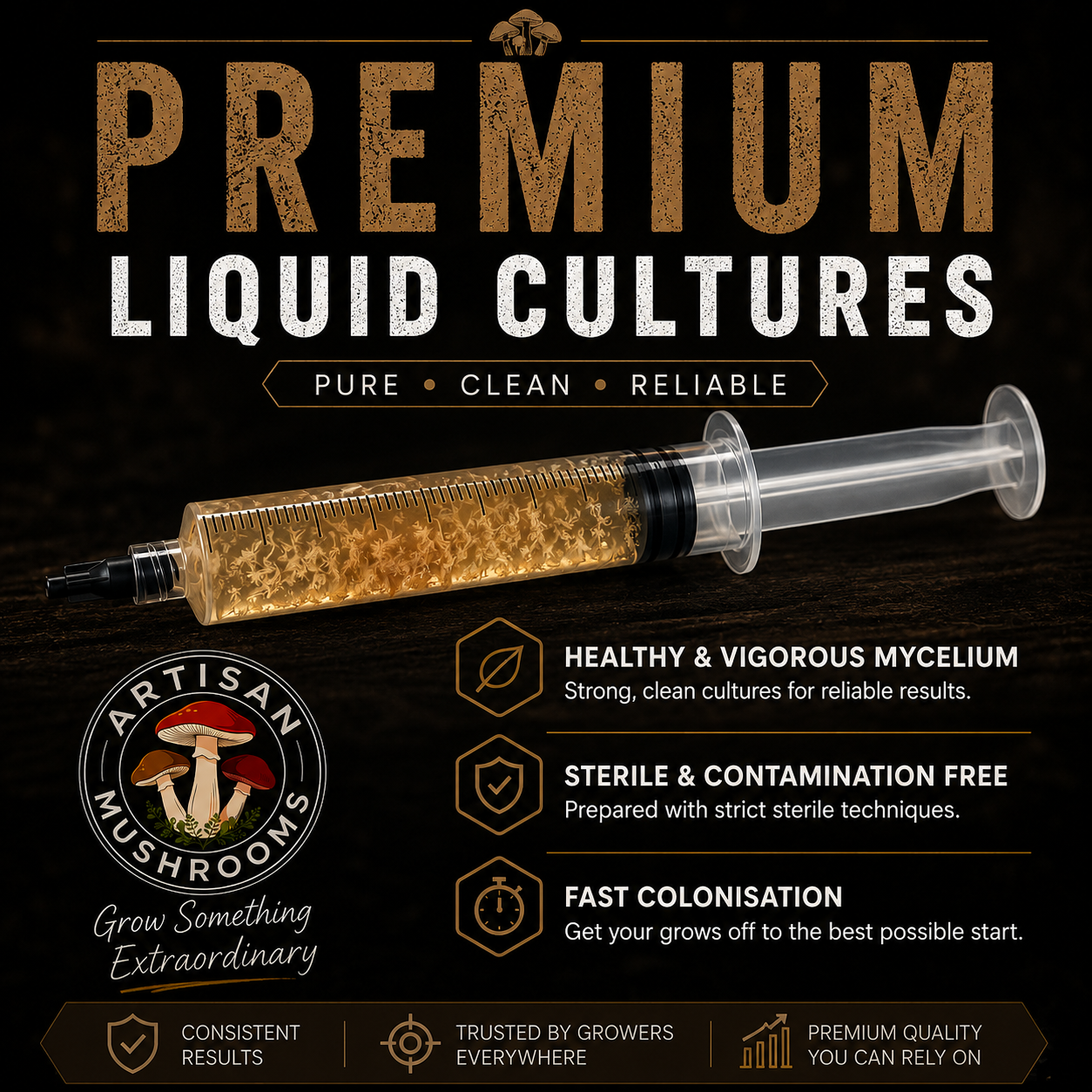 Image 2 of 2

Mushroom Liquid Culture 3 Pack FAQ
What is included in the Mushroom Liquid Culture 3 Pack?
Each pack contains:
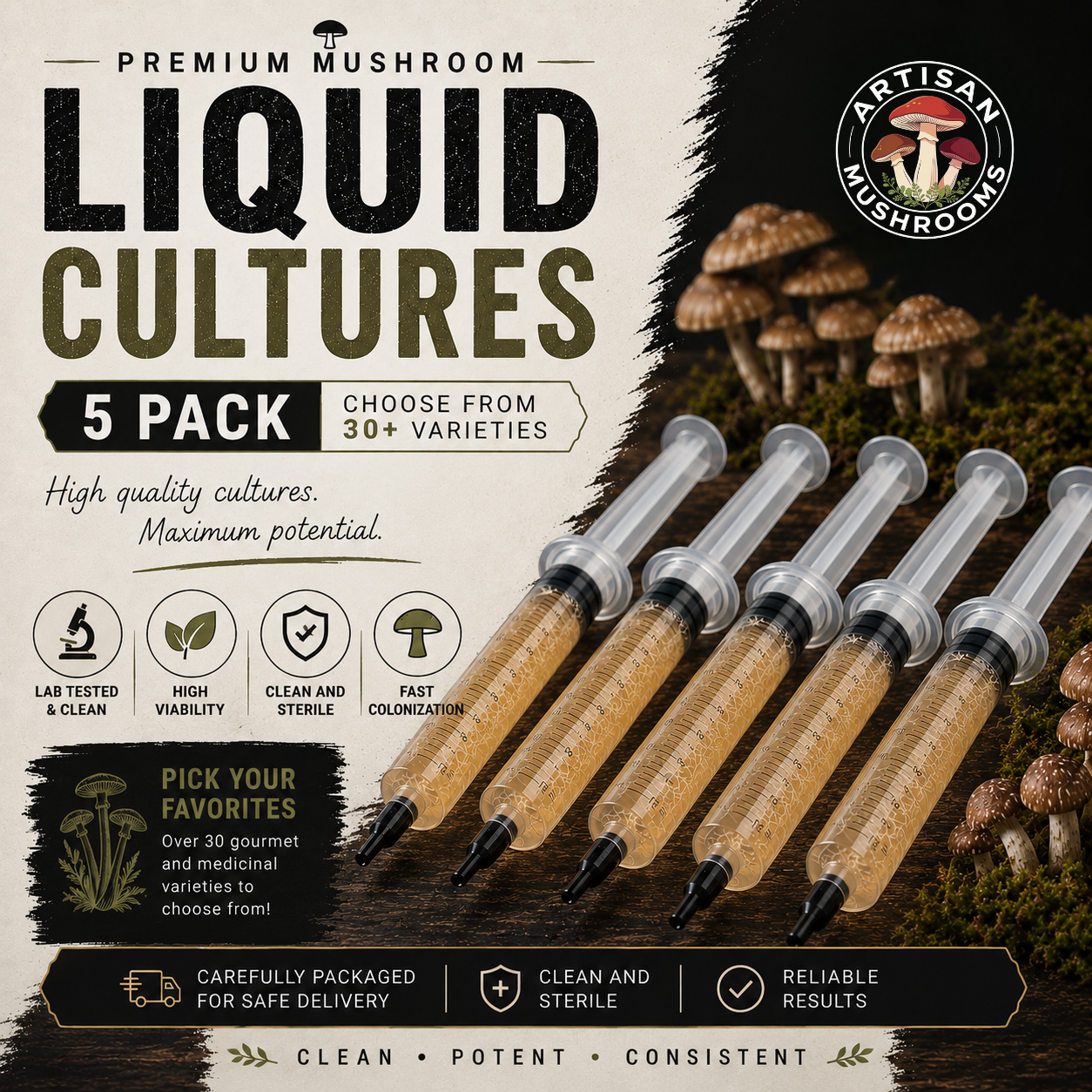
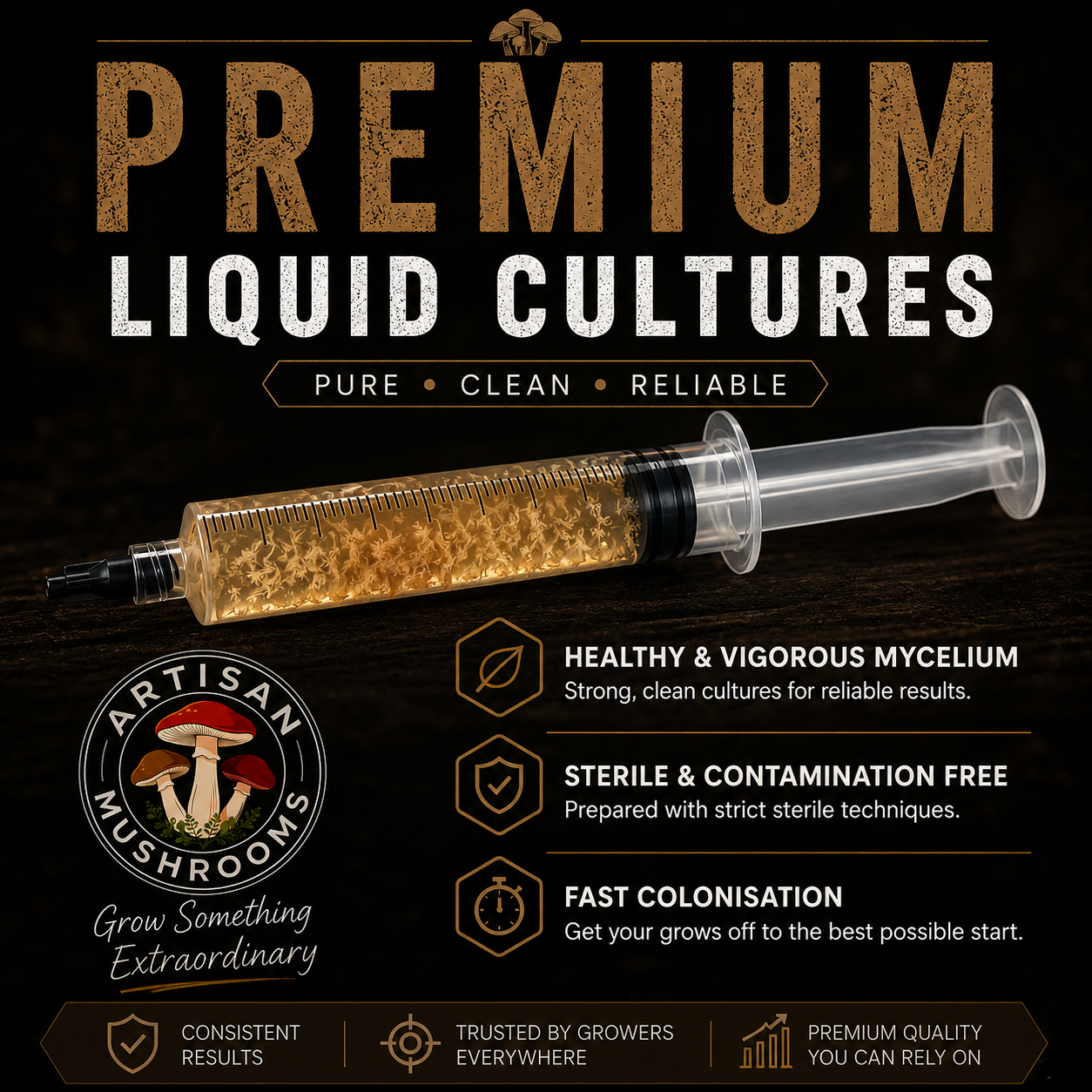
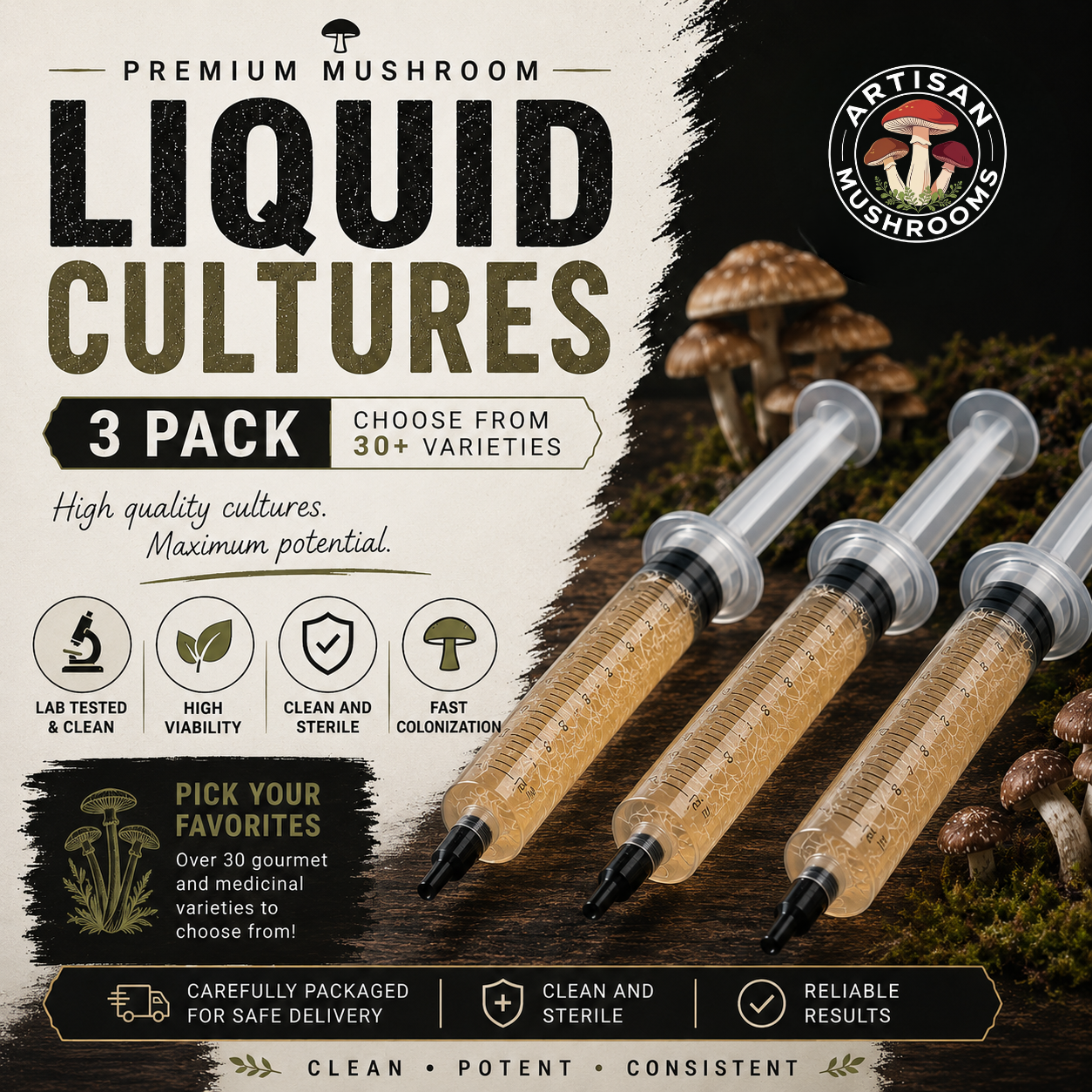
3 × 10 ml mushroom liquid culture syringes
3 sterile 18G syringe needles
3 sterile alcohol wipes
Protective packaging for delivery
You can choose any three available varieties from our extensive collection of gourmet, medicinal and speciality mushroom cultures.
Can I choose which three liquid cultures I receive?
Yes. You can select your preferred three cultures from the available options when ordering.
The selection includes more than 30 mushroom varieties, such as:
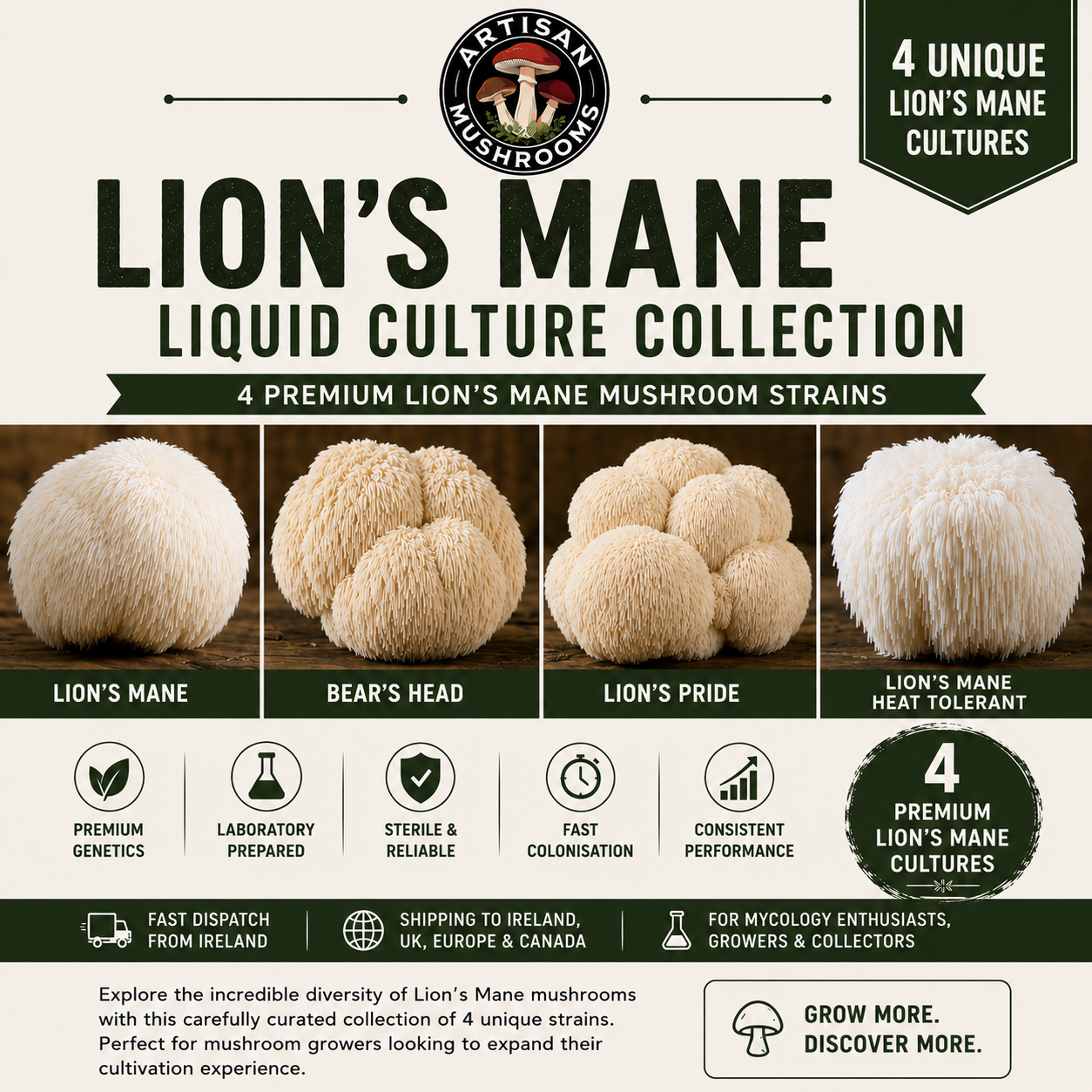
Lion’s Mane
Blue Oyster
Pearl Oyster
Golden Oyster
King Oyster
Black Pearl Oyster
Shiitake varieties
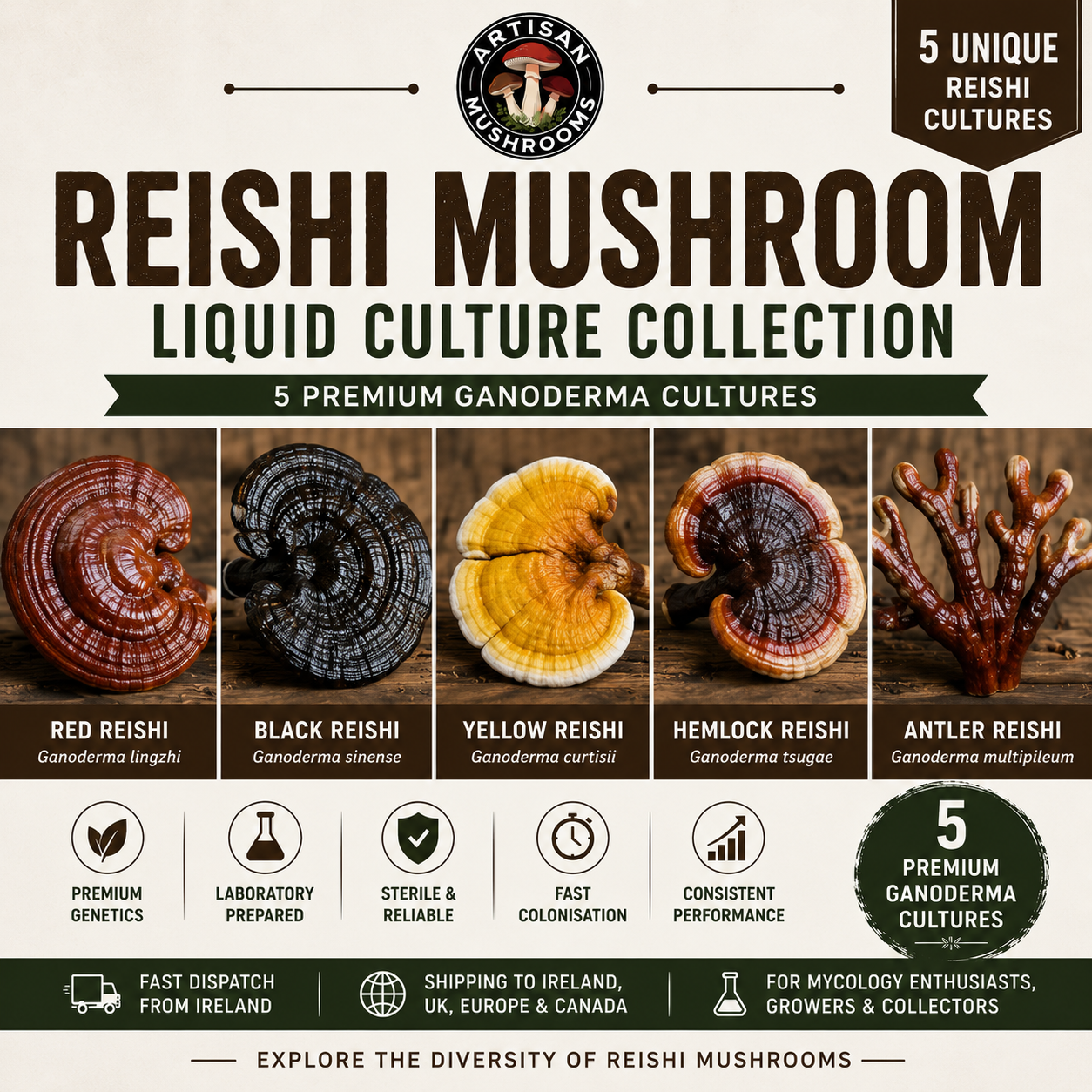
Reishi varieties
Maitake
Turkey Tail
Cordyceps militaris
Chanterelle varieties
Wine Cap varieties
Many other gourmet and speciality cultures
Browse our full range of Mushroom Liquid Cultures for more information about the available species.
Is the 3 Pack cheaper than buying three individual cultures?
Yes. The Mushroom Liquid Culture 3 Pack offers a discounted bundle price compared with purchasing three cultures separately.
It is a convenient option for growers who want to:
Try several species
Compare different strains
Begin a small culture collection
Grow mushrooms with different fruiting temperatures
Maintain backup cultures
Purchase cultures for several cultivation projects
Growers looking for a larger selection can also choose our 5 Mushroom Liquid Cultures or 10 Mushroom Liquid Cultures.
What is mushroom liquid culture?
Mushroom liquid culture contains living mushroom mycelium suspended in a sterile, nutrient-rich solution.
The established mycelium can be used to inoculate suitable sterilised grain, agar or prepared cultivation substrate. Because the culture is already growing, it can usually begin colonising more quickly than spores.
Liquid culture can be used for:
Inoculating sterilised grain
Inoculating ready-to-use grow bags
Producing grain spawn
Expanding cultures on agar
Preparing additional liquid culture
Maintaining mushroom genetics
Educational and mycology projects
Are the three cultures mixed together?
No. Each selected mushroom variety is supplied in its own clearly labelled 10 ml syringe.
The cultures should normally be kept separate because different species can have very different substrate, temperature and fruiting requirements.
Clearly label every grain bag, agar plate and fruiting block after inoculation.
Are the liquid cultures supplied sterile?
The liquid cultures are prepared under sterile laboratory conditions and packaged to minimise contamination risks.
Each syringe is supplied with its own sterile 18G needle and alcohol wipe. Keep the syringe sealed until you are ready to use it, and avoid touching the sterile connection points.
Testing liquid culture on agar before expanding it or inoculating a large quantity of substrate is always recommended.
Are the included needles sterile?
Yes. Three individually wrapped sterile 18G syringe needles are included.
Each needle is intended for single use. Use one fresh needle for each culture to reduce the risk of cross-contamination.
Additional 18G Sterile Syringe Needles are available separately.
Very thick or densely colonised liquid cultures may pass more easily through a wider 16G Sterile Syringe Needle.
What can I inoculate with the liquid cultures?
The correct material depends on the mushroom species selected.
Many wood-loving gourmet mushrooms can be used to inoculate:
Sterilised wheat grain
Supplemented hardwood substrate
Hardwood grow bags
Agar plates
Sterile liquid-culture media
Species such as oyster mushrooms, Lion’s Mane, Shiitake and Reishi generally perform well on hardwood-based fruiting substrates.
Other species may require different substrates, environmental conditions or cultivation methods. Always check the growing requirements of each selected culture before inoculation.
Can I inject the liquid culture directly into a hardwood grow bag?
Many wood-loving species can be injected directly into a ready-to-inoculate Sterile Hardwood Mushroom Grow Bag.
This is a simple option for beginners because the bag contains hydrated, sterilised hardwood and wheat bran substrate and is fitted with a self-healing injection port.
A basic inoculation process is:
Clean your hands and working surface.
Gently shake the liquid culture syringe.
Attach a fresh sterile needle.
Wipe the injection port with the supplied alcohol wipe.
Allow the alcohol to evaporate.
Insert the needle through the centre of the port.
Inject the liquid culture.
Carefully withdraw the needle.
Leave the bag sealed during colonisation.
Do not inject through the filter patch or directly through the plastic bag.
Can I use the cultures to make grain spawn?
Yes. Most of the cultures can be inoculated into suitable sterilised grain to produce grain spawn.
Our 2 kg Sterilised Wheat Grain Bag is hydrated, pressure sterilised and fitted with a self-healing injection port.
Once fully colonised, the grain spawn can be transferred into a suitable fruiting substrate for the selected species.
Can colonised grain be transferred to hardwood substrate?
Yes. For wood-loving species, fully colonised grain can be mixed with our 2 kg Sterilised Hardwood and Wheat Bran Substrate.
This method creates many inoculation points throughout the substrate and can support fast, even colonisation.
Opening and mixing a sterile substrate bag requires very clean handling. A still-air box or laminar-flow hood is recommended to reduce contamination risk.
Is direct liquid-culture inoculation or grain spawn better?
Both methods can work.
Direct liquid-culture inoculation is usually easier because:
The grow bag remains sealed
Fewer transfers are required
No separate grain stage is needed
Less equipment is required
The risk associated with opening the substrate bag is reduced
Producing grain spawn first can provide:
More inoculation points
Faster and more even substrate colonisation
A larger quantity of established mycelium
Greater flexibility when preparing several grow bags
An effective way to expand a small amount of culture
The best method depends on your experience, equipment and chosen mushroom species.
How much liquid culture should I use?
Approximately 5 to 10 ml of liquid culture can be used to inoculate one 2 kg grain or suitable hardwood grow bag.
A complete syringe may be used for one bag. You can also use a smaller quantity if you want to test the culture on agar or inoculate several smaller containers.
Using excessive liquid culture does not guarantee faster colonisation and may create overly wet areas in grain or substrate.
Should I test each liquid culture on agar?
Testing on agar is recommended, particularly before inoculating a full grain bag or expanding a culture.
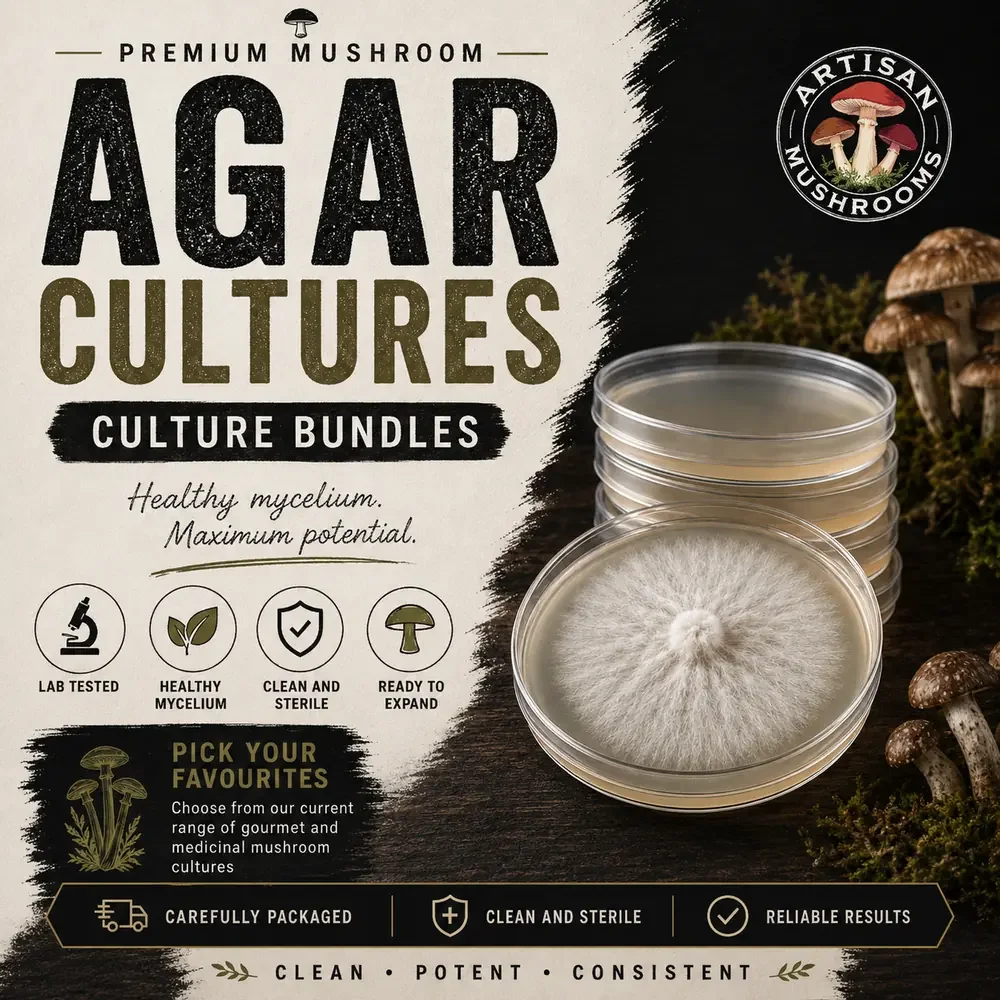
Place one or two small drops onto a sterile LME Agar Plate and observe the growth.
Agar testing can help you:
Check for contamination
Observe the mycelium before inoculating grain
Compare the growth of your three cultures
Preserve backup cultures
Produce clean agar wedges
Expand the culture
Confirm that an older stored syringe remains viable
Different species can produce very different mycelial growth patterns, so one culture should not necessarily be expected to look like another.
What does healthy mushroom mycelium look like?
Healthy mycelium is normally white or cream-coloured, but its density and appearance vary between species.
It may appear:
Fine and wispy
Cotton-like
Dense and bright white
Rope-like or rhizomorphic
Thin and almost translucent
Patchy during early colonisation
Lion’s Mane mycelium can appear particularly fine or delicate, while oyster mushroom mycelium is often dense and vigorous.
Green, black, pink, red or unusually slimy spreading growth may indicate contamination.
Will all three cultures grow under the same conditions?
Not necessarily.
Different mushroom species can require different:
Colonisation temperatures
Fruiting temperatures
Substrates
Humidity levels
Fresh-air exchange
Lighting
Fruiting methods
Colonisation times
For example, Golden Oyster generally prefers warmer fruiting conditions than Blue Oyster, while Lion’s Mane requires substantial fresh-air exchange to develop properly formed fruiting bodies.
Research each selected species separately before beginning cultivation.
What temperature should the cultures be kept at during colonisation?
Many mushroom cultures colonise well at approximately 20°C to 24°C, but the ideal range varies between species.
Some tropical or heat-tolerant cultures can grow at warmer temperatures, while cool-weather species may perform better toward the lower end of the range.
Keep colonising bags away from:
Direct sunlight
Radiators
Hot presses
Cold draughts
Large temperature fluctuations
Areas where several bags may overheat when packed closely together
A Digital Thermometer and Hygrometer can help you monitor the cultivation area.
How long will colonisation take?
Colonisation time varies considerably between species.
Visible mycelium may appear within several days, but slower cultures can take one to two weeks before growth is clearly visible.
Complete colonisation may take:
Approximately one to four weeks for grain
Approximately two to eight weeks for many hardwood fruiting blocks
Considerably longer for slow-growing or specialised species
Temperature, culture vigour, substrate, moisture, gas exchange and inoculation quantity can all affect colonisation speed.
Can I choose Chanterelle cultures in the 3 Pack?
Yes, when Chanterelle varieties are shown as available options.
Chanterelles are mycorrhizal mushrooms and require a living host tree to complete their normal lifecycle. They should not be expected to fruit from a standard indoor hardwood grow bag like oyster mushrooms or Lion’s Mane.
The liquid culture can be inoculated into sterilised grain or sterilised hardwood sawdust substrate and allowed to colonise. The colonised material can then be planted around the active root zones of a suitable host tree.
Suitable options for preparing inoculated material include:
Chanterelle cultivation is experimental, slow and not guaranteed. Establishing a successful relationship with a host tree may take several years.
Are all available liquid cultures suitable for beginners?
No. Some species are significantly easier to cultivate than others.
Beginner-friendly options commonly include:
Blue Oyster
Pearl Oyster
Golden Oyster
Pink Oyster
Lion’s Mane
Black Pearl Oyster
More advanced or experimental species may require:
A specific host tree
Specialised substrates
Very precise temperature control
Longer colonisation periods
Advanced sterile technique
More complex fruiting conditions
Choose cultures that match your experience, equipment and available growing environment.
Can I select three cultures that fruit at different times of year?
Yes. Selecting cultures with different temperature preferences can help extend your growing season.
For example, you might choose:
A cooler-weather oyster mushroom
A moderate-temperature Lion’s Mane or Reishi culture
A warm-weather Golden or Pink Oyster culture
The exact fruiting range depends on the individual strain and growing environment. Check the information provided for each selected culture before planning seasonal cultivation.
How should the liquid cultures be stored?
Store the sealed syringes in a refrigerator at approximately 2°C to 4°C until required.
For best results:
Keep each syringe sealed
Do not freeze
Protect from direct sunlight
Keep the culture labels attached
Avoid repeated warming and refrigeration
Store separately from food where practical
Use the cultures as soon as reasonably possible
Allow a refrigerated syringe to warm slightly before use and gently shake it to distribute the mycelium.
How long will the liquid cultures remain viable?
For best performance, use the cultures within approximately three months of receipt.
Properly refrigerated cultures may remain viable for longer, but their vigour can gradually decline. Storage life varies between species and is affected by temperature stability, age and handling.
Test an older culture on a sterile LME Agar Plate before inoculating a full bag.
Can I expand the cultures?
Yes. Liquid cultures can be expanded using sterile liquid-culture media or agar.
Culture expansion requires:
Properly prepared nutrient media
Pressure sterilisation
Sterile tools
A still-air box or laminar-flow hood
Careful contamination monitoring
Test the original culture on agar before expanding it. This reduces the risk of multiplying an undetected contaminant throughout several jars.
Are mushroom liquid cultures intended for consumption?
No. Mushroom liquid cultures are cultivation products containing living mycelium suspended in nutrient solution.
They are not food, drinks, supplements, extracts or medicinal preparations and should not be consumed or injected into people or animals.
No medical or health claims are made for the cultures. They are supplied for mushroom cultivation, culture expansion, educational work and mycology projects.
How do I reduce the risk of contamination?
To help protect each culture:
Wash your hands before handling it
Clean the working surface
Use the supplied sterile needle
Use a different needle for each culture
Wipe the injection port before inoculation
Allow alcohol to evaporate before inserting the needle
Keep grain and substrate bags sealed
Do not inject through filter patches
Avoid touching sterile syringe connections
Test cultures on agar where possible
Clearly label every inoculated container
Discard material showing obvious contamination
Never place your face directly against the filter patch to smell a sealed grow bag.
Where is the Mushroom Liquid Culture 3 Pack shipped from?
The Mushroom Liquid Culture 3 Pack is freshly prepared, carefully packaged and shipped directly from Ireland.
Fast shipping is available to customers across Ireland, the UK, Europe, the United States and Canada.